

 Facebook
 X
X
 Pinterest
 Copy Link
Timeless Luxury Home Design: Why Some Homes Feel Extraordinary for Generations
Why Some Luxury Homes Feel Timeless While Others Simply Feel Expensive
Luxury Leaves an Impression Long Before Anyone Talks About Price
Walk through enough exceptional homes and one observation becomes difficult to ignore.
Some homes are unforgettable.
Others are merely expensive.
The difference has very little to do with the price tag.
I’ve toured magnificent estates where every finish was imported, every appliance represented the latest technology, and every room showcased extraordinary craftsmanship. Yet after leaving, I struggled to remember much about the experience.
I’ve also visited homes that were noticeably smaller or less elaborate, yet days later I could still recall exactly how they felt.
That contrast fascinated me.
Over the years, I’ve come to believe that timeless luxury isn’t created by adding more. It’s created by understanding what truly matters and having the discipline to remove what doesn’t.
Whether we’re talking about architecture, fashion, furniture, or fine watchmaking, the principles remain remarkably consistent.
The Best Luxury Never Feels Forced
Before entering real estate, I spent more than two decades representing some of the world’s most respected luxury brands, including Giorgio Armani, Loro Piana, and Vacheron Constantin.
Although each company operates in a different industry, they all share one defining characteristic.
None relies on excess to communicate quality.
Giorgio Armani became synonymous with elegance by refining proportions and removing unnecessary complexity.
Loro Piana built its reputation not through bold logos, but through exceptional materials, craftsmanship, and understated refinement.
Vacheron Constantin has spent nearly three centuries perfecting details that many people will never consciously notice, yet collectors immediately recognize their significance.
Luxury, I learned, is rarely loud.
It communicates confidence through restraint, precision, and authenticity.
When I began working in luxury real estate, I realized exceptional homes follow many of the same principles.
The most memorable residences aren’t those trying hardest to impress.
They’re the ones where every decision feels intentional.
Timeless Design Begins With Human Experience
Many conversations about luxury homes focus on measurable features.
Square footage.
Bedroom count.
Ceiling height.
Imported stone.
Custom cabinetry.
Smart home technology.
Those elements certainly contribute to quality.
But they don’t fully explain why one property feels extraordinary while another, with a similar budget, leaves only a fleeting impression.
The answer lies in something far less tangible.
Great design begins with human experience.
Before buyers consciously evaluate finishes or construction details, they are already responding to the environment around them.
How natural light enters a room.
Whether proportions feel balanced.
How the architecture frames a view.
How the transition from one space to another unfolds.
Most of these reactions happen within seconds, long before anyone begins discussing specifications.
The finest homes are designed not only to be seen, but also to be experienced.
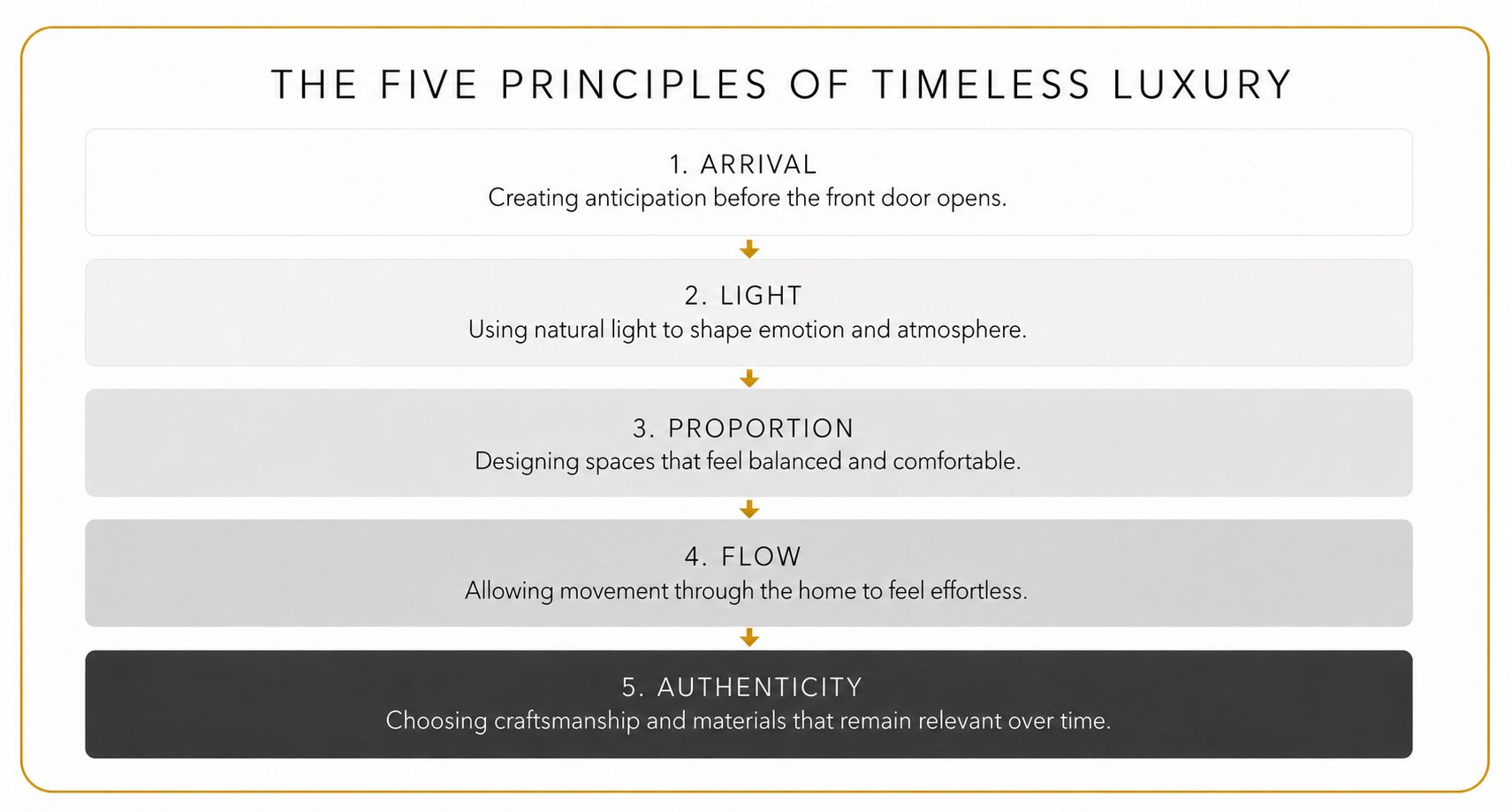
Principle One: Arrival
Luxury doesn’t begin inside the home.
It begins the moment someone approaches the property.
Think about some of the world’s most memorable hotels, museums, or historic estates.
Very few reveal everything at once.
Instead, they create anticipation.
A tree lined drive.
A carefully framed entrance.
The gradual reveal of a courtyard.
A glimpse of the ocean beyond the architecture.
These moments slow people down.
They encourage curiosity before the front door even opens.
The same principle appears throughout exceptional residential architecture.
Rather than immediately displaying every feature, the home invites visitors to discover it one experience at a time.
That sense of arrival is often impossible to measure, yet it becomes one of the strongest first impressions a property can create.
Principle Two: Light
Ask architects what transforms a room, and many will give the same answer.
Natural light.
Not because it simply makes a room brighter, but because it changes throughout the day, bringing movement, warmth, and depth to the spaces we inhabit.
Morning light creates energy.
Afternoon light softens a room.
Evening light can completely transform the character of an interior.
Expensive finishes may capture attention for a moment.
Beautiful light influences how people feel every day.
Perhaps that’s why so many of the world’s most admired homes are remembered not for a specific material, but for the way they engage with the sun, the landscape, and the changing seasons.
Timeless luxury isn’t static.
It evolves with the environment around it.
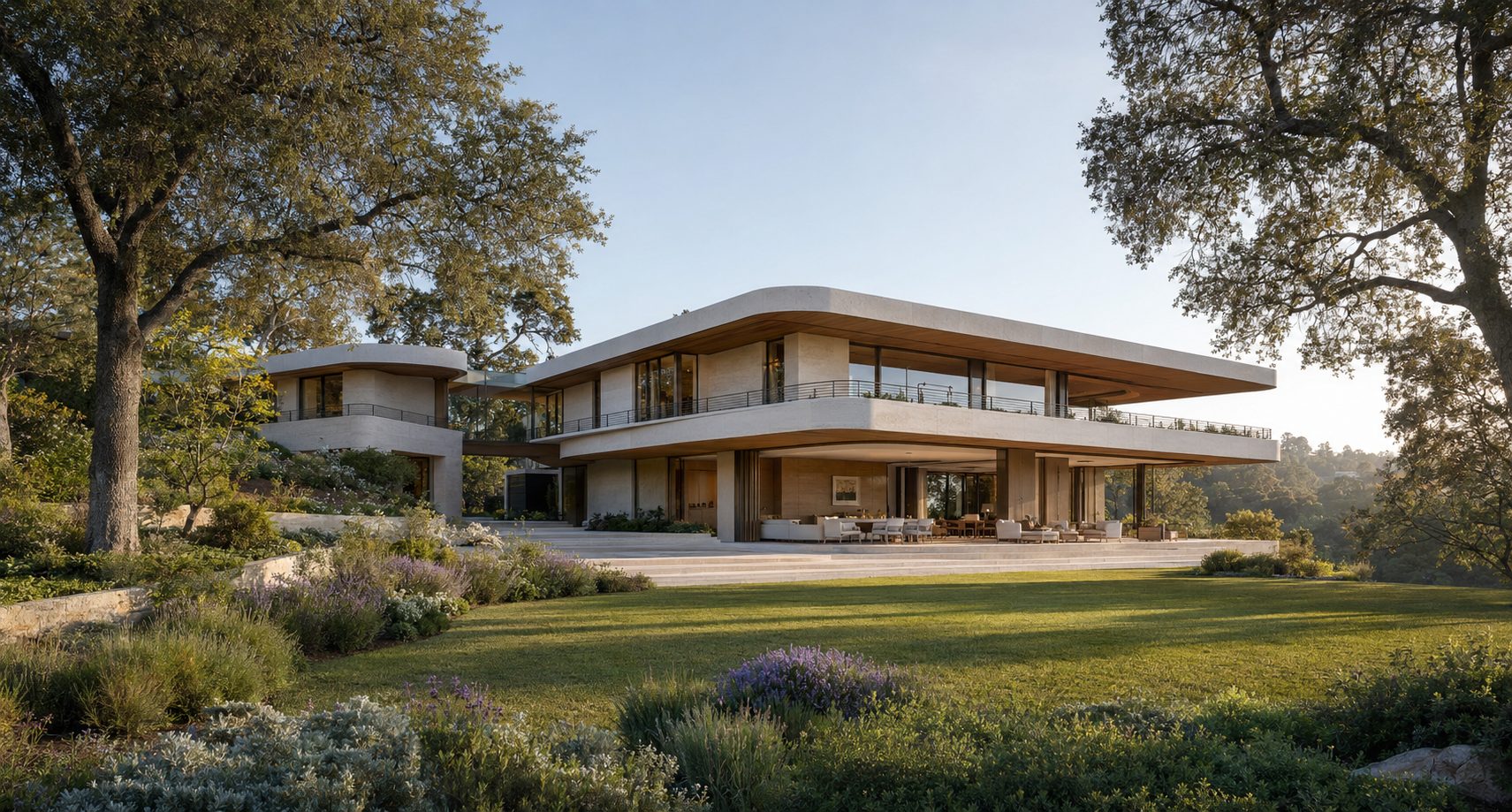
Principle Three: Proportion
One of the greatest misconceptions about luxury is that bigger automatically means better.
In reality, proportion often matters far more than size.
Some of the world’s most admired homes are not remembered because they have the largest rooms. They’re remembered because every room feels balanced.
Ceilings relate comfortably to the room’s dimensions.
Windows frame views rather than overwhelm them.
Hallways feel purposeful instead of oversized.
Furniture complements the architecture instead of competing with it.
When these relationships are thoughtfully considered, a home feels calm and intuitive. Visitors may never consciously identify why, but they immediately recognize the result.
The same principle exists throughout the luxury world.
During my years with Giorgio Armani, I came to appreciate that elegance is rarely created by adding more fabric or embellishment. It comes from proportion. Every line, every silhouette, and every detail exists in balance with the whole. Nothing feels exaggerated because nothing needs to.
Exceptional architecture follows the same philosophy.
A home that is perfectly proportioned often feels more luxurious than one that is simply larger or more elaborate.
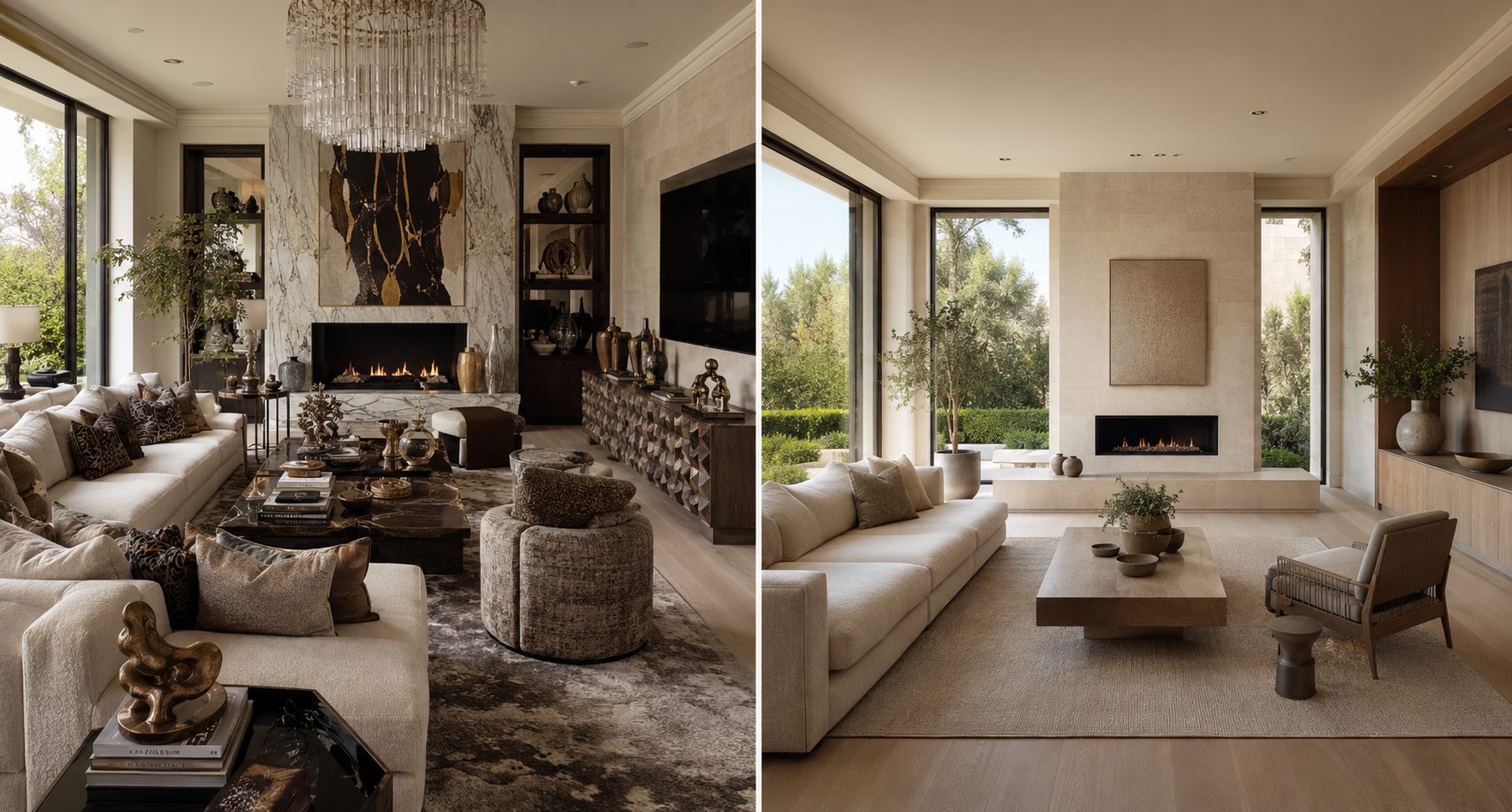
Key Insight: Luxury is often the result of balance rather than abundance.
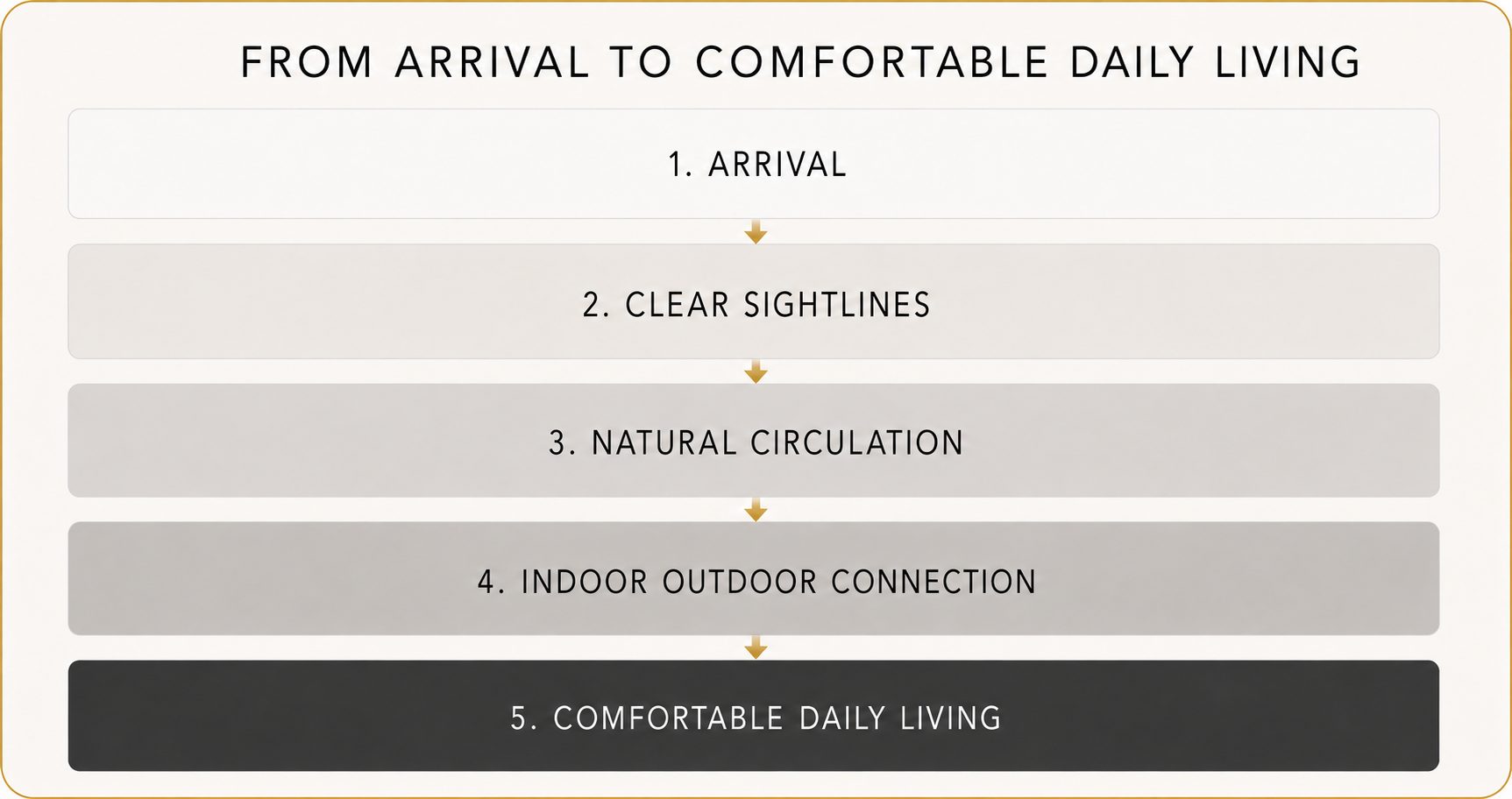
Principle Four: Flow
If proportion determines how a home looks, flow determines how it lives.
Think about the last home that immediately felt comfortable.
Chances are you didn’t stop to analyze why.
You simply moved through it effortlessly.
One room naturally led to the next.
Sightlines felt intentional.
Outdoor spaces extended the interior rather than interrupting it.
Natural light guided your attention.
Nothing felt awkward or forced.
This is thoughtful planning at work.
Great architecture removes friction.
Rather than constantly asking occupants to adapt to the building, the building quietly adapts to the way people naturally live.
That is surprisingly difficult to achieve.
It requires careful planning, restraint, and an understanding of human behavior rather than simply maximizing square footage.
The Luxury of Simplicity
Many people associate luxury with abundance.
More rooms.
More materials.
More technology.
More amenities.
Yet the most enduring luxury often feels remarkably simple.
That lesson became especially clear during my time with Loro Piana.
Clients didn’t choose a garment because it demanded attention across the room.
They chose it because it felt extraordinary the moment they touched it.
The quality wasn’t immediately obvious to everyone.
It revealed itself over time.
Exceptional homes behave much the same way.
The finest craftsmanship often isn’t the most visible.
It’s found in details that quietly improve daily life.
Cabinet doors that close with precision.
Natural materials that become more beautiful as they age.
Windows positioned to capture changing daylight throughout the seasons.
Outdoor spaces that feel like natural extensions of the home rather than separate destinations.
These details rarely appear in marketing headlines.
Yet they consistently shape how people experience a property.
Luxury Should Feel Effortless
One characteristic I admire most in exceptional homes is how little they ask of their owners.
Daily routines feel intuitive.
Guests know where to gather.
Private spaces remain private.
Storage is thoughtfully integrated.
The kitchen supports conversation rather than interrupting it.
Technology serves the home without dominating it.
Ironically, achieving this level of simplicity often requires tremendous discipline.
Every unnecessary decision removed from daily life allows the architecture itself to shine.
The result is a home that doesn’t constantly compete for attention.
Instead, it quietly supports the people living within it.
That’s a hallmark of timeless luxury.
What Buyers Often Remember
After showing hundreds of luxury homes, I’ve noticed that buyers rarely recall every appliance brand, countertop material, or lighting fixture.
Instead, they remember something far less tangible.
“That home felt peaceful.”
“I could picture myself living there.”
“Everything just made sense.”
Those reactions aren’t accidents.
They’re the result of thoughtful proportion, natural flow, and careful craftsmanship working together.
When architecture disappears into the experience of living, it has achieved something remarkable.
That’s when a house begins to feel timeless rather than simply expensive.
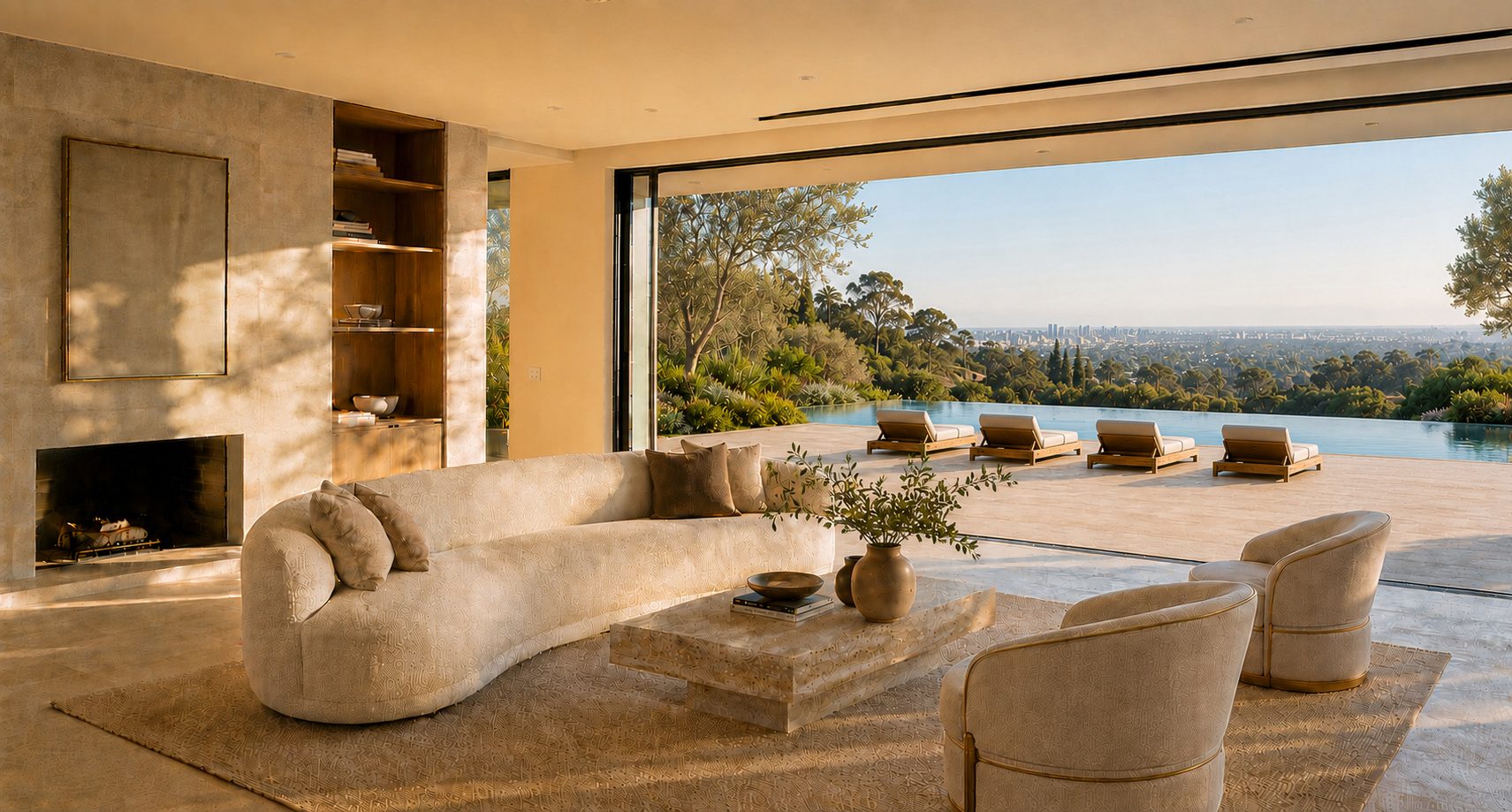
Principle Five: Authenticity
If proportion creates beauty and flow creates comfort, authenticity creates permanence.
It’s the characteristic that allows a home to remain desirable long after design trends have changed.
Authenticity cannot be manufactured.
It comes from architecture that respects its surroundings.
Materials selected for their integrity rather than their novelty.
Craftsmanship that rewards closer inspection.
Design decisions guided by purpose instead of fashion.
Authentic homes don’t imitate luxury.
They embody it.
Craftsmanship Is Meant to Be Discovered, Not Announced
One lesson I carried with me from Vacheron Constantin is that true craftsmanship often reveals itself gradually.
A collector doesn’t admire a fine mechanical watch because it is covered in decoration.
They admire the countless details that remain invisible to most people.
The precision of the movement.
The finishing beneath the dial.
The patience required to create something intended to last for generations.
Exceptional homes evoke the same appreciation.
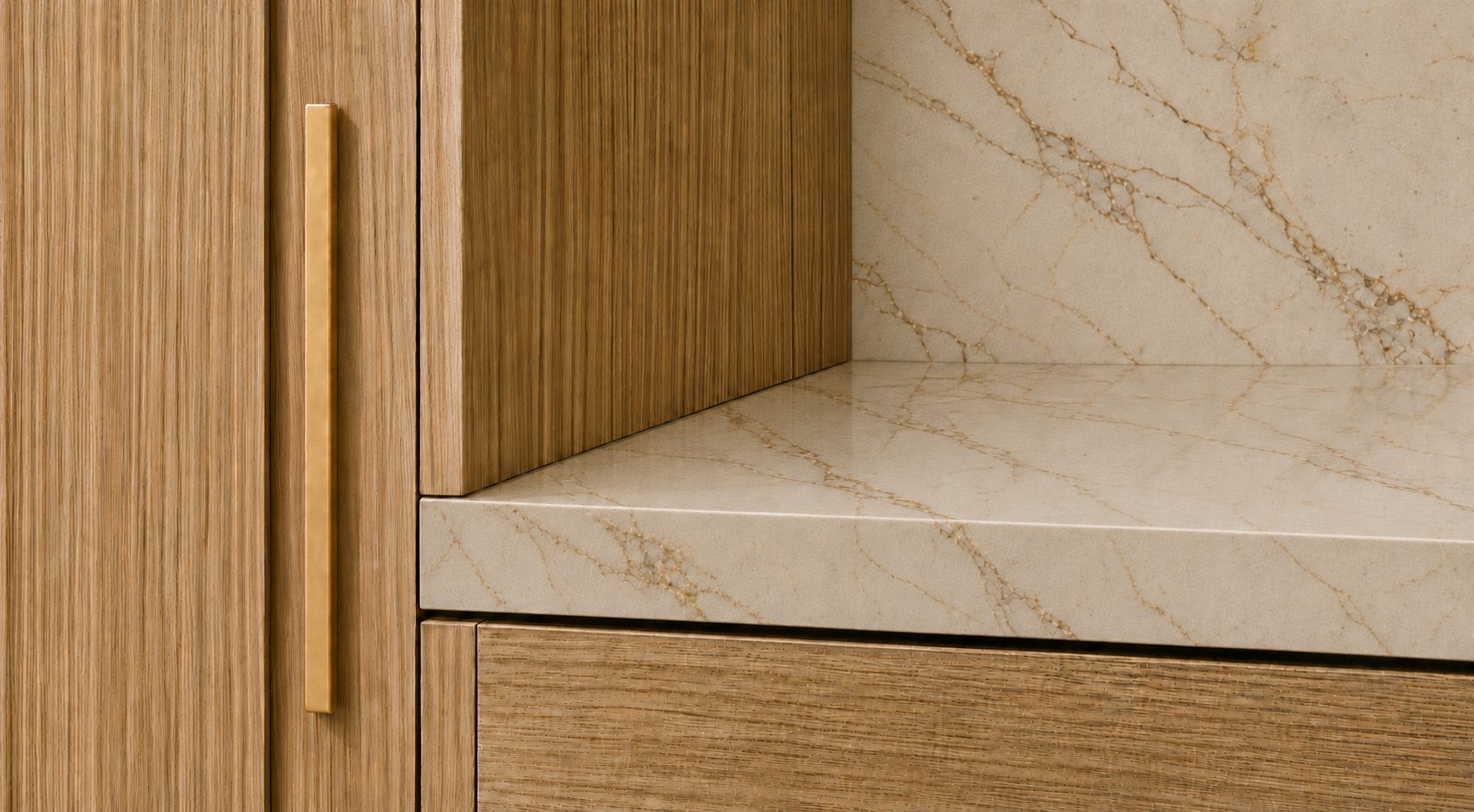
The joinery of custom millwork.
The way natural stone aligns across adjoining surfaces.
The precision of shadow lines.
How doors close with quiet confidence.
How light gently moves across carefully chosen materials throughout the day.
Many visitors may never consciously notice these details.
Yet they influence how a home is experienced.
Luxury is often defined not by what immediately captures attention, but by what quietly earns admiration over time.
Timeless Homes Respect Their Surroundings
The finest homes rarely compete with their environment.
They complement it.
A contemporary residence overlooking the Pacific should frame the coastline rather than distract from it.
A Beverly Hills estate should embrace mature landscaping as naturally as it embraces its architecture.
A Bel Air hillside home should celebrate privacy, topography, and distant city views rather than overwhelm them.
Great architecture doesn’t dominate the landscape.
It belongs to it.
That’s one reason many of Los Angeles’ most admired homes remain compelling decade after decade.
They respond thoughtfully to their setting instead of chasing temporary trends.
What This Means for Buyers
When touring luxury homes, it’s easy to compare measurable features.
Square footage.
Bedroom count.
Construction cost.
Amenities.
Those details matter.
But after years of walking through exceptional homes, I’ve found that the questions leading to the best long-term decisions are often different.
Does the architecture feel balanced?
Will this design remain beautiful twenty years from now?
Does the home feel connected to its surroundings?
Can I imagine enjoying this space long after today’s trends have passed?
A remarkable home doesn’t reveal itself all at once.
Like exceptional art, fine tailoring, or masterful watchmaking, its qualities become more meaningful the longer you experience them.
What This Means for Sellers
Preparing a luxury home for sale isn’t simply about updating finishes or adding fashionable décor.
It’s about revealing the qualities that already make the home exceptional.
Sometimes that means simplifying a space so the architecture becomes the focal point.
Sometimes it means allowing natural light to define a room instead of filling it with decorative elements.
Sometimes it means preserving original craftsmanship that tells the home’s story.
The objective isn’t to convince buyers that a property is luxurious.
It’s to help them experience why it is.
When buyers form that emotional connection, the conversation shifts away from individual features and toward the home as a complete composition.
That is where enduring value is created.
A Different Way to Think About Luxury
Throughout my career, whether I was representing Giorgio Armani, Loro Piana, Vacheron Constantin, or advising clients in luxury real estate, I’ve been fascinated by the same question:
Why do some creations remain admired for generations while others quickly fade from memory?
The answer is rarely excess.
It is thoughtful design.
Purpose.
Craftsmanship.
Restraint.
Authenticity.
Those principles transcend industries.
They define exceptional fashion.
They define fine watchmaking.
They define enduring architecture.
And they define the homes that continue to inspire long after they are built.
Final Thoughts
Luxury isn’t a collection of expensive materials.
It isn’t a larger floor plan or a longer list of amenities.
At its highest level, luxury is the thoughtful integration of architecture, craftsmanship, proportion, light, and human experience.
That’s why the homes people remember most are often not the ones that tried hardest to impress.
They’re the ones that felt effortless.
As someone who has spent more than two decades immersed in luxury brands before entering real estate, I’ve come to appreciate that the principles of enduring quality are remarkably consistent. Whether evaluating a finely tailored jacket, a handcrafted timepiece, or an exceptional residence, the question remains the same:
Will this still feel extraordinary years from now?
For buyers, asking that question often leads to wiser decisions.
For sellers, understanding that perspective can help reveal the authentic strengths that already exist within a home.
Markets will rise and fall.
Design trends will evolve.
Technology will continue to advance.
But homes built upon timeless principles will continue to stand apart because genuine luxury never depends on the moment. It endures well beyond it.
Key Takeaways
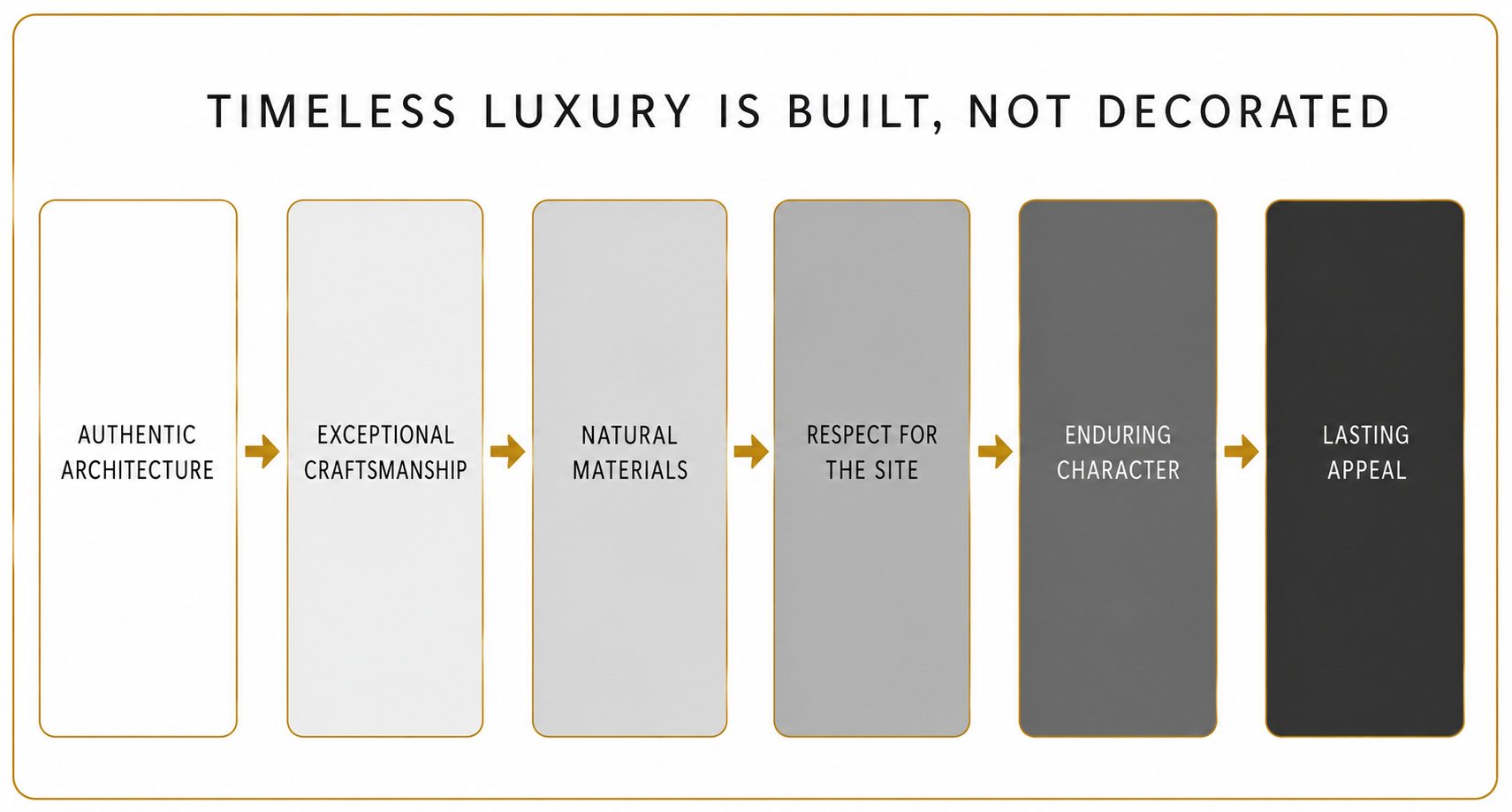
- Timeless luxury is defined by design principles, not price.
- Arrival, light, proportion, flow, and authenticity shape how a home is experienced.
- Exceptional craftsmanship is often subtle and reveals itself over time.
- Great architecture complements its surroundings instead of competing with them.
- Buyers should evaluate how a home will feel years from now, not just on the day they tour it.
- Sellers create the strongest impressions by highlighting authentic architectural qualities rather than chasing temporary design trends.
Suggested Internal Links
- The 4 Layers of Property Value: Why Some Los Angeles Homes Continue to Outperform Over Time
- What Today’s Luxury Home Buyers Really Want in 2026
- Home Pricing Strategy: Sell Smarter in Today’s Los Angeles Market
- Beverly Hills Real Estate
- Bel Air Real Estate
- Brentwood Real Estate
- Santa Monica Real Estate
- Malibu Real Estate
Suggested Authoritative External Links
Luxury Home Buyers: What They Want Today
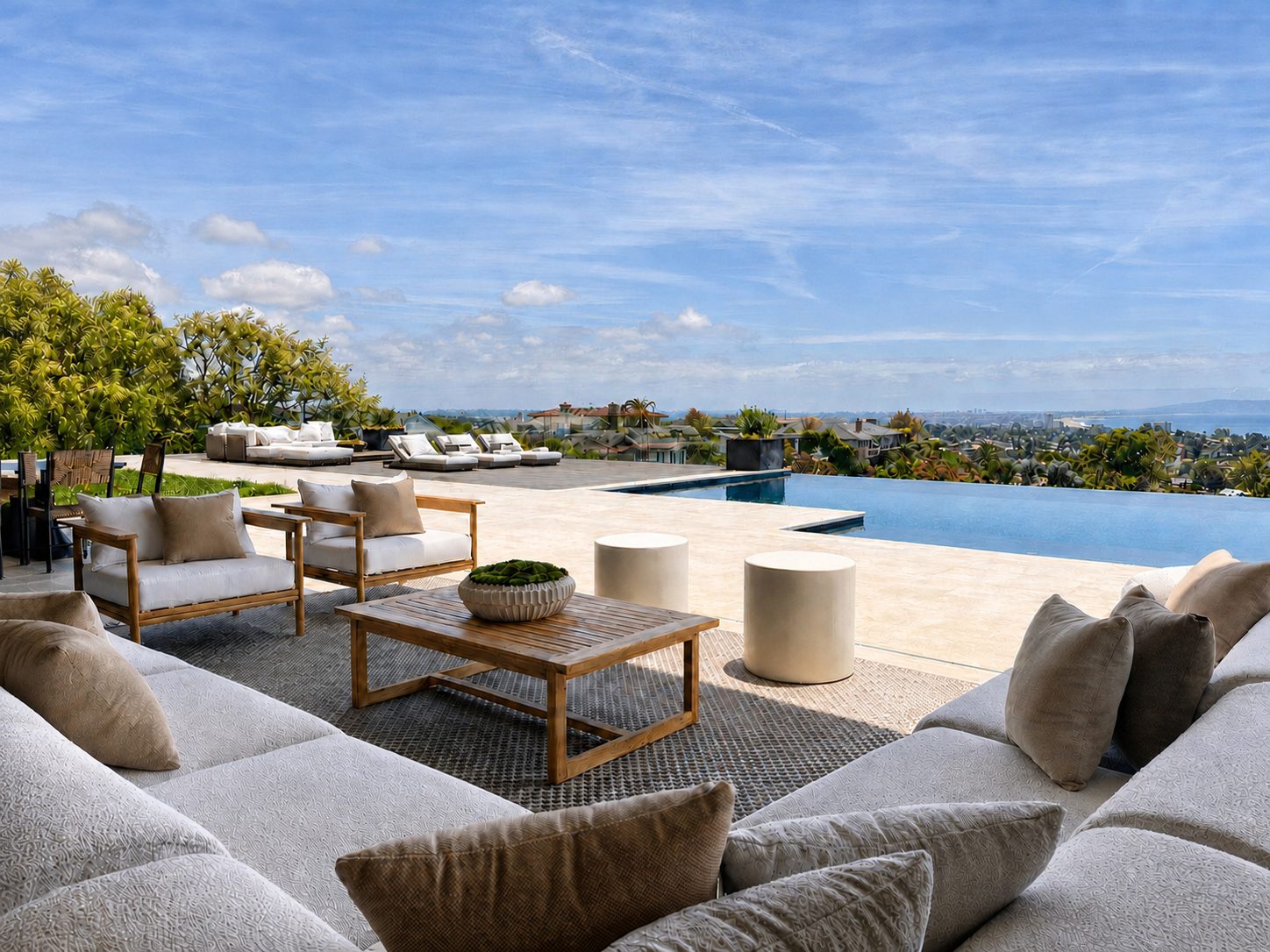
What Today’s Luxury Home Buyers Really Want
Luxury home buyers in Los Angeles are approaching the market differently than they did just a few years ago.
While headlines often focus on mortgage rates, inventory levels, or home prices, those factors tell only part of the story. The more significant shift is happening in buyer behavior.
Today’s affluent buyers are taking more time because they have more options. The latest Los Angeles County Housing Report shows that inventory in the luxury market has expanded while demand has moderated, giving buyers greater flexibility to compare properties before making a decision.
For sellers, understanding this change is just as important as understanding market statistics.
Luxury buyers have not become hesitant.
They have become intentional.
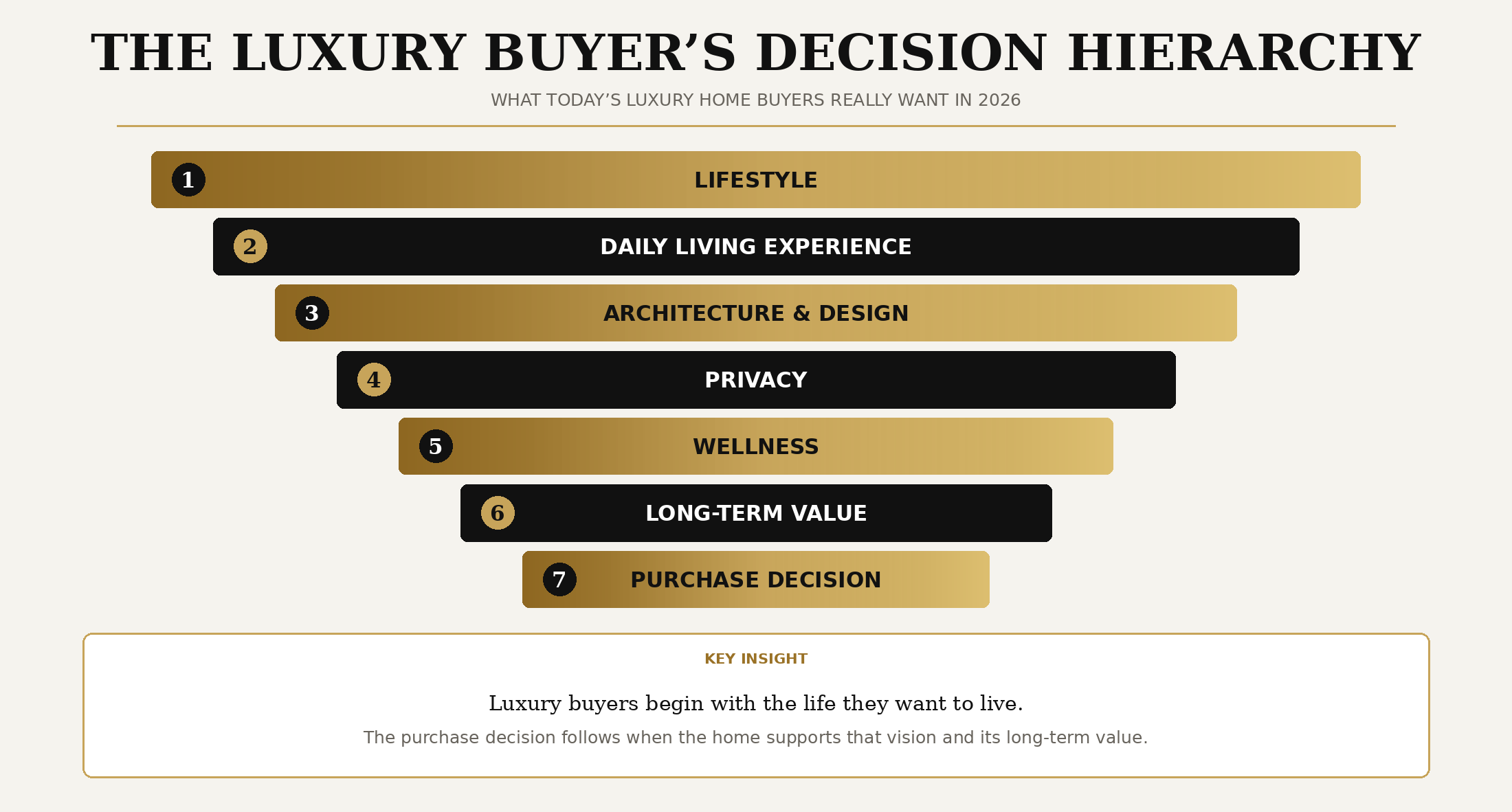
Instead of asking, “Can I afford this home?” they are increasingly asking, “Is this the home that best fits the way I want to live?”
That shift is influencing luxury real estate across Beverly Hills, Bel Air, Brentwood, Westwood, Pacific Palisades, and Malibu.
Luxury Buyers Are Purchasing a Lifestyle, Not Just a Home
One of the biggest misconceptions about luxury real estate is that affluent buyers simply purchase larger homes with more amenities.
In reality, many are making lifestyle decisions rather than real estate decisions.
Before looking at bedroom counts or lot sizes, they often evaluate questions such as:
- Will this home improve my daily life?
- Does this property reflect my personal style?
- Can I entertain family and friends comfortably?
- Will I still enjoy living here ten years from now?
- Does the neighborhood support the lifestyle I want?
Those questions are emotional rather than financial.
That is one reason two homes with similar square footage and similar asking prices can generate dramatically different levels of buyer interest.
Luxury buyers are often purchasing a vision of how they want to live rather than simply acquiring another property.
Choice Has Changed Buyer Behavior
Several years ago, luxury buyers frequently faced intense competition with limited inventory.
Today, many buyers have the opportunity to compare multiple exceptional properties before making an offer. According to the July Housing Report, increased inventory and longer expected marketing times have created a more balanced environment in many luxury price segments.
That additional choice has changed buyer psychology.
Rather than rushing to secure the first attractive home they see, affluent buyers are spending more time comparing architecture, location, privacy, views, floor plans, and long-term livability.
They understand that purchasing a luxury home is rarely a short-term decision.
Many intend to own these properties for years, sometimes decades.
Taking additional time before making a purchase is often a reflection of thoughtful decision-making rather than uncertainty.
Architecture Has Become a Competitive Advantage
Architecture has always mattered.
Today, it often determines whether a luxury home captures immediate attention.
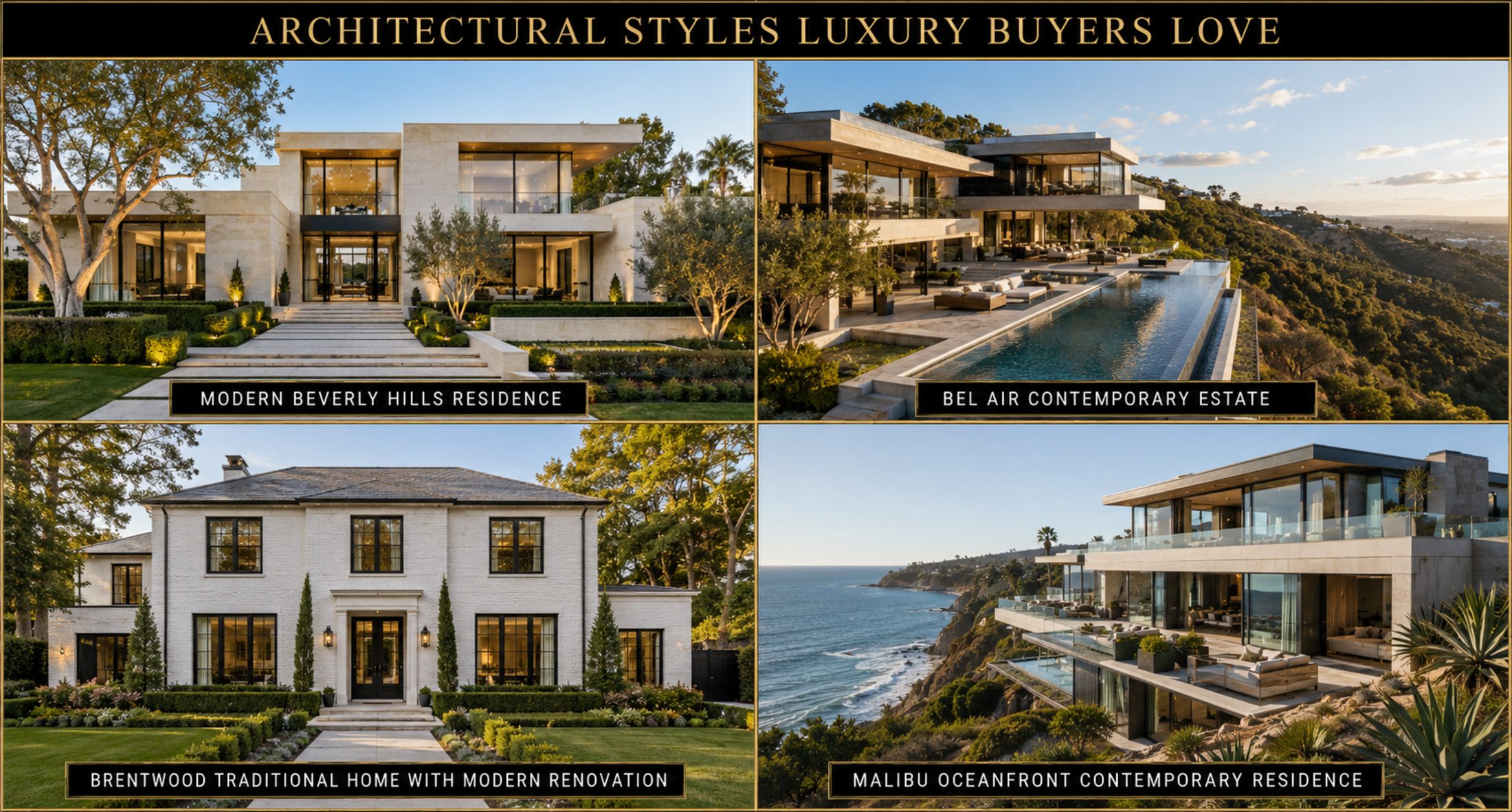
Across Beverly Hills and Bel Air, contemporary homes with clean lines, natural materials, expansive glass, and seamless indoor-outdoor living continue to attract significant interest.
In Brentwood and Westwood, buyers frequently appreciate timeless architecture that blends modern functionality with established neighborhood character.
Pacific Palisades continues to appeal to buyers seeking coastal elegance, generous outdoor living spaces, and family-oriented communities.
Malibu remains one of Southern California’s most distinctive luxury markets, where architecture often serves as a frame for ocean views rather than competing with them.
While design preferences naturally vary, one common theme has emerged.
Luxury buyers increasingly favor homes that feel authentic and enduring rather than built around short-lived design trends.
The homes that create an immediate emotional connection are often the ones buyers remember long after they have toured dozens of competing properties.
Turnkey Has Become the New Luxury
A decade ago, many luxury buyers expected to renovate after purchasing a home.
Today, that mindset has changed.
While some buyers still enjoy creating a custom residence, many high net worth individuals place a greater value on convenience than construction. Time has become one of the most valuable commodities in luxury real estate.
Business owners, physicians, attorneys, executives, and international buyers often have demanding schedules. The prospect of managing architects, permits, contractors, and supply chain delays for the next 18 months is simply less appealing than moving into a home that is ready to enjoy from day one.
The July Housing Report reinforces this trend. Even in today’s slower market, homes that are priced appropriately and presented in excellent, move in ready condition continue to attract buyers quickly. Approximately 35% of all homes that closed in June sold within their first two weeks, demonstrating that buyers are still willing to act decisively when a property offers exceptional value and presentation.
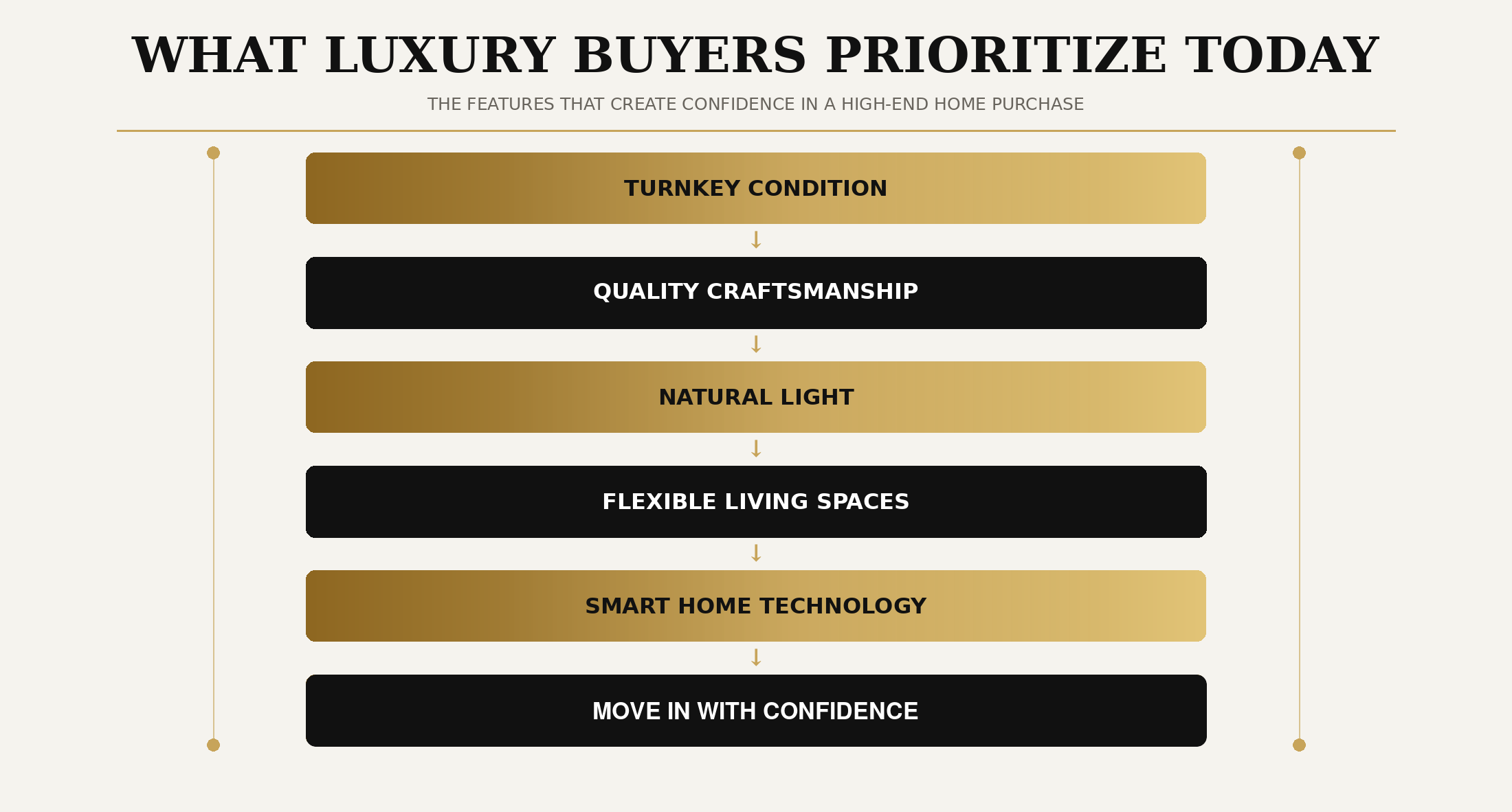
Turnkey no longer means simply “updated.”
It means every detail has already been thoughtfully considered.
Professional landscaping.
Quality craftsmanship.
Timeless finishes.
Smart home technology.
Well-designed outdoor spaces.
Luxury buyers increasingly want to spend their weekends enjoying their homes rather than managing renovation projects.
Privacy Has Become One of Luxury’s Most Valuable Amenities
Ask ten luxury buyers what defines an exceptional property, and you’ll receive ten different answers.
Yet one feature appears repeatedly across nearly every conversation:
Privacy.
Luxury today is increasingly measured by what cannot be seen.
A gated entrance.
Mature landscaping.
A long private driveway.
Thoughtful architecture that shields living spaces from neighboring properties.
Quiet outdoor entertaining areas.
In Bel Air, privacy has always been one of the neighborhood’s defining characteristics. Larger lots, winding streets, and hillside settings naturally create separation from surrounding homes.
Malibu buyers often pursue privacy for a different reason. They are looking for a peaceful retreat where the ocean, rather than surrounding development, becomes the dominant experience.
Even in Beverly Hills Flats, where walkability is one of the neighborhood’s greatest strengths, thoughtful landscaping, architectural design, and carefully positioned outdoor spaces remain highly valued.
Privacy has evolved from a desirable feature into a core component of luxury living.
Wellness Has Become Part of Home Design
Luxury homes are no longer designed solely for entertaining.
Increasingly, they are designed to support healthier daily living.
The pandemic permanently changed how many people think about their homes. Rather than simply serving as places to return to at the end of the day, homes have become spaces for work, exercise, relaxation, and personal well-being.
As a result, today’s luxury buyers are paying closer attention to features that contribute to both physical and mental wellness.
Among the amenities generating increased interest are:
- Spa-inspired bathrooms
- Infrared saunas
- Cold plunge pools
- Home fitness studios
- Meditation or yoga spaces
- Advanced air purification systems
- Abundant natural light
- Seamless indoor-outdoor living
- Outdoor kitchens and gathering spaces
These features are not simply luxurious.
They improve the way people live every day.
Wellness has become part of the home’s long-term value proposition.
Walkability Means Something Different in Every Neighborhood
Luxury buyers are redefining what location means.
For decades, prestige alone drove many purchasing decisions.
Today, lifestyle often carries equal weight.
In Beverly Hills, buyers appreciate the ability to walk to fine dining, luxury shopping along Rodeo Drive, renowned hotels, and cultural destinations.
In Brentwood, San Vicente Boulevard continues to attract buyers who enjoy neighborhood cafés, farmers markets, boutiques, and tree-lined streets.
Westwood appeals to professionals, physicians, and academics seeking proximity to UCLA, Century City, and some of Los Angeles’ most established residential neighborhoods.
For buyers considering Pacific Palisades, lifestyle is defined differently. Ocean breezes, hiking trails, village charm, and a strong sense of community create an environment that feels both sophisticated and relaxed.
Meanwhile, Malibu offers a lifestyle unlike any other in Southern California. Walkability is less about shopping districts and more about direct access to the beach, scenic coastal drives, and an everyday connection with nature.
Luxury buyers no longer ask only, “How impressive is this home?”
They also ask, “How enjoyable will everyday life be here?”
That subtle shift continues to influence purchasing decisions across every luxury neighborhood in Los Angeles.
Off Market Opportunities Continue to Offer a Competitive Advantage
One of the most misunderstood aspects of luxury real estate is the role of off market opportunities.
Many people assume the best homes are always listed publicly on the MLS.
In reality, some of the most desirable luxury properties are sold quietly through professional networks before they ever appear online.
Privacy is often the driving factor.
Some homeowners simply prefer to avoid public showings, extensive photography, or widespread marketing. Others want to test buyer interest discreetly before committing to a full public launch.
For buyers, off market opportunities offer something equally valuable.
Less competition.
Instead of competing against every qualified buyer monitoring the MLS, off market transactions often allow both parties to negotiate more thoughtfully and privately.
That is one reason relationships remain so important in luxury real estate.
Access to opportunities can be just as valuable as understanding market statistics.
Choice Has Raised Expectations
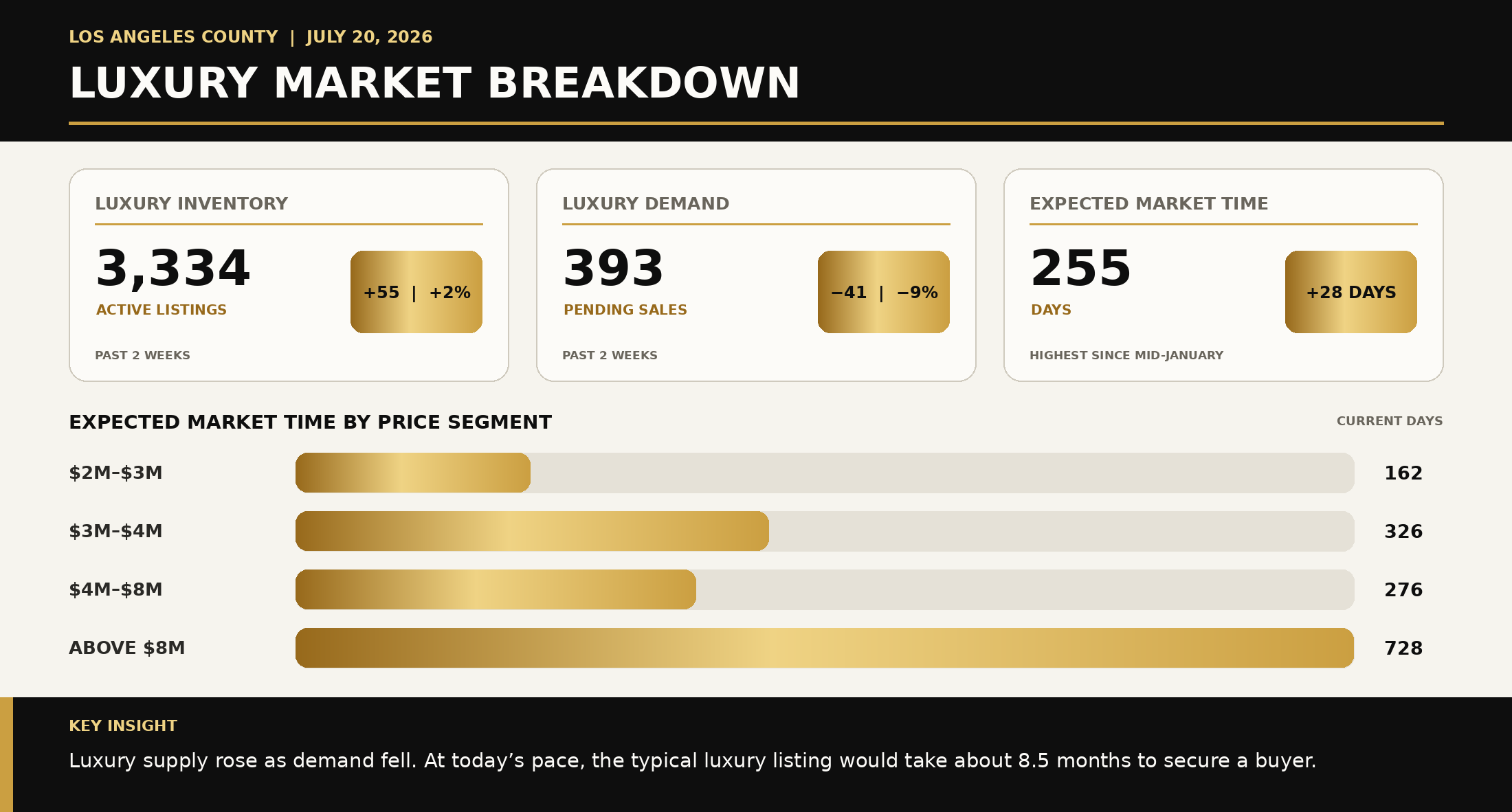
The July Housing Report notes that luxury inventory above $2 million increased while pending sales declined, extending the expected market time for luxury homes to approximately 255 days. Some price ranges, particularly between $3 million and $4 million, now require substantially longer marketing periods than they did only weeks earlier.
Those numbers tell an important story.
They do not necessarily indicate that affluent buyers have left the market.
Instead, they suggest that buyers have become more selective.
When inventory was limited a few years ago, buyers often felt pressure to compromise quickly.
Today’s environment allows them to compare multiple exceptional properties before making a decision.
That additional choice has fundamentally changed luxury buying behavior.
Rather than asking,
“Is this home available?”
Many buyers now ask,
“Is this the best home available?”
That subtle difference has become one of the defining characteristics of today’s luxury market.
Advice for Luxury Sellers
Understanding today’s luxury buyer is no longer optional.
It is one of the most important advantages a seller can have.
Luxury homes that consistently attract the strongest interest tend to share several characteristics:
- Distinctive architecture with timeless appeal
- Exceptional presentation and move in ready condition
- Privacy that enhances everyday living
- Natural light and thoughtfully designed indoor outdoor spaces
- Wellness oriented amenities that support modern lifestyles
- Locations that complement the buyer’s daily routines
These qualities create emotional connections that are difficult for competing properties to replicate.
In today’s market, buyers are not simply evaluating homes.
They are evaluating how each property fits into the life they want to build.
Final Thoughts
Luxury real estate has always been about more than square footage or price.
Today’s market simply makes that reality more visible.
Affluent buyers have more opportunities to compare homes, neighborhoods, architectural styles, and lifestyles than they have enjoyed in years. The July Housing Report reflects this shift through increased luxury inventory, softer demand, and longer marketing times, but those statistics only tell part of the story.
The more important story is how buyer priorities have evolved.
Today’s luxury buyers value thoughtful design over excess.
They value privacy over prominence.
They value wellness over extravagance.
They value lifestyle over status.
Whether searching in Beverly Hills, Bel Air, Brentwood, Westwood, Pacific Palisades, or Malibu, buyers are no longer looking for the biggest home.
They are looking for the right home.
For sellers, that means success depends on understanding not only the market but also the people driving it.
The homes that resonate emotionally and support the way today’s buyers want to live will continue to stand apart, regardless of broader market conditions.
