

 Facebook
 X
X
 Pinterest
 Copy Link
Palisades Rebuilding New Financing and Smoke Protections
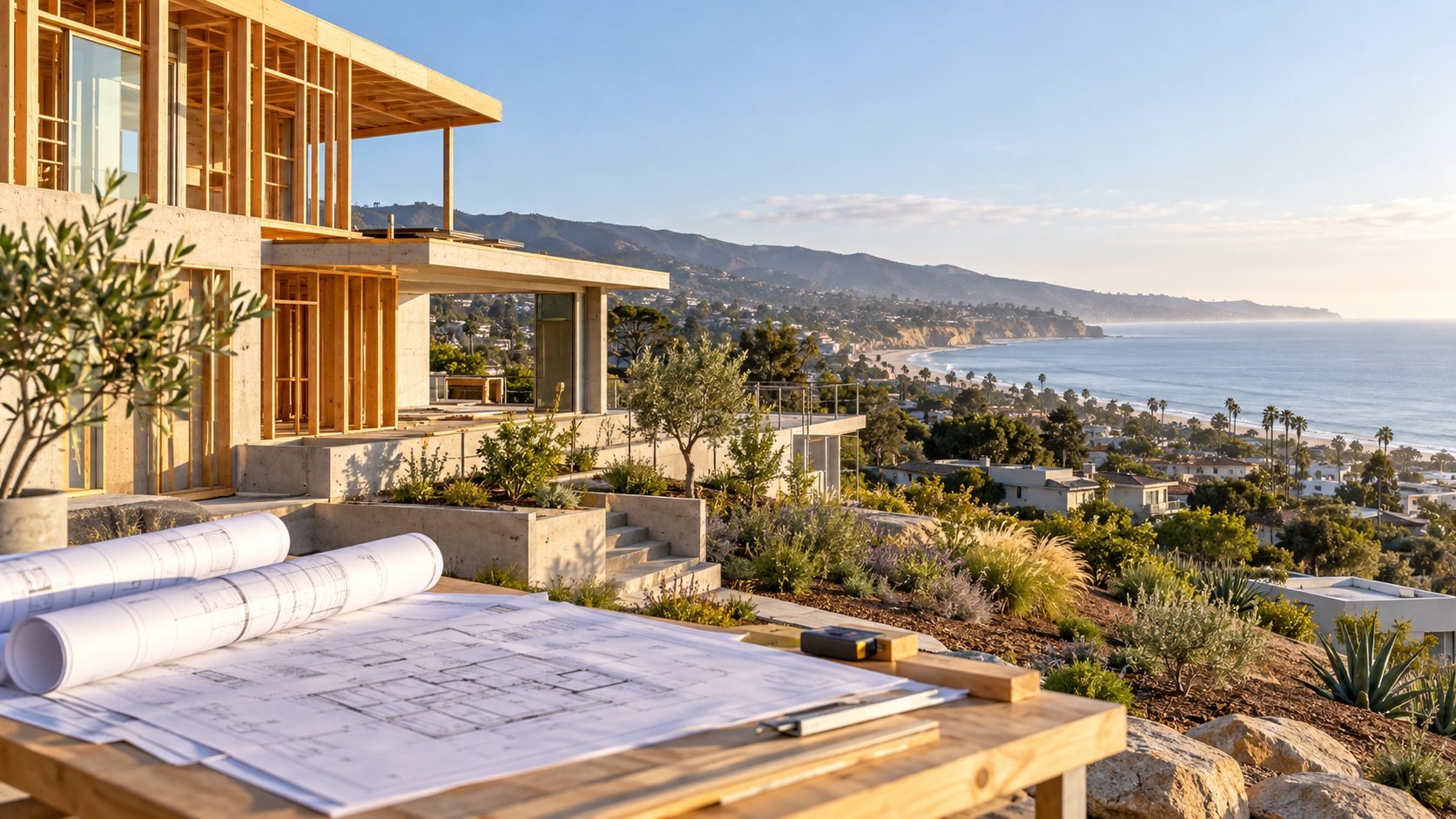
Pacific Palisades home rebuilding project overlooking the coastline
A More Complicated Question Than Rebuilding
For many Pacific Palisades homeowners, the decision after the fire has never been as simple as whether to rebuild.
The more difficult question is whether rebuilding still makes sense after considering insurance proceeds, construction costs, financing, temporary housing, time, and the emotional weight of managing a major project.
Every family is approaching that question differently. Some remain committed to returning. Others are considering selling the land. Some are still waiting for enough information to make a confident decision.
Last week’s announcements from California may not resolve every challenge, but they add several important pieces to the Palisades rebuilding conversation.
New Resources for a Difficult Financial Gap
On September 17, California launched a $100 million Disaster Rebuilding Assistance Program. The program is intended to help qualifying disaster survivors address the difference between available insurance proceeds and the actual cost of rebuilding.
It includes interest rate buydowns that can reduce borrowing costs and loan loss guarantees that may help participating lenders provide construction financing more broadly.
The announcement followed new legislation expanding mortgage forbearance protections and addressing the testing and remediation of wildfire smoke contamination. Together, these measures recognize something many homeowners have already discovered. Rebuilding involves far more than obtaining a permit and hiring a contractor.
It is a financial, environmental, and personal decision unfolding over several years.
The Market Is Asking Owners to Think Carefully
The latest Los Angeles County Housing Report showed 94 active listings in Pacific Palisades and only 5 pending sales during the prior 30 days. That resulted in an Expected Market Time of 564 days. Malibu was even slower, with 312 active listings, 13 pending sales, and an Expected Market Time of 720 days.
These figures do not mean every Palisades or Malibu property will take that long to sell. Fire affected lots, surviving homes, new construction, and properties in untouched sections of the community appeal to very different buyers.
The numbers do suggest something important.
Buyers have time to compare alternatives, investigate risk, and think carefully about value.
For owners considering Palisades rebuilding, that slower market makes realistic planning especially important. A projected future sale price is only one part of the calculation. Construction financing, architectural and engineering expenses, permit timing, contractor availability, insurance proceeds, carrying costs, temporary housing, and contingency reserves can all change the outcome.
Sometimes rebuilding will create the strongest long term result. In other situations, selling the land or choosing a different path may provide greater financial and personal flexibility.
Smoke Damage Is No Longer a Secondary Issue
One of the most difficult lessons from the January 2025 fires is that a home did not need to burn to be seriously affected.
California reported that more than 13,000 of approximately 40,000 insurance claims involved smoke damage to homes that remained standing. Homeowners and insurers often disagreed about what should be tested, how a property should be cleaned, and when it was safe to return.
The newly signed legislation directs state agencies to develop standards for lead, asbestos, and other wildfire related contaminants. It also establishes insurance responsibilities for qualifying testing, remediation, restoration, and Additional Living Expense coverage.
The details and timing may vary by claim, so homeowners should confirm how the new protections apply to their situation with qualified insurance and legal professionals. The larger direction, however, is clear. Environmental documentation will become an increasingly important part of wildfire recovery.
What Future Buyers Will Want to Understand
When buyers evaluate a property in an affected area, they will naturally ask more questions.
What testing was completed? Who performed it? Which contaminants were included? What work followed? Was clearance testing conducted? Are the reports, invoices, permits, and warranties available?
A general statement that a home was cleaned may no longer provide enough reassurance. Buyers are likely to place greater value on a clear record showing what was discovered, how it was addressed, and who verified the result.
In my experience, uncertainty often affects a transaction more than a known issue with a documented solution. A complete file cannot remove every concern, but it can help buyers understand the property and make a more informed decision.
Rebuilding With the Future in Mind
For owners who decide to rebuild, the project should support both the family’s needs and the character of the property.
It can be tempting to focus primarily on size, finishes, and the highest possible future price. Yet the strongest homes usually begin with more fundamental questions. How does the design relate to the lot? Does the floor plan support daily life? Is the architecture appropriate for the neighborhood? Will the materials and systems remain practical over time?
The same discipline applies to the records surrounding the project. Insurance correspondence, environmental reports, plans, permits, contracts, warranties, and final approvals should be organized from the beginning. Those documents may eventually become part of the property’s value story.
A New Phase of Palisades Rebuilding
The latest state actions address three obstacles that have complicated recovery: the financing gap, mortgage pressure on displaced owners, and uncertainty surrounding smoke contamination.
That is meaningful progress.
It does not make every rebuilding project financially feasible, and it does not determine which path is right for an individual owner. Those decisions still require patience, careful analysis, and an honest understanding of what the next several years may involve.
The future of Pacific Palisades will be shaped one property at a time. The strongest decisions will come from combining the new resources with complete information, realistic expectations, and a long term view of what home and community mean.
Sources
• California Governor Disaster Rebuilding Assistance Program September 17 2026
• California Governor Wildfire Recovery Package September 15 2026
• Reports on Housing Los Angeles County Housing Report
