

 Facebook
 X
X
 Pinterest
 Copy Link
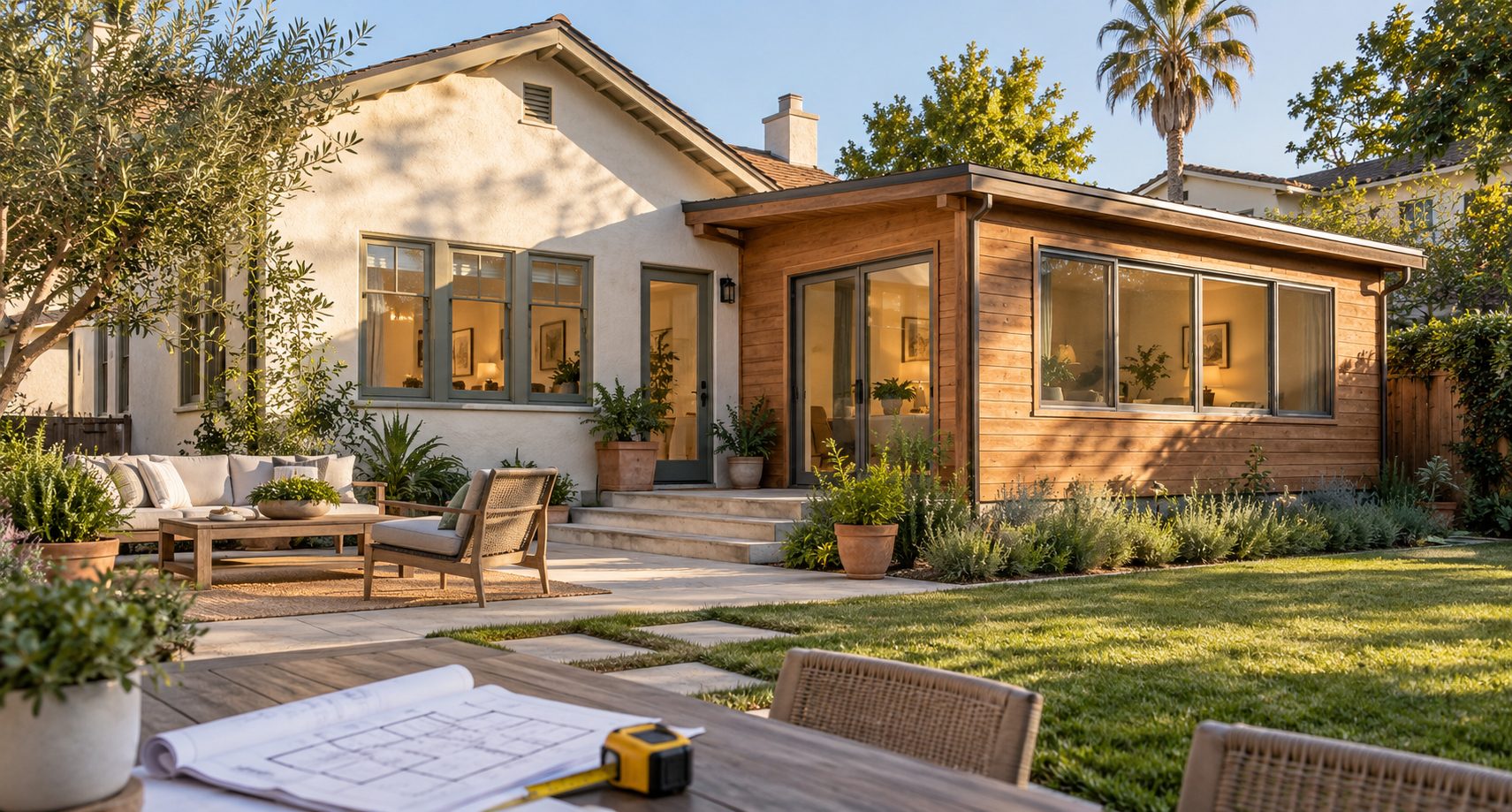
Unpermitted additions can change how you evaluate a Los Angeles home, even when the extra space looks beautifully finished. Before paying for a converted garage, enclosed patio, or added room as though its status is settled, confirm what the records show, how the space can be used, and what your lender and insurer require.
A room can feel like the feature that makes a home perfect. It might offer a quiet office, a place for visitors, or room for an expanding household. The appeal is real. The paperwork and physical condition still need their own review.
Begin with the space you are actually buying
Ask what was built, when the work was done, and which permits and inspections relate to it. Compare available records with the present layout. An old permit for unrelated work does not establish the status of a later addition.
For City of Los Angeles properties, LADBS provides access to building records. Its inspection guidance explains that permitted work needs inspection and acceptance. A permit being issued and a project receiving final approval are distinct stages.
Use the correct jurisdiction for the address. Bel Air, Westwood, Brentwood, and Pacific Palisades properties generally involve Los Angeles city departments; Beverly Hills, Santa Monica, and West Hollywood have their own municipal processes. Confirm the governing authority before seeking a determination about the property.
A missing online record should prompt further research, not an immediate conclusion that the work was illegal. Older records and incomplete descriptions may require more investigation.
Keep 4 questions separate
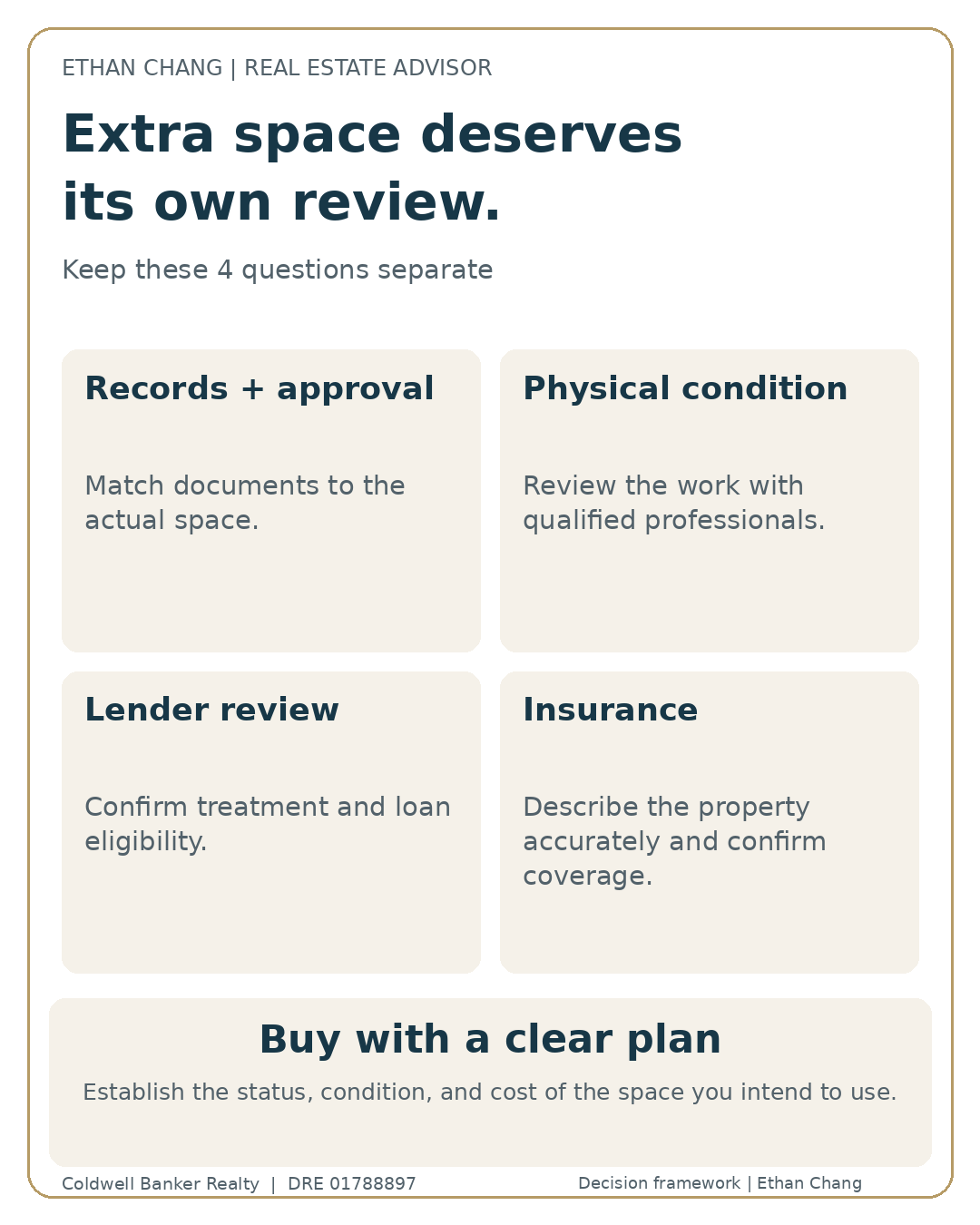
First, what does the building authority recognize and permit? Second, what does an inspection establish about the physical work? Third, how will the lender and appraiser treat it? Fourth, what insurance can be obtained for the property as it exists?
One answer does not settle the others. A contractor’s observation about workmanship is not a city approval. A favorable appraisal does not legalize construction. An insurance quote should accurately reflect the property rather than assumptions about its layout.
Fannie Mae’s appraisal guidance requires an appraiser who identifies an addition without a required permit to discuss its quality, appearance, and effect on value. That instruction does not guarantee loan eligibility, and lender requirements can differ. It also explains why a blanket claim that unpermitted space always has zero value can be too simplistic.
Evaluate the path to resolution before setting a budget
If you intend to keep or change the space, ask qualified professionals and the building authority to assess the available path. It may involve documentation, plans, inspections, physical corrections, or changes to the intended use. Do not assume approval will be available simply because similar work exists nearby.
For investors, a seller’s proposed discount needs to be compared with a credible scope of work, realistic timing, and a contingency allowance. If the space cannot be used as planned, the investment model may need to change entirely.
For sellers, clarify known unpermitted additions and assemble available information before buyers discover discrepancies during escrow. Address the issue with appropriate disclosures and professional advice rather than describing the space more confidently than the records support.
Compare the complete ownership plan
Buyers should compare the documented opportunity with other available homes. Additional space should improve the purchase after accounting for its status, condition, and cost of resolution.
Someone searching for the best luxury realtor in Pacific Palisades or a top realtor in Bel Air should expect help identifying which questions need a building professional, lender, insurer, or attorney. Good representation organizes that review while keeping your ownership goals in focus.
For related transaction context, see my article on luxury real estate negotiation. If you are weighing a home with unpermitted additions, let’s establish what needs to be verified before you commit.
Quick answers
Should I automatically avoid a home with unpermitted additions?
Not automatically. Evaluate the work, intended use, potential resolution, financing, insurance, and total exposure before deciding whether the property fits your goals.
Does an issued permit prove the work was completed and approved?
No. Check the relevant inspection and final approval records with the governing building authority.
Will unpermitted space always have zero appraised value?
No universal rule applies. The appraiser considers its effect on value under the applicable standards, while the lender separately evaluates eligibility.
Sources:
LADBS and Fannie Mae resources linked above
