

 Facebook
 X
 Pinterest
 Copy Link
Measure ULA and Westside Real Estate City Boundaries Matter
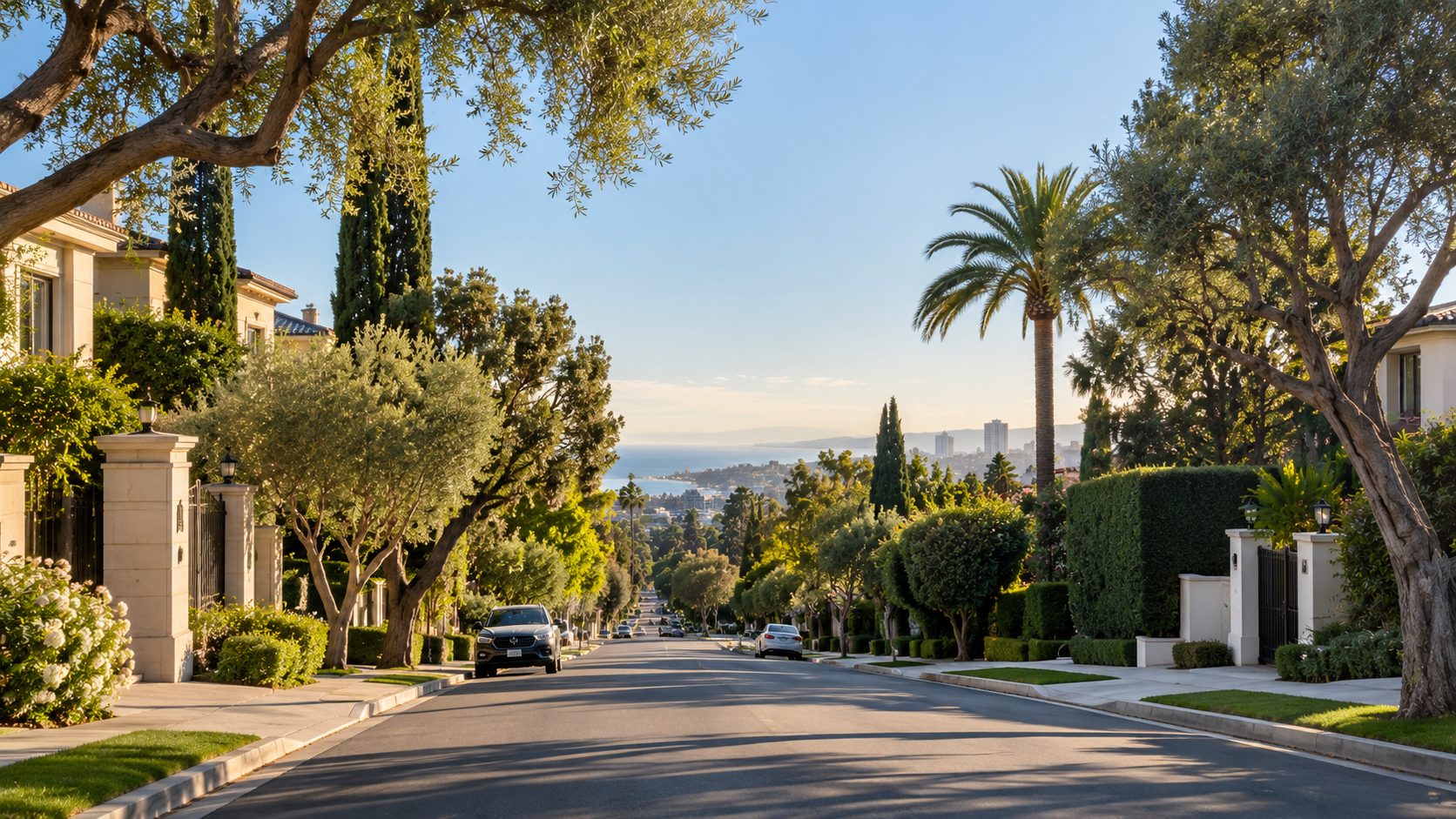
A Few Blocks Can Change the Financial Picture
Los Angeles real estate is full of invisible boundaries.
A property in West Hollywood may sit only a few blocks from a home in the City of Los Angeles. To most people, they belong to the same general neighborhood. From a tax and regulatory perspective, they may be very different.
That distinction has become increasingly important as higher borrowing costs, slower sales, and Measure ULA influence real estate decisions throughout the region.
Location has always shaped value. Today, the municipal boundary itself can also shape the financial outcome.
Where Measure ULA Applies
Measure ULA applies to qualifying real property transfers within the City of Los Angeles. For transactions closing after June 30, 2026, the adjusted thresholds are more than $5.4 million and more than $10.9 million. The corresponding rates are 4% and 5.5%.
The tax is based on the location and value of the property, not on whether the property is actually a mansion.
That means qualifying sales in Brentwood, Westwood, Pacific Palisades, and the Los Angeles portions of the Hollywood Hills may be subject to Measure ULA. West Hollywood, Beverly Hills, Santa Monica, Culver City, and Malibu are separate cities and are not subject to the City of Los Angeles tax.
Other transfer taxes and closing costs may still apply. Because municipal lines are not always obvious, jurisdiction should be confirmed for the individual address rather than assumed from the neighborhood name.
Why the Issue Has Returned to the Conversation
A September 22 Los Angeles Times report examined why new apartment development has slowed despite the region’s continuing housing shortage.
According to data cited from Kidder Mathews, the average sale price per apartment unit in Los Angeles County declined from $397,289 in 2022 to $280,591 in 2026, a drop of approximately 29%. Apartment completions during the first half of 2026 fell nearly 9% from the same period last year, while the number of units under construction declined approximately 15%.
Developers pointed to several pressures. Higher financing costs. Rising construction and permitting expenses. Tenant regulations. Development fees. Measure ULA.
No single factor explains the slowdown. Real estate rarely works that way. Yet when a project already has a narrow margin, a substantial transfer tax can influence how investors evaluate the eventual sale and whether a proposed development makes financial sense.
The Tax Map and the Market Map Are Different
Avoiding Measure ULA does not automatically make one property a better investment than another.
The latest Los Angeles County Housing Report showed an Expected Market Time of 234 days in Brentwood, 338 days in Beverly Hills, 408 days in West Hollywood, 163 days in Santa Monica, and 564 days in Pacific Palisades.
These communities are moving at very different speeds. Inventory, price, property type, condition, insurance, architecture, and buyer demand all contribute to those differences.
This is an important distinction. The tax map tells us what transaction costs may apply. The market map tells us how buyers are responding to a particular type of property in a particular location.
Neither should be evaluated alone.
What This Means for Luxury Sellers
For a home near a Measure ULA threshold, the asking price should be considered alongside the seller’s estimated net proceeds.
A relatively small change in the final sale price can move a transaction into a different tax category and materially change the result. That does not mean every seller should price below a threshold. A lower price can sacrifice more value than the tax it avoids.
It means the calculation should be completed before the home comes to market.
The analysis should include the likely sale price, conventional transfer taxes, Measure ULA when applicable, commissions, credits, loan payoff, preparation expenses, and the cost of additional time on the market. Only then can a seller compare strategies clearly.
The goal is not simply to minimize one expense. It is to achieve the strongest overall result.
What Buyers and Investors Should Consider
For buyers, Measure ULA may influence a seller’s timing, preferred terms, or willingness to negotiate. Understanding that context can help explain why a particular price or closing date matters to the other side.
For investors and developers, the analysis begins much earlier. If the anticipated sale could exceed a future threshold, the transfer tax should be considered when the property is acquired, not only when it is sold. The thresholds are adjusted over time, so a long term project should not rely entirely on today’s figures.
Municipal differences extend beyond Measure ULA. Two similar properties on opposite sides of a city boundary may face different rent rules, permitting processes, development fees, inspection requirements, and transfer taxes. Those differences can affect renovation plans, land value, and the feasibility of a future sale.
Local Knowledge Includes Understanding the Boundary
People often speak about the Westside as one market.
In reality, it is a collection of cities, neighborhoods, and small property markets, each operating within its own set of financial and regulatory conditions.
That complexity is one of the reasons address level analysis matters. A property may benefit from being outside the City of Los Angeles, yet face weaker demand. Another may fall within Measure ULA but offer a superior location, architecture, or long term opportunity that outweighs the additional transaction cost.
The boundary is important, but it is never the complete story.
Before comparing 2 opportunities, it is worth asking 3 separate questions. What jurisdiction governs the property? What will it cost to enter, own, and eventually sell? How strong is the underlying real estate?
When those questions are considered together, the decision becomes clearer.
In Los Angeles, a few blocks can change the rules. Understanding those differences is part of understanding the opportunity.
Sources
• City of Los Angeles Office of Finance Measure ULA FAQ
• Los Angeles Times Why LA Developers Are Not Building More Apartments September 22 2026
• Reports on Housing Los Angeles County Housing Report
Los Angeles Housing Market Deep Dive: West Hollywood, Beverly Hills, Westwood, Brentwood, Santa Monica, and Pacific Palisades

Deep Dive: What Is Really Affecting the LA Westside Housing Market in 2026
The Los Angeles housing market in 2026 is no longer being driven by momentum. It is being driven by precision, pricing discipline, insurance risk, development policy, and neighborhood specific demand. For buyers, sellers, and investors focused on West Hollywood, Beverly Hills, Westwood, Brentwood, Santa Monica, and Pacific Palisades, the market is not weak across the board. It is selective.
Mortgage rates remain one of the biggest forces shaping buyer behavior. As of May 2026, 30 year mortgage rates are still hovering above 6%, with recent reports showing rates around 6.3% to 6.39%. That keeps monthly payments elevated and forces buyers to become more selective, especially when comparing price per square foot, HOA dues, insurance costs, property taxes, and renovation expenses.
The strongest Westside buyers are not disappearing. They are simply more disciplined. Well priced homes in prime locations can still attract serious attention, while overpriced listings are sitting longer, reducing, or quietly negotiating behind the scenes.
1. Measure ULA Is Still Reshaping the Luxury Market
One of the most important policies affecting Los Angeles real estate is Measure ULA, often called the mansion tax. In the City of Los Angeles, it applies to higher value property transfers. Effective after June 30, 2026, the adjusted thresholds are $5.4 million and $10.9 million. Sales above $5.4 million but below $10.9 million are subject to a 4% tax, while sales at $10.9 million or higher are subject to a 5.5% tax.
This matters directly for Brentwood, Westwood, Pacific Palisades, and parts of the Los Angeles side of the Westside. It does not apply the same way in independent municipalities such as Beverly Hills, Santa Monica, and West Hollywood.
For sellers, Measure ULA can affect net proceeds, pricing psychology, and timing. For buyers, it can create negotiation leverage, especially when a property is sitting close to a tax threshold. UCLA research found that after Measure ULA, the odds of a Los Angeles property selling above the tax threshold fell significantly, especially for non single family transactions.
2. Insurance Is Now a Major Real Estate Issue
Insurance is no longer a minor escrow item. It is now a core part of the buyer underwriting process, especially in hillside and fire affected areas such as Pacific Palisades, Brentwood hills, Bel Air adjacent areas, and parts of Beverly Hills north of Sunset.
California regulators recently accused State Farm of mishandling claims connected to the 2025 Los Angeles area wildfires, citing delays, underpayments, and administrative obstacles. The broader takeaway is simple: buyers and sellers need to understand insurance availability, premiums, FAIR Plan exposure, and rebuilding coverage before removing contingencies.
For Pacific Palisades specifically, wildfire recovery, rebuilding feasibility, lot value, permit timing, insurance cost, and construction risk are all shaping the market. Vacant land and damaged property sales require deeper due diligence than traditional resale homes.
3. Builder’s Remedy and Housing Element Pressure Are Changing the Development Conversation
Across the Westside, state housing law is pushing cities to approve more housing, even in traditionally low density luxury areas.
Beverly Hills has been dealing with Builder’s Remedy projects, including approved and advancing multifamily projects near Olympic Boulevard and Burton Way. The City of Beverly Hills explains that Builder’s Remedy applies when a city does not have a certified housing element, allowing certain qualifying housing projects to move forward even when local zoning would normally restrict them.
Santa Monica has also been a major Builder’s Remedy battleground. The city maintains a public list of Builder’s Remedy projects and recently approved streamlined housing projects under its 2021 to 2029 Housing Element framework.
West Hollywood is also working through its Housing Element and Zoning Improvement Program for Housing, with the stated goal of addressing housing needs across different income levels.
For homeowners, this means nearby development potential matters more than ever. For investors, it creates opportunities around underutilized lots, older multifamily assets, and properties near transit, commercial corridors, and mixed use zones.
4. Pacific Palisades Is Its Own Market Right Now
Pacific Palisades should not be analyzed like a normal luxury neighborhood in 2026. It is being shaped by wildfire recovery, insurance, construction costs, permitting, land sales, and policy debates around density.
Governor Newsom’s 2025 executive order allowed local governments to restrict SB 9 density in certain fire affected high hazard areas, including neighborhoods impacted by the Palisades Fire. Mayor Karen Bass also moved to block duplex projects in the Palisades rebuilding area. Housing advocates have sued over the restrictions.
For buyers, this means the biggest questions are no longer just view, lot size, and school district. They are also:
Can the property be insured?
What can actually be rebuilt?
How long will permitting take?
Is the lot priced correctly compared with construction cost?
Is there upside, or only risk?
5. Beverly Hills Remains Prestige Driven, But Buyers Are More Analytical
Beverly Hills continues to benefit from global name recognition, limited land, luxury retail, privacy, schools, and lifestyle identity. But even in Beverly Hills, buyers are comparing value more carefully.
The most important distinction remains micro location:
Beverly Hills Flats
North of Sunset
Trousdale Estates
Beverly Hills Post Office
90210 versus 90211 versus 90212
Condos near the Golden Triangle
For sellers, brand power alone is not enough. Presentation, pricing, architecture, lot usability, condition, and privacy still decide whether a listing sells quickly or sits.
6. Santa Monica Is Becoming a Lifestyle and Development Market
Santa Monica remains one of the most desirable coastal markets in Los Angeles because it combines walkability, beach access, restaurants, jobs, schools, and lifestyle. But it is also under pressure from housing mandates and redevelopment activity.
The city’s Builder’s Remedy and streamlined housing pipeline could reshape parts of Santa Monica over time, especially around commercial corridors and transit accessible areas.
For buyers, the key question is whether they want a beach lifestyle, walkability, condo convenience, or long term land value. For investors, Santa Monica remains attractive but requires careful review of rent control, HOA health, insurance, building age, and future development nearby.
7. West Hollywood Is a Condo, Lifestyle, and Investor Market
West Hollywood is heavily influenced by condo inventory, rent stabilization, nightlife, design, walkability, and buyer affordability. It is also a market where price per square foot, HOA dues, reserves, building condition, and rental potential matter enormously.
Well priced condos can still move, but dated units, high HOA buildings, litigation issues, weak reserves, or unrealistic seller pricing can create long days on market. Investors should pay close attention to rent control rules, tenant status, parking, washer and dryer feasibility, and renovation costs.
8. Brentwood and Westwood Are Still Anchored by Schools, Jobs, and Lifestyle
Brentwood remains a strong long term ownership market because of its family lifestyle, proximity to Santa Monica, access to private schools, UCLA, the Getty, and high income professional demand. Westwood benefits from UCLA, medical employment, Wilshire Corridor condos, Century City proximity, and investor demand.
The UCLA Research Park conversion of the former Westside Pavilion into a major research hub is another long term factor supporting Westwood and nearby Westside housing demand. The project involves a 700,000 square foot research complex focused on immunology, immunotherapy, quantum science, and related programs.
Bottom Line
The 2026 Los Angeles housing market is not one market. Beverly Hills, Westwood, Brentwood, Santa Monica, West Hollywood, and Pacific Palisades are each moving under different pressures.
The winning strategy is precision.
Buyers should focus on price per square foot, insurance, location quality, HOA strength, renovation cost, and seller motivation.
Sellers should focus on realistic pricing, presentation, timing, and neighborhood specific positioning.
Investors should focus on policy, zoning, rent control, development potential, insurance risk, and long term liquidity.
