

 Facebook
 X
X
 Pinterest
 Copy Link
Luxury Real Estate Negotiation in Los Angeles: Why Representation Matters More Than Ever in 2026
The Return of Negotiation: Why Representation Matters More Than Ever in Today’s Los Angeles Market

One of the biggest misconceptions about real estate is that success comes down to finding the right property.
Finding the right property is only the beginning.
The real work often starts after an offer is written.
Every purchase involves hundreds of decisions.
Price.
Terms.
Contingencies.
Repairs.
Credits.
Escrow timelines.
Inspection strategy.
Appraisals.
Disclosures.
Risk management.
Many of these decisions never appear on real estate websites, yet they frequently determine whether a transaction succeeds and how favorable the final outcome becomes.
As today’s Los Angeles market becomes more balanced, negotiation has once again become one of the most valuable skills a real estate professional can provide.
Negotiation Is No Longer Just About Price
During highly competitive markets, buyers often believed the only way to win was to offer more money.
Today’s market has become more nuanced.
Price still matters.
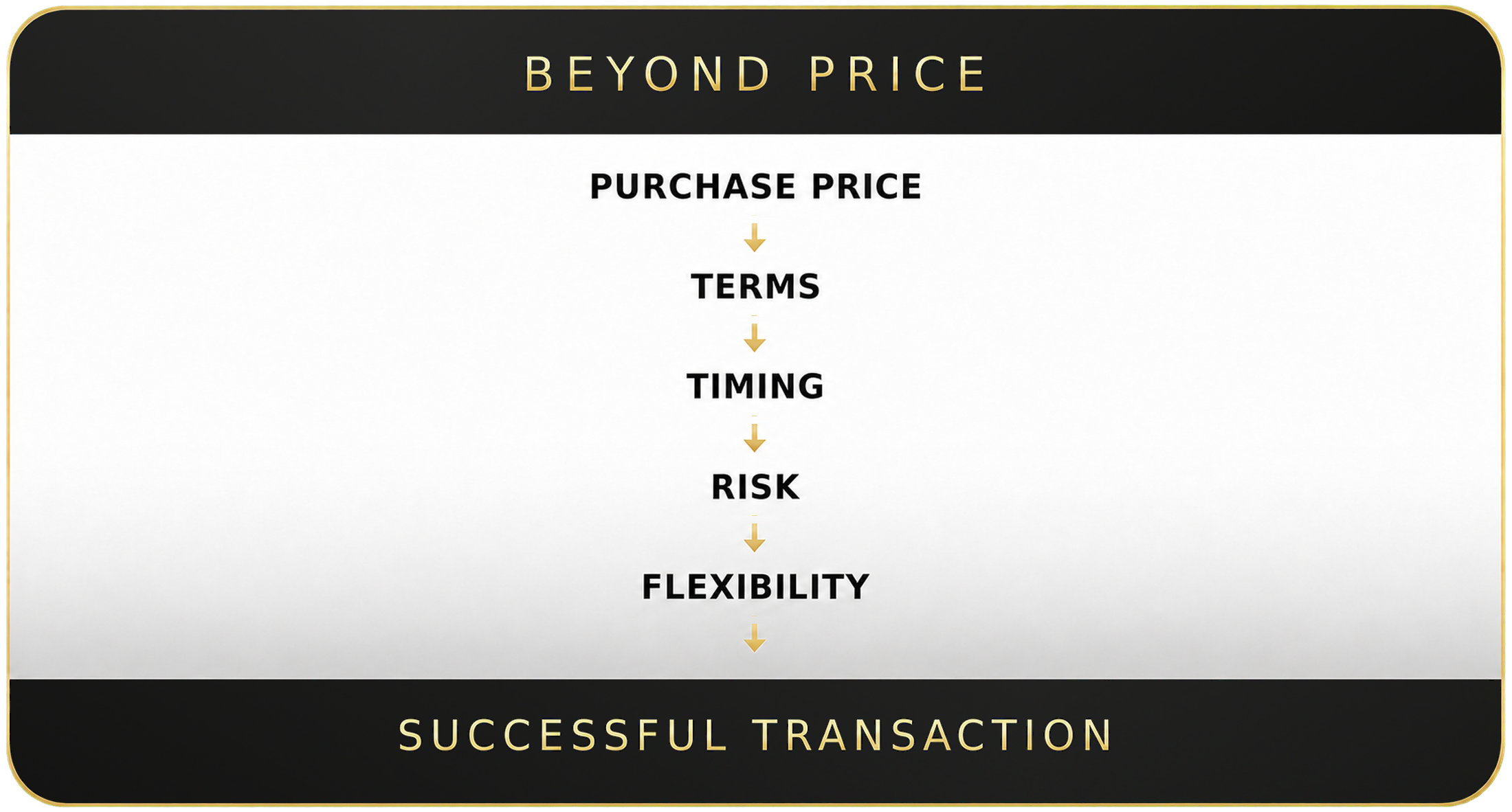
But many successful negotiations involve adjustments that create value for both parties without necessarily changing the purchase price.
Examples include:
• Repair credits
• Escrow timelines
• Lease-back arrangements
• Contingency periods
• Personal property
• Closing cost allocations
• Home warranty coverage
• Inspection scheduling
Often, a thoughtful adjustment in one of these areas creates more value than simply reducing the purchase price.
Every Client Defines Success Differently
One buyer may want the lowest possible purchase price.
Another may prioritize certainty.
Some sellers want maximum proceeds.
Others value privacy or timing.
I’ve found that successful negotiations begin by understanding what each party values most.
Once those priorities become clear, opportunities often emerge that wouldn’t be obvious by focusing exclusively on price.
That is why negotiation is as much about listening as it is about advocating.
Information Creates Leverage
One of the advantages experienced agents bring to a negotiation is context.
Market data.
Comparable sales.
Neighborhood trends.
Inspection findings.
Disclosure analysis.
Contract knowledge.
These pieces of information help clients understand not only what a property is worth, but also how much negotiating flexibility may realistically exist.
Good negotiation is rarely based on emotion.
It is based on preparation.
 Negotiation Continues Throughout Escrow
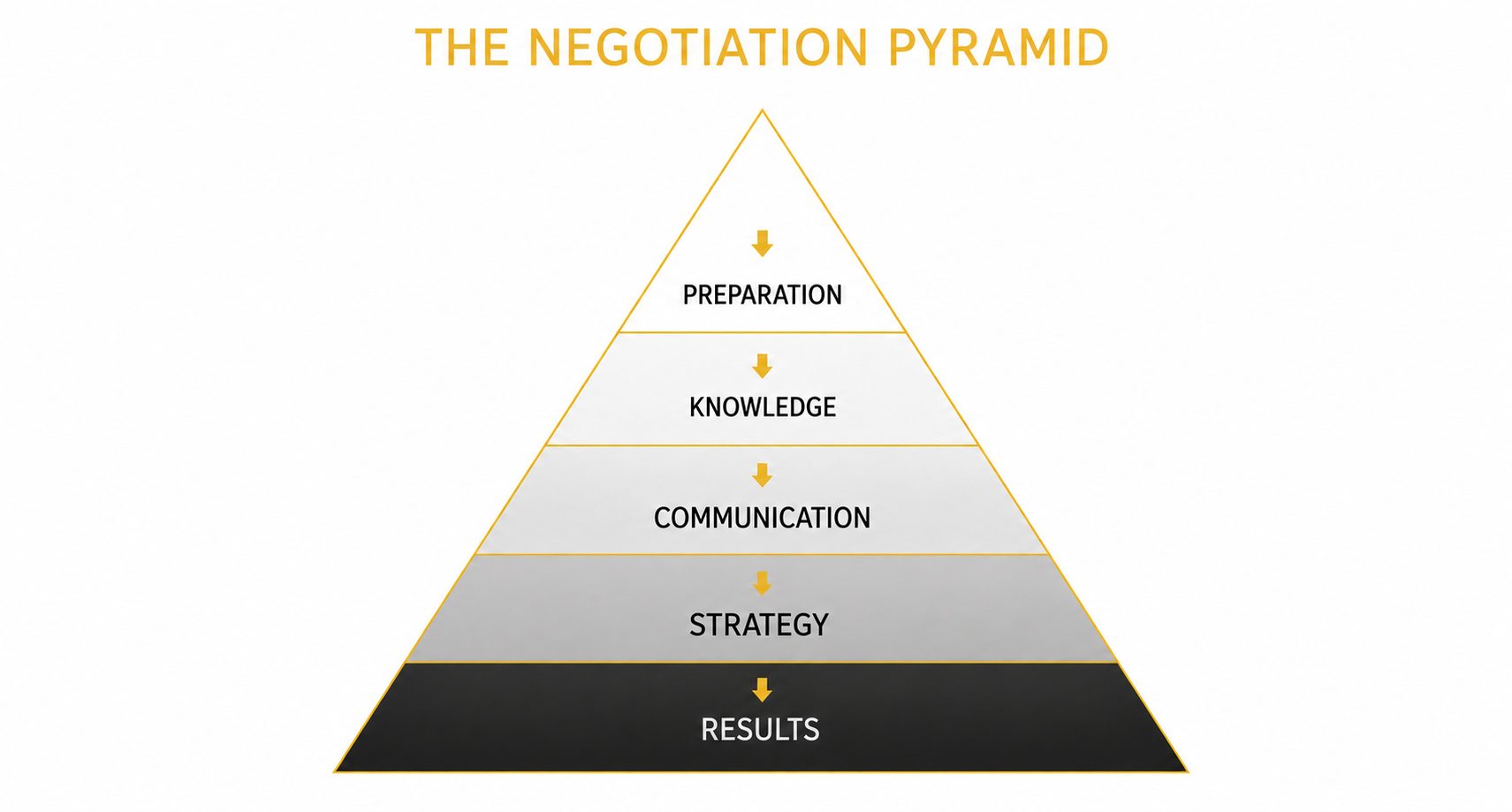 Negotiation Continues Throughout Escrow
Many people think negotiations end once an offer is accepted.
In reality, some of the most important discussions occur afterward.
Inspection findings.
Repair requests.
Credit negotiations.
Appraisal issues.
Title questions.
Financing changes.
Unexpected discoveries.
Each stage requires careful judgment.
Knowing which issues deserve attention and which are unlikely to influence the outcome helps keep transactions moving toward a successful closing.
Communication Often Determines Outcomes
Real estate transactions involve many professionals working toward the same goal.
Buyers.
Sellers.
Agents.
Escrow officers.
Lenders.
Inspectors.
Contractors.
Attorneys.
Appraisers.
Clear communication reduces misunderstandings, builds trust, and helps solve problems before they become obstacles.
Many successful transactions close not because problems never arise, but because everyone remains focused on finding practical solutions.
Experience Helps Identify Risk Before It Becomes Expensive
One of the least visible parts of representation is risk management.
Reviewing disclosures carefully.
Recognizing unusual contract language.
Understanding inspection reports.
Identifying potential permit issues.
Coordinating specialists when necessary.
Helping clients ask better questions.
Many of these efforts receive little attention because, ideally, they prevent problems before they occur.
The best transaction is often the one where potential issues are addressed early rather than becoming expensive surprises later.
Today’s Market Rewards Patience and Strategy
The July 20 Housing Report suggests buyers generally have more time to evaluate opportunities than during the extremely competitive markets of recent years. Rather than reacting immediately, many buyers can compare properties, negotiate thoughtfully, and make decisions with greater confidence.
That doesn’t mean every negotiation becomes easier.
It means every decision becomes more important.
With additional opportunities available, buyers and sellers benefit from careful preparation rather than rushed decisions.
Representation Is About More Than One Transaction
The goal of professional representation isn’t simply to close escrow.
It is to help clients make informed decisions that continue serving them long after the transaction is complete.
Sometimes that means encouraging a client to move forward confidently.
Other times it means recommending patience – or even advising against a purchase—when the risks outweigh the potential benefits.
The most valuable advice isn’t always the advice that leads to an immediate sale.
It’s the advice that helps clients achieve their long-term goals.
Conclusion
Markets change.
Interest rates fluctuate.
Inventory rises and falls.
Negotiation, however, remains one constant.
Every transaction involves decisions that influence financial outcomes, timing, and risk.
Understanding those decisions—and approaching them with preparation, communication, and strategy—can make a meaningful difference.
Whether buying or selling in Beverly Hills, Bel Air, Brentwood, Santa Monica, Pacific Palisades, Malibu, or elsewhere on the Westside, successful outcomes are rarely the result of luck.
More often, they reflect thoughtful planning, informed negotiation, and experienced guidance throughout every stage of the process.
West Hollywood Condo Buying Guide: Look Beyond the Unit
The Lesson Beneath Sunset Boulevard: What Every West Hollywood Condo Buyer and Seller Should Know

When a 36 inch water main ruptured beneath Sunset Boulevard in July, the immediate impact was easy to see. Streets flooded, businesses were disrupted, and one of West Hollywood’s busiest corridors temporarily came to a standstill. The more important story, however, was hidden beneath the surface. The failure wasn’t caused by something homeowners or drivers could see that day. It involved infrastructure that had quietly served the community for decades before finally demanding attention. For anyone buying or selling a condominium in West Hollywood, the event offers an important reminder. Real estate is much the same way. Beautiful interiors, designer finishes, and professional staging create strong first impressions, but the long term value of a condominium often depends on factors that are far less visible. The building itself, the homeowners association, long term maintenance, financial planning, and thoughtful management all influence the ownership experience long after the excitement of closing day has passed.
Looking Beyond the Interior
West Hollywood remains one of Southern California’s most desirable condominium markets because of its walkability, architecture, restaurants, nightlife, and central location. The housing stock is equally diverse. Some condominium communities were built in the 1960s and 1970s, while others are modern developments with contemporary amenities. Neither is automatically better. Older buildings often offer larger floor plans, mature landscaping, established neighborhoods, and architectural character that is difficult to replicate today. Newer buildings may provide updated systems and modern conveniences. Ultimately, age alone says very little about a property’s quality. A better question is this: How well has the building been cared for over time? That answer cannot be determined during a fifteen minute showing. It requires understanding the property beyond the individual residence.
The HOA Is More Than a Monthly Fee
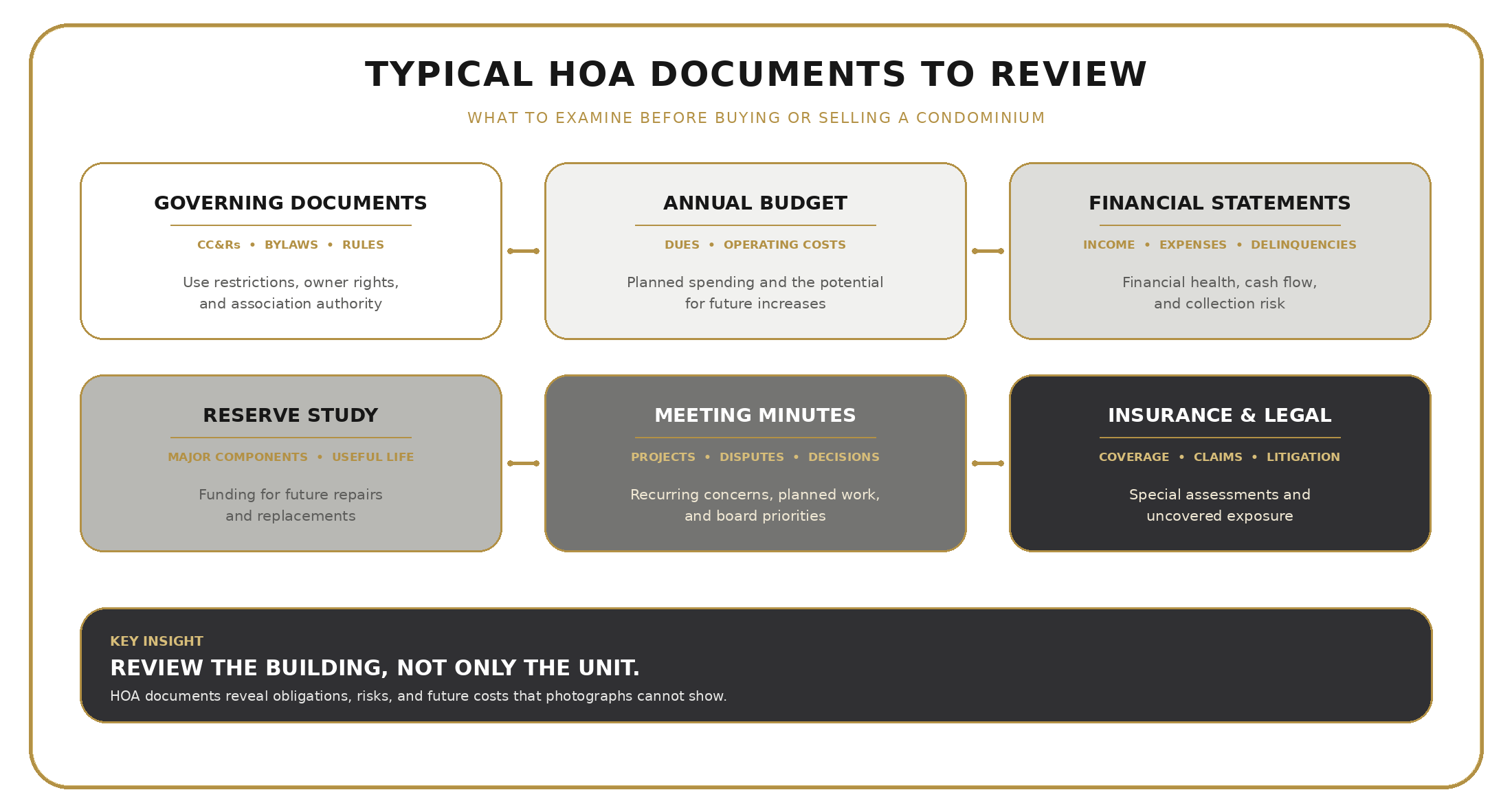
One of the most common misconceptions among condominium buyers is viewing the homeowners association simply as another monthly expense. In reality, the HOA plays a significant role in protecting both the ownership experience and long term property value. A well managed association generally plans ahead rather than reacting to emergencies. It maintains common areas consistently, communicates openly with owners, budgets responsibly for future improvements, and addresses maintenance before small issues become major ones. This is why reviewing HOA documents is an important part of the buying process. During escrow, buyers typically receive a comprehensive package of association documents. While these may seem like routine paperwork, they provide valuable insight into how a community operates. Meeting minutes often reveal ongoing projects or recurring concerns. Financial statements help illustrate the association’s financial position. Reserve studies explain how future capital improvements are being planned and funded. Insurance summaries clarify what responsibilities belong to the association and what remains the owner’s responsibility. No building is perfect, and every community will encounter maintenance over time. The objective is not to eliminate every potential concern. It is to understand whether the association approaches ownership with long term planning, transparency, and responsible stewardship.
Every Building Has Its Own Story
One lesson I’ve learned from working throughout West Hollywood is that no two condominium communities are exactly alike. Two residences may have nearly identical square footage, similar renovations, and comparable asking prices, yet offer very different ownership experiences. One building may have recently completed major improvements. Another may have stronger financial reserves. A third may have lower monthly HOA dues but anticipate larger capital projects over the next several years. Likewise, individual units within the same building often differ in meaningful ways. Floor level, natural light, privacy, orientation, outdoor space, parking, storage, and even proximity to elevators or common amenities can all influence both daily living and future resale value. These distinctions rarely appear in online listing descriptions. They come from understanding the building as a whole rather than viewing each unit in isolation.
A Changing Market Rewards Better Decisions
This broader perspective has become even more valuable as market conditions continue to evolve. According to the July Los Angeles County Housing Report, the expected market time for condominiums and townhomes increased from 154 days to 172 days in just two weeks as inventory expanded and buyers gained more choices. That does not mean West Hollywood has become a weak market. Desirable homes that are properly prepared, accurately priced, and located within well regarded communities continue to attract serious buyers. What has changed is the decision making process. Today’s buyers have more opportunities to compare properties than they did during the exceptionally competitive markets of recent years. Sellers likewise face greater competition and must position their homes more thoughtfully. Success today depends less on urgency and more on preparation.
Why Local Knowledge Matters
Over the past five years, one consistent message has appeared throughout my neighborhood market updates and letters to West Hollywood homeowners. Every market requires a different strategy. During highly competitive markets, buyers often ask how quickly they need to act. Today’s question is different. Which property truly represents the strongest long term opportunity? For sellers, the conversation has evolved as well. Rather than simply bringing a home to market, success increasingly depends on understanding how buyers evaluate competing properties, how the building compares with nearby alternatives, and how to position the home to inspire confidence. These are questions that cannot be answered by automated home valuations or national real estate websites. They require local market knowledge, careful analysis, and an understanding of how West Hollywood’s individual condominium communities have developed over time.
Knowledge Creates Confidence
Buying or selling a condominium involves much more than comparing recent sales or calculating price per square foot. It means understanding how the individual residence fits within the larger community, how the building has been maintained, whether the homeowners association has planned responsibly for the future, and how today’s market conditions influence buyer expectations. These are often the conversations that create the greatest long term value because they help clients make decisions based on the complete picture rather than the most visible features. As buyers become more informed and inventory continues to expand, thoughtful preparation has become one of the strongest competitive advantages available to both buyers and sellers.
Final Thoughts
The Sunset Boulevard water main break reminded West Hollywood that the most important systems often remain unnoticed until something goes wrong. Real estate works much the same way. Beautiful kitchens, elegant staging, and designer finishes will always capture attention, but lasting value is often determined by the quality of the building, the strength of its homeowners association, thoughtful long term planning, and informed decision making. In today’s market, where buyers have more choices and sellers face greater competition than they did only a few years ago, understanding those less visible factors has never been more important. The strongest real estate decisions are rarely based solely on what can be seen during a showing. They come from asking better questions, looking beyond the obvious, and recognizing the details that shape a property’s value for years to come.
Why Some Los Angeles Homes Sell Fast While Others Sit

Why Some Los Angeles Homes Sell Fast While Others Sit
The market for Los Angeles homes has changed significantly over the past year. While many headlines focus on rising inventory and longer market times, they rarely explain why some properties continue attracting strong interest almost immediately while others remain unsold for months.
That difference is rarely caused by luck.
Instead, it usually comes down to preparation, pricing, presentation, and marketing strategy.
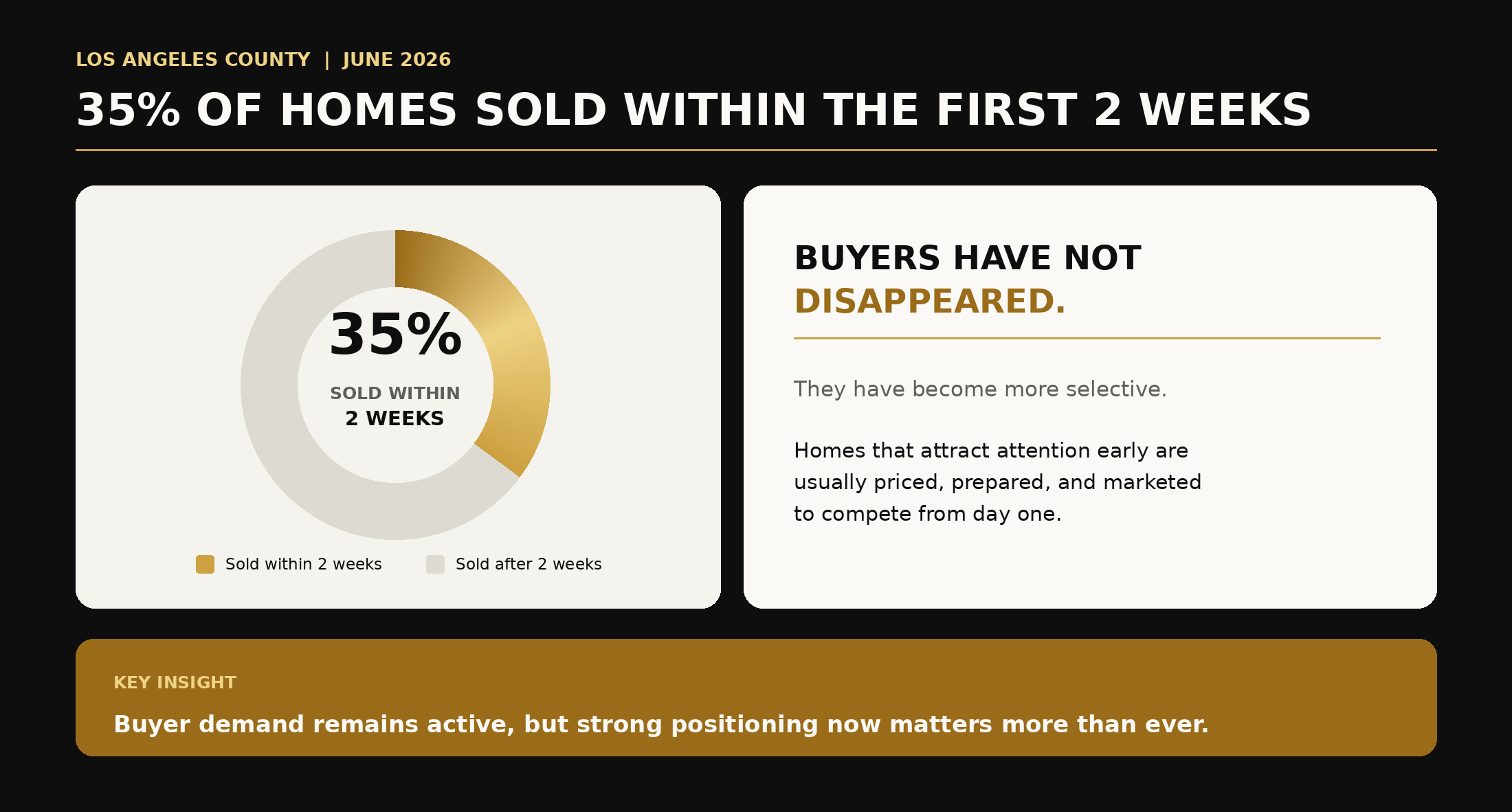
According to the latest Los Angeles County Housing Report, approximately 35% of all homes that closed in June sold within their first two weeks on the market.
That statistic tells us one important thing.
Qualified buyers are still actively purchasing Los Angeles homes.
They have simply become much more selective.
The Market Is More Competitive, Not Broken
Inventory has increased while buyer demand has softened compared with previous years. As a result, buyers have more choices and more negotiating power than they did during the highly competitive market of 2021 and early 2022. Expected market time across Los Angeles County has also increased.
However, averages only tell part of the story.
Exceptional homes continue to attract buyers quickly because they stand apart from competing listings.
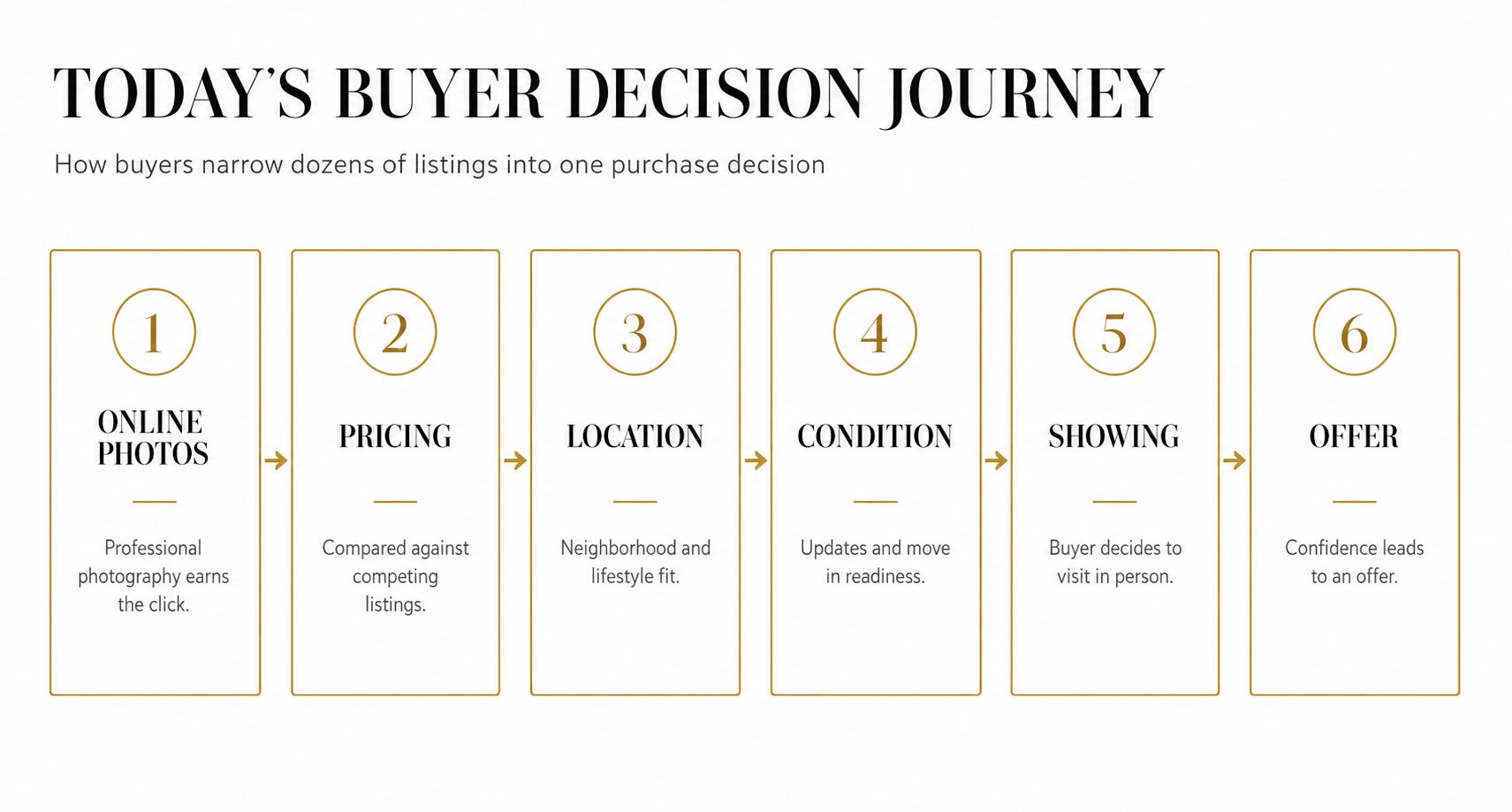
Buyers Decide Online Before Scheduling a Showing
Most buyers form their first impression long before they walk through the front door.
Professional photography, thoughtful staging, accurate pricing, compelling descriptions, and strong visual presentation all influence whether buyers schedule a showing.
Today’s buyers often compare dozens of listings before selecting just a handful to visit.
If a property fails to make an immediate impression online, many buyers simply move on.
Turnkey Homes Continue to Outperform
Many buyers today prefer homes requiring little or no immediate renovation.
Higher borrowing costs and rising construction expenses have increased the value of move-in ready properties.
Updated kitchens.
Modern bathrooms.
Fresh paint.
Quality flooring.
Energy-efficient systems.
These improvements often create stronger buyer confidence and reduce negotiation challenges.
Homes requiring significant repairs can certainly sell, but pricing becomes even more important.
Pricing Creates Opportunity
Price alone rarely determines whether a home sells quickly.
Pricing creates interest.
Presentation creates emotion.
Marketing creates competition.
When those three elements work together, sellers place themselves in the strongest negotiating position.
Conversely, an overpriced listing often loses momentum after its first few weeks on the market.
The First Two Weeks Are Critical
The greatest buyer attention typically occurs immediately after a home is listed.
Serious buyers who have been monitoring the market often schedule showings within days.
That early exposure provides the best opportunity to generate multiple showings and stronger offers.
Once a property remains on the market for several weeks without meaningful activity, buyers often begin wondering whether something is wrong with the home, even when nothing has changed.
Luxury Homes Require Even Greater Precision
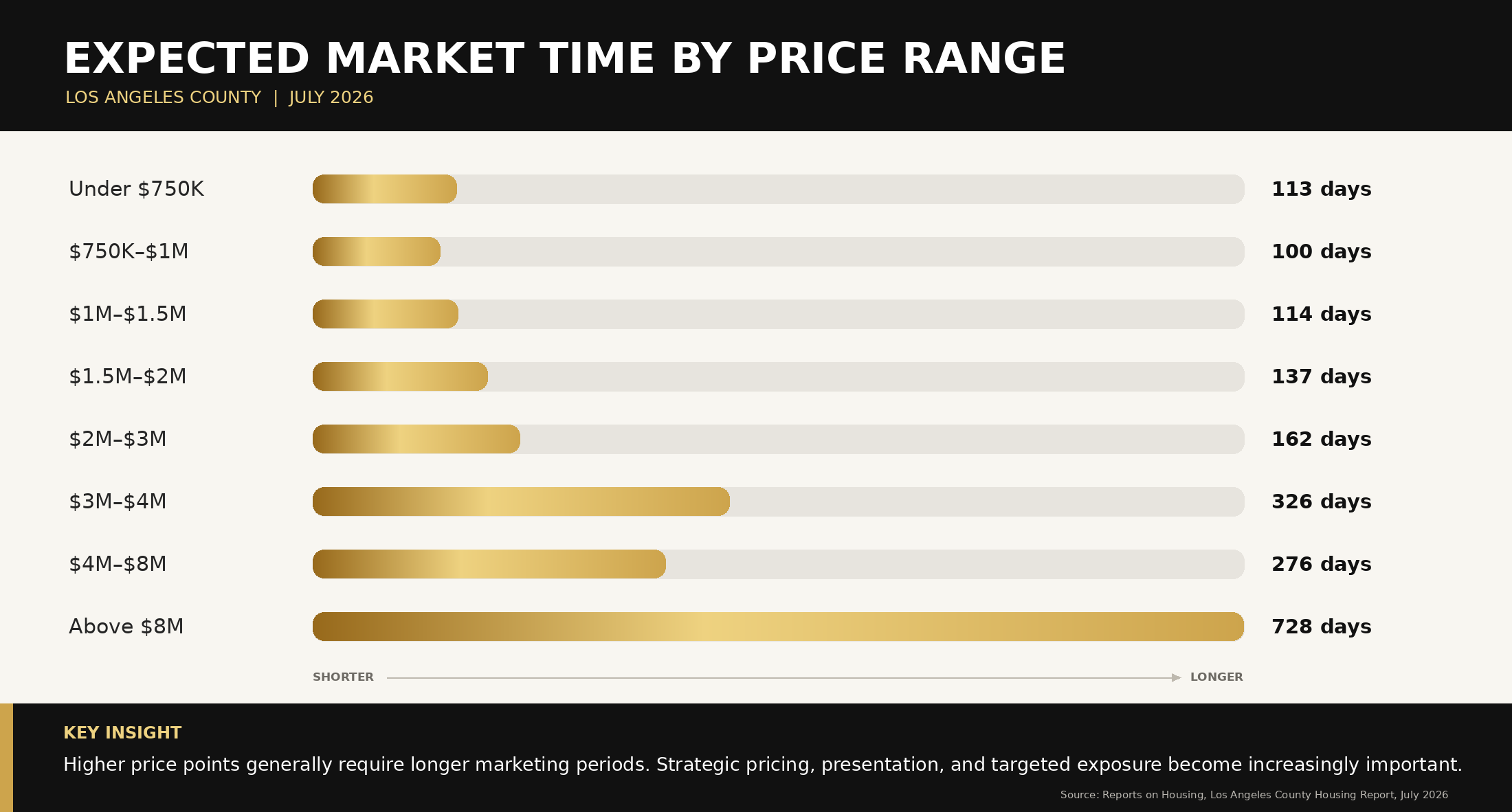
Luxury buyers throughout Beverly Hills, Bel Air, Brentwood, Westwood, Santa Monica, Pacific Palisades, and Malibu have become increasingly selective.
Higher inventory gives affluent buyers more opportunities to compare architecture, design, privacy, views, and overall value.
The July Housing Report shows considerably longer expected market times for higher price ranges, reinforcing the importance of strategic pricing and professional marketing for luxury properties.
Exceptional homes continue attracting buyers.
Average listings face much greater competition.
Marketing Has Become a Competitive Advantage
Today’s marketing extends far beyond the MLS.
Successful listings often include:
- Professional photography
- Cinematic video
- Drone imagery
- Social media campaigns
- Broker networking
- Targeted digital advertising
- International exposure
- Strategic open houses
Marketing should generate demand, not simply announce availability.
Final Thoughts

Today’s market rewards preparation.
The Los Angeles homes that continue selling quickly are rarely accidental successes. They are usually the result of thoughtful pricing, exceptional presentation, and strategic marketing from the very beginning.
Whether you’re preparing to sell a condominium in Westwood, a family home in Brentwood, or a luxury estate in Beverly Hills or Bel Air, careful planning can make a meaningful difference in both timing and outcome.
