

 Facebook
 X
X
 Pinterest
 Copy Link
Luxury Home Buyers: What They Want Today
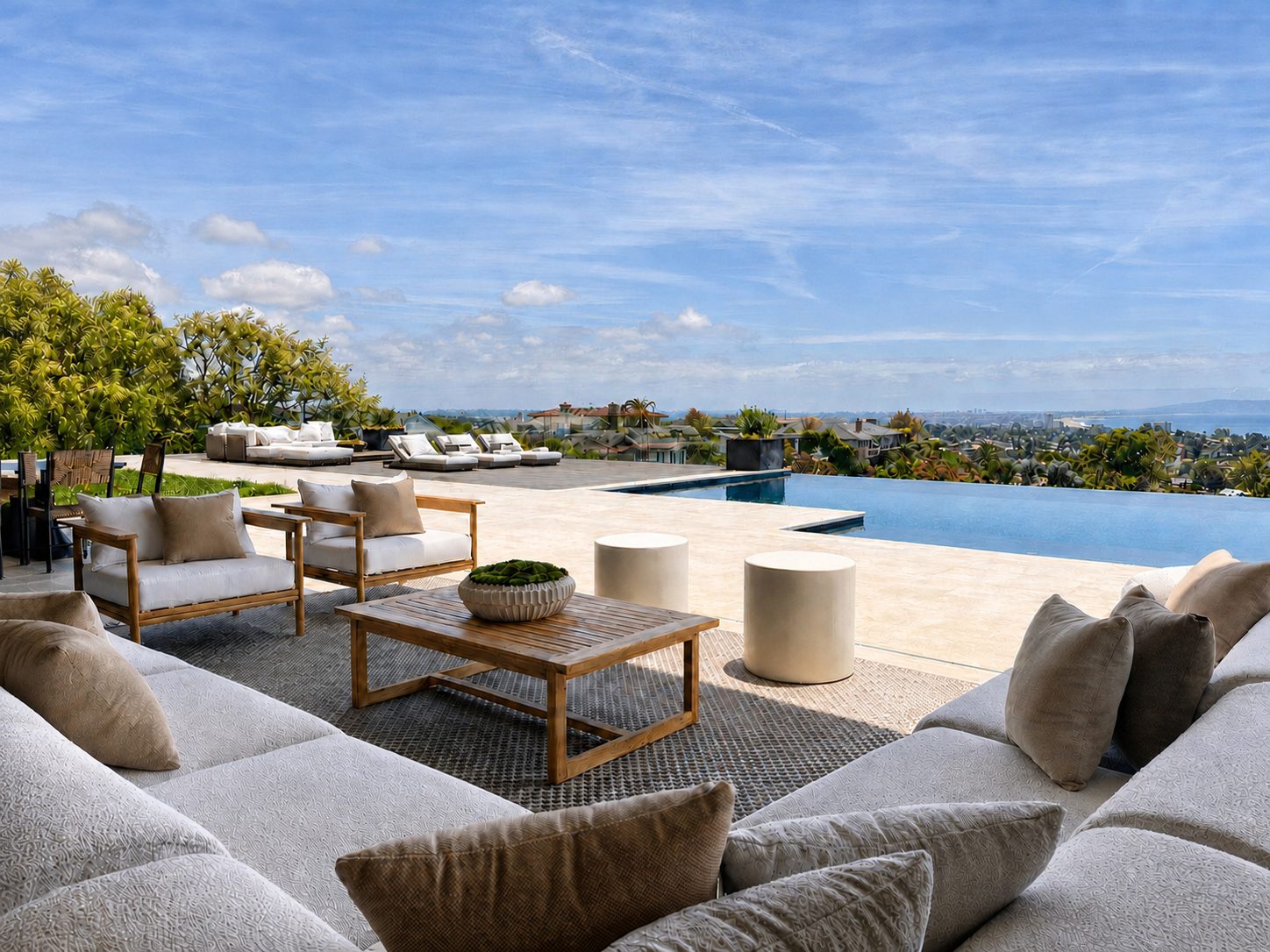
What Today’s Luxury Home Buyers Really Want
Luxury home buyers in Los Angeles are approaching the market differently than they did just a few years ago.
While headlines often focus on mortgage rates, inventory levels, or home prices, those factors tell only part of the story. The more significant shift is happening in buyer behavior.
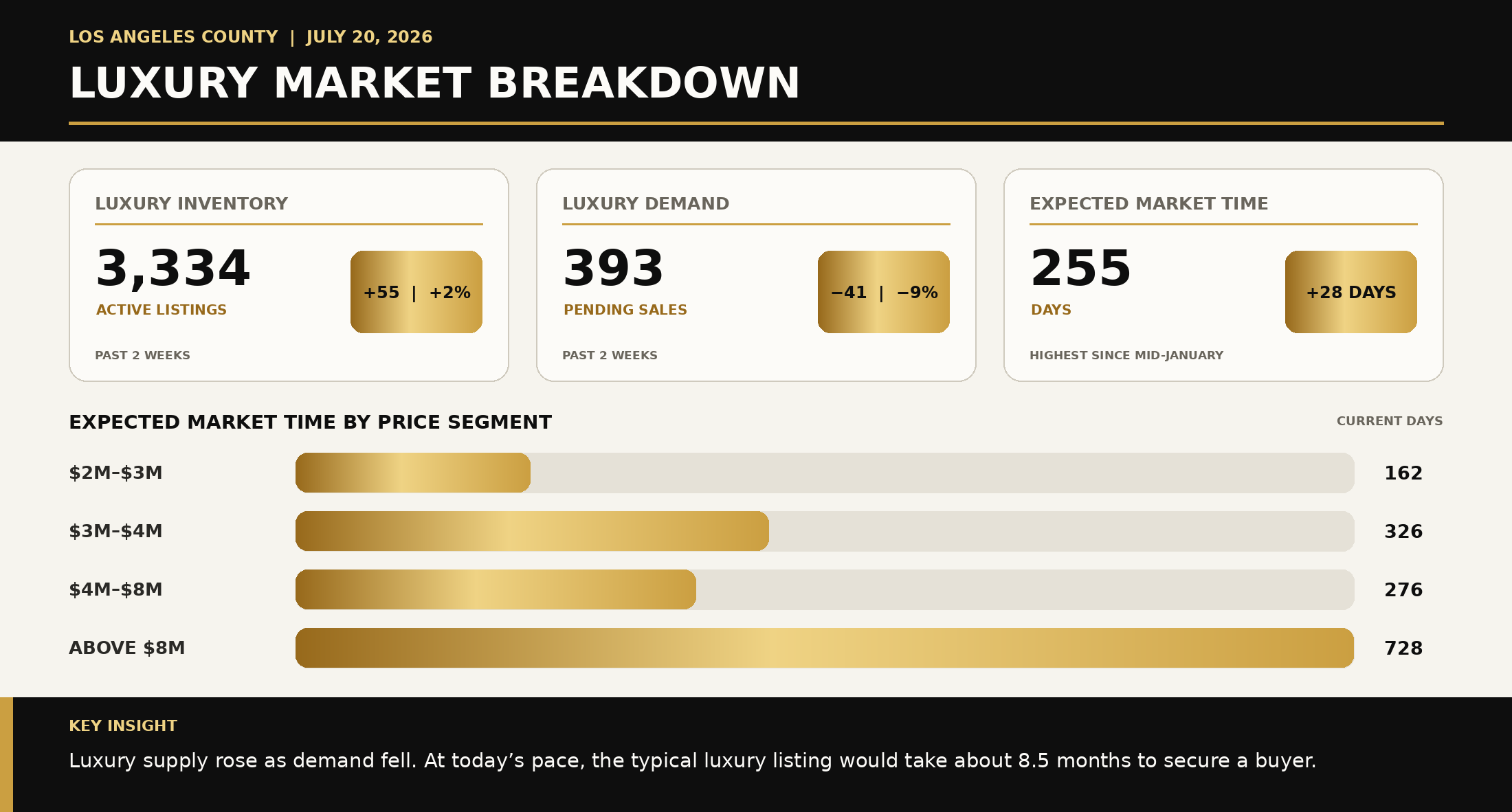
Today’s affluent buyers are taking more time because they have more options. The latest Los Angeles County Housing Report shows that inventory in the luxury market has expanded while demand has moderated, giving buyers greater flexibility to compare properties before making a decision.
For sellers, understanding this change is just as important as understanding market statistics.
Luxury buyers have not become hesitant.
They have become intentional.
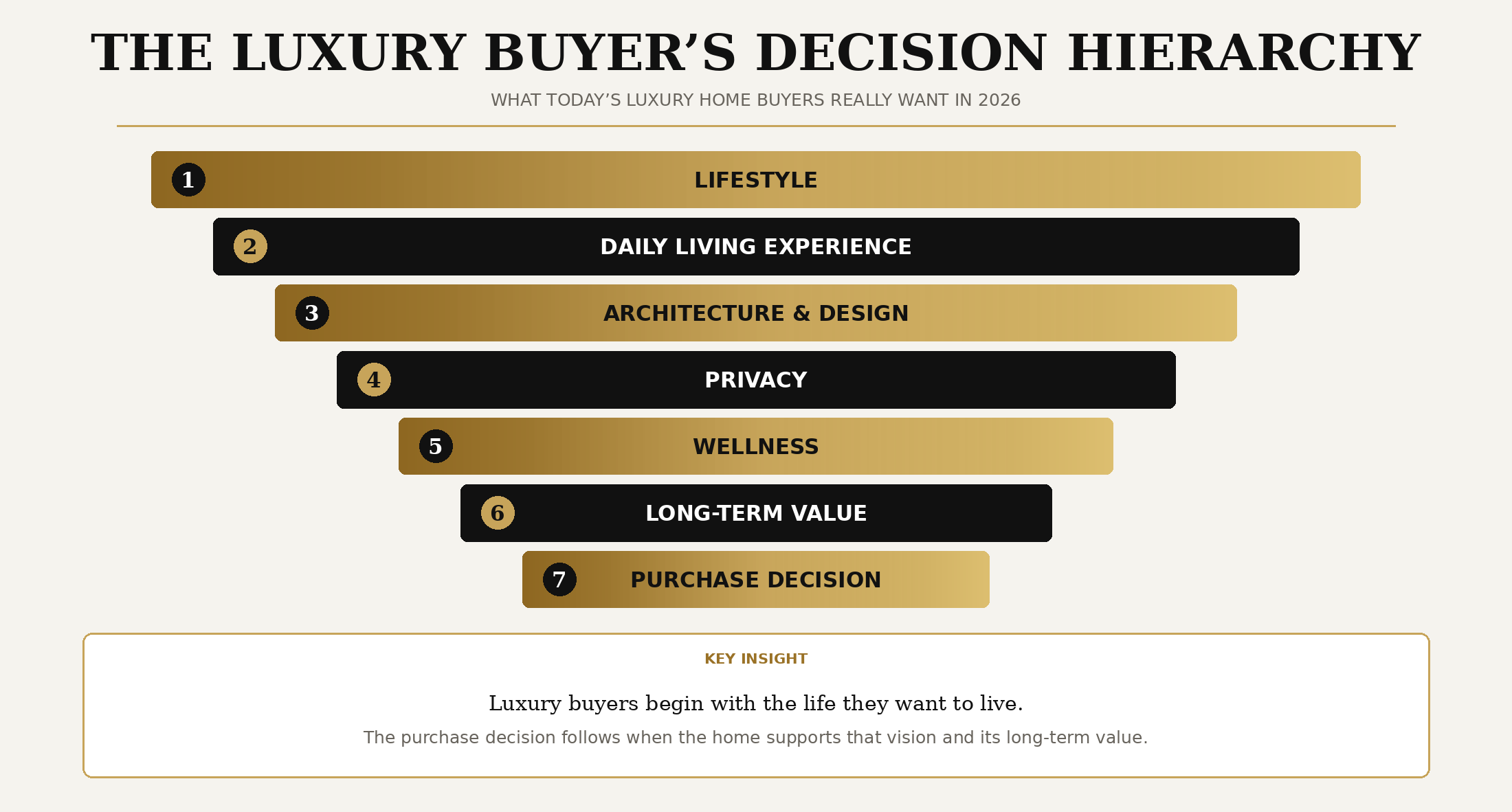
Instead of asking, “Can I afford this home?” they are increasingly asking, “Is this the home that best fits the way I want to live?”
That shift is influencing luxury real estate across Beverly Hills, Bel Air, Brentwood, Westwood, Pacific Palisades, and Malibu.
Luxury Buyers Are Purchasing a Lifestyle, Not Just a Home
One of the biggest misconceptions about luxury real estate is that affluent buyers simply purchase larger homes with more amenities.
In reality, many are making lifestyle decisions rather than real estate decisions.
Before looking at bedroom counts or lot sizes, they often evaluate questions such as:
- Will this home improve my daily life?
- Does this property reflect my personal style?
- Can I entertain family and friends comfortably?
- Will I still enjoy living here ten years from now?
- Does the neighborhood support the lifestyle I want?
Those questions are emotional rather than financial.
That is one reason two homes with similar square footage and similar asking prices can generate dramatically different levels of buyer interest.
Luxury buyers are often purchasing a vision of how they want to live rather than simply acquiring another property.
Choice Has Changed Buyer Behavior
Several years ago, luxury buyers frequently faced intense competition with limited inventory.
Today, many buyers have the opportunity to compare multiple exceptional properties before making an offer. According to the July Housing Report, increased inventory and longer expected marketing times have created a more balanced environment in many luxury price segments.
That additional choice has changed buyer psychology.
Rather than rushing to secure the first attractive home they see, affluent buyers are spending more time comparing architecture, location, privacy, views, floor plans, and long-term livability.
They understand that purchasing a luxury home is rarely a short-term decision.
Many intend to own these properties for years, sometimes decades.
Taking additional time before making a purchase is often a reflection of thoughtful decision-making rather than uncertainty.
Architecture Has Become a Competitive Advantage
Architecture has always mattered.
Today, it often determines whether a luxury home captures immediate attention.
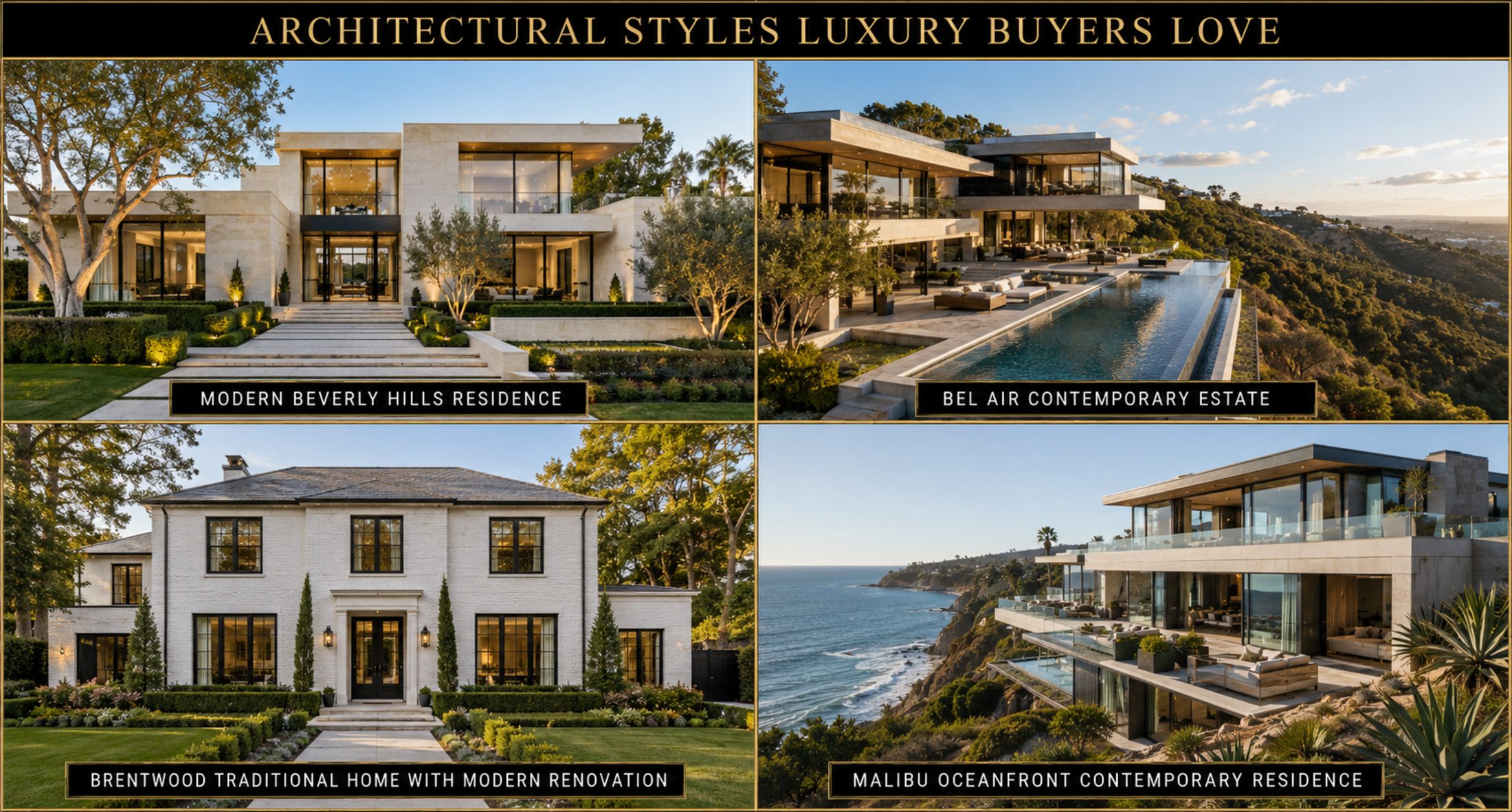
Across Beverly Hills and Bel Air, contemporary homes with clean lines, natural materials, expansive glass, and seamless indoor-outdoor living continue to attract significant interest.
In Brentwood and Westwood, buyers frequently appreciate timeless architecture that blends modern functionality with established neighborhood character.
Pacific Palisades continues to appeal to buyers seeking coastal elegance, generous outdoor living spaces, and family-oriented communities.
Malibu remains one of Southern California’s most distinctive luxury markets, where architecture often serves as a frame for ocean views rather than competing with them.
While design preferences naturally vary, one common theme has emerged.
Luxury buyers increasingly favor homes that feel authentic and enduring rather than built around short-lived design trends.
The homes that create an immediate emotional connection are often the ones buyers remember long after they have toured dozens of competing properties.
Turnkey Has Become the New Luxury
A decade ago, many luxury buyers expected to renovate after purchasing a home.
Today, that mindset has changed.
While some buyers still enjoy creating a custom residence, many high net worth individuals place a greater value on convenience than construction. Time has become one of the most valuable commodities in luxury real estate.
Business owners, physicians, attorneys, executives, and international buyers often have demanding schedules. The prospect of managing architects, permits, contractors, and supply chain delays for the next 18 months is simply less appealing than moving into a home that is ready to enjoy from day one.
The July Housing Report reinforces this trend. Even in today’s slower market, homes that are priced appropriately and presented in excellent, move in ready condition continue to attract buyers quickly. Approximately 35% of all homes that closed in June sold within their first two weeks, demonstrating that buyers are still willing to act decisively when a property offers exceptional value and presentation.
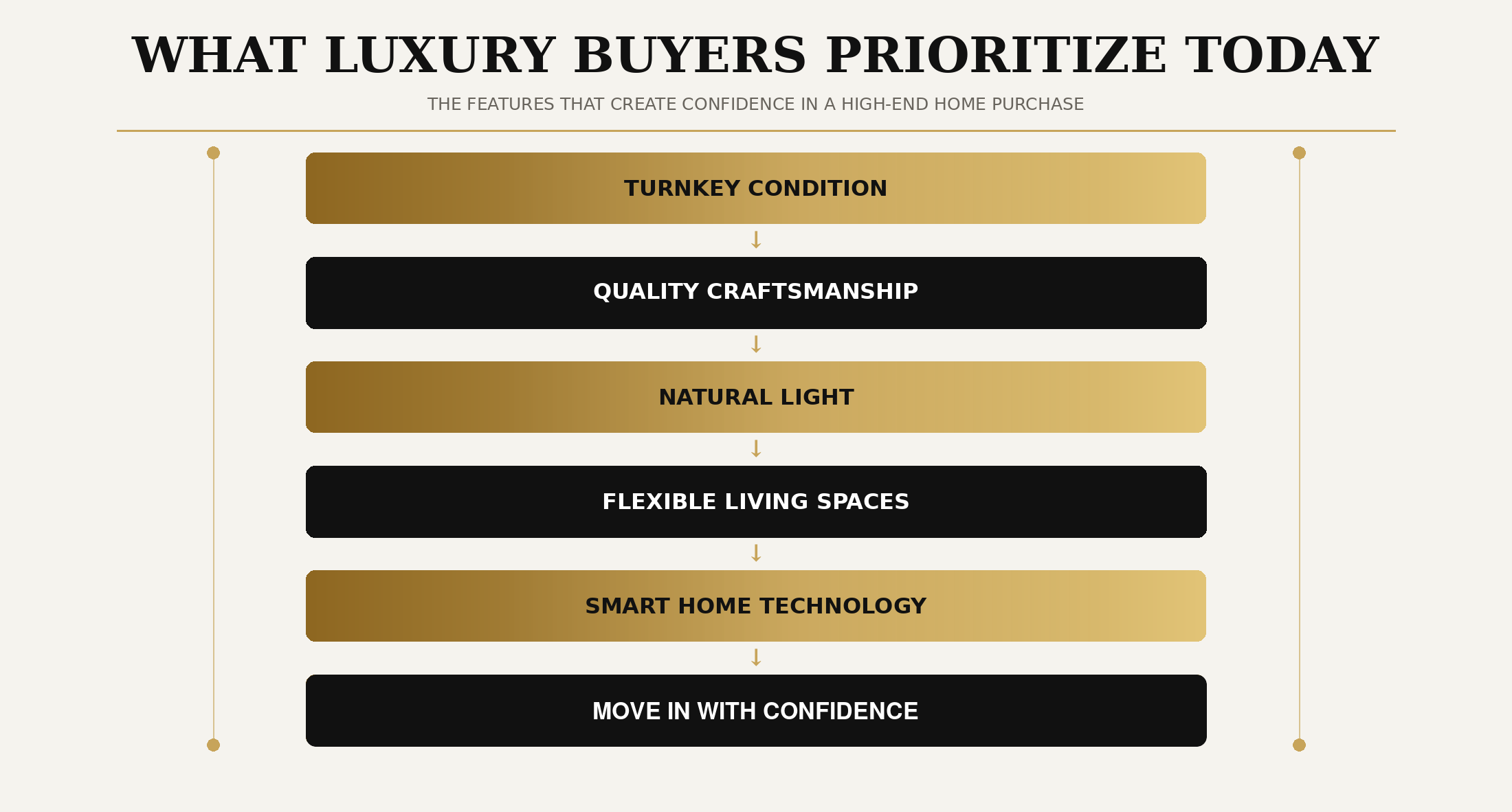
Turnkey no longer means simply “updated.”
It means every detail has already been thoughtfully considered.
Professional landscaping.
Quality craftsmanship.
Timeless finishes.
Smart home technology.
Well-designed outdoor spaces.
Luxury buyers increasingly want to spend their weekends enjoying their homes rather than managing renovation projects.
Privacy Has Become One of Luxury’s Most Valuable Amenities
Ask ten luxury buyers what defines an exceptional property, and you’ll receive ten different answers.
Yet one feature appears repeatedly across nearly every conversation:
Privacy.
Luxury today is increasingly measured by what cannot be seen.
A gated entrance.
Mature landscaping.
A long private driveway.
Thoughtful architecture that shields living spaces from neighboring properties.
Quiet outdoor entertaining areas.
In Bel Air, privacy has always been one of the neighborhood’s defining characteristics. Larger lots, winding streets, and hillside settings naturally create separation from surrounding homes.
Malibu buyers often pursue privacy for a different reason. They are looking for a peaceful retreat where the ocean, rather than surrounding development, becomes the dominant experience.
Even in Beverly Hills Flats, where walkability is one of the neighborhood’s greatest strengths, thoughtful landscaping, architectural design, and carefully positioned outdoor spaces remain highly valued.
Privacy has evolved from a desirable feature into a core component of luxury living.
Wellness Has Become Part of Home Design
Luxury homes are no longer designed solely for entertaining.
Increasingly, they are designed to support healthier daily living.
The pandemic permanently changed how many people think about their homes. Rather than simply serving as places to return to at the end of the day, homes have become spaces for work, exercise, relaxation, and personal well-being.
As a result, today’s luxury buyers are paying closer attention to features that contribute to both physical and mental wellness.
Among the amenities generating increased interest are:
- Spa-inspired bathrooms
- Infrared saunas
- Cold plunge pools
- Home fitness studios
- Meditation or yoga spaces
- Advanced air purification systems
- Abundant natural light
- Seamless indoor-outdoor living
- Outdoor kitchens and gathering spaces
These features are not simply luxurious.
They improve the way people live every day.
Wellness has become part of the home’s long-term value proposition.
Walkability Means Something Different in Every Neighborhood
Luxury buyers are redefining what location means.
For decades, prestige alone drove many purchasing decisions.
Today, lifestyle often carries equal weight.
In Beverly Hills, buyers appreciate the ability to walk to fine dining, luxury shopping along Rodeo Drive, renowned hotels, and cultural destinations.
In Brentwood, San Vicente Boulevard continues to attract buyers who enjoy neighborhood cafés, farmers markets, boutiques, and tree-lined streets.
Westwood appeals to professionals, physicians, and academics seeking proximity to UCLA, Century City, and some of Los Angeles’ most established residential neighborhoods.
For buyers considering Pacific Palisades, lifestyle is defined differently. Ocean breezes, hiking trails, village charm, and a strong sense of community create an environment that feels both sophisticated and relaxed.
Meanwhile, Malibu offers a lifestyle unlike any other in Southern California. Walkability is less about shopping districts and more about direct access to the beach, scenic coastal drives, and an everyday connection with nature.
Luxury buyers no longer ask only, “How impressive is this home?”
They also ask, “How enjoyable will everyday life be here?”
That subtle shift continues to influence purchasing decisions across every luxury neighborhood in Los Angeles.
Off Market Opportunities Continue to Offer a Competitive Advantage
One of the most misunderstood aspects of luxury real estate is the role of off market opportunities.
Many people assume the best homes are always listed publicly on the MLS.
In reality, some of the most desirable luxury properties are sold quietly through professional networks before they ever appear online.
Privacy is often the driving factor.
Some homeowners simply prefer to avoid public showings, extensive photography, or widespread marketing. Others want to test buyer interest discreetly before committing to a full public launch.
For buyers, off market opportunities offer something equally valuable.
Less competition.
Instead of competing against every qualified buyer monitoring the MLS, off market transactions often allow both parties to negotiate more thoughtfully and privately.
That is one reason relationships remain so important in luxury real estate.
Access to opportunities can be just as valuable as understanding market statistics.
Choice Has Raised Expectations
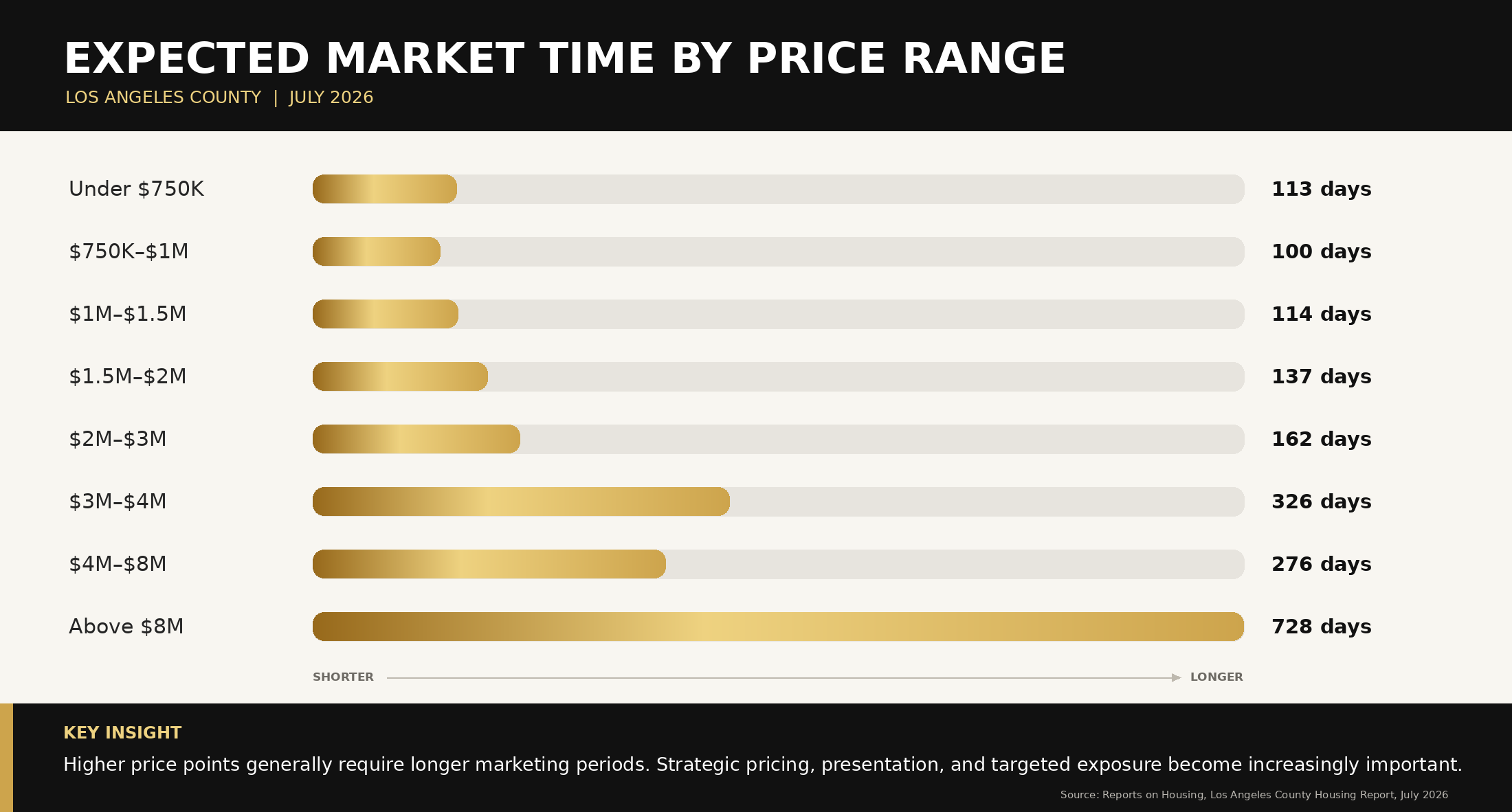
The July Housing Report notes that luxury inventory above $2 million increased while pending sales declined, extending the expected market time for luxury homes to approximately 255 days. Some price ranges, particularly between $3 million and $4 million, now require substantially longer marketing periods than they did only weeks earlier.
Those numbers tell an important story.
They do not necessarily indicate that affluent buyers have left the market.
Instead, they suggest that buyers have become more selective.
When inventory was limited a few years ago, buyers often felt pressure to compromise quickly.
Today’s environment allows them to compare multiple exceptional properties before making a decision.
That additional choice has fundamentally changed luxury buying behavior.
Rather than asking,
“Is this home available?”
Many buyers now ask,
“Is this the best home available?”
That subtle difference has become one of the defining characteristics of today’s luxury market.
Advice for Luxury Sellers
Understanding today’s luxury buyer is no longer optional.
It is one of the most important advantages a seller can have.
Luxury homes that consistently attract the strongest interest tend to share several characteristics:
- Distinctive architecture with timeless appeal
- Exceptional presentation and move in ready condition
- Privacy that enhances everyday living
- Natural light and thoughtfully designed indoor outdoor spaces
- Wellness oriented amenities that support modern lifestyles
- Locations that complement the buyer’s daily routines
These qualities create emotional connections that are difficult for competing properties to replicate.
In today’s market, buyers are not simply evaluating homes.
They are evaluating how each property fits into the life they want to build.
Final Thoughts
Luxury real estate has always been about more than square footage or price.
Today’s market simply makes that reality more visible.
Affluent buyers have more opportunities to compare homes, neighborhoods, architectural styles, and lifestyles than they have enjoyed in years. The July Housing Report reflects this shift through increased luxury inventory, softer demand, and longer marketing times, but those statistics only tell part of the story.
The more important story is how buyer priorities have evolved.
Today’s luxury buyers value thoughtful design over excess.
They value privacy over prominence.
They value wellness over extravagance.
They value lifestyle over status.
Whether searching in Beverly Hills, Bel Air, Brentwood, Westwood, Pacific Palisades, or Malibu, buyers are no longer looking for the biggest home.
They are looking for the right home.
For sellers, that means success depends on understanding not only the market but also the people driving it.
The homes that resonate emotionally and support the way today’s buyers want to live will continue to stand apart, regardless of broader market conditions.
Home Pricing Strategy: Sell Smarter in Today’s Los Angeles Market
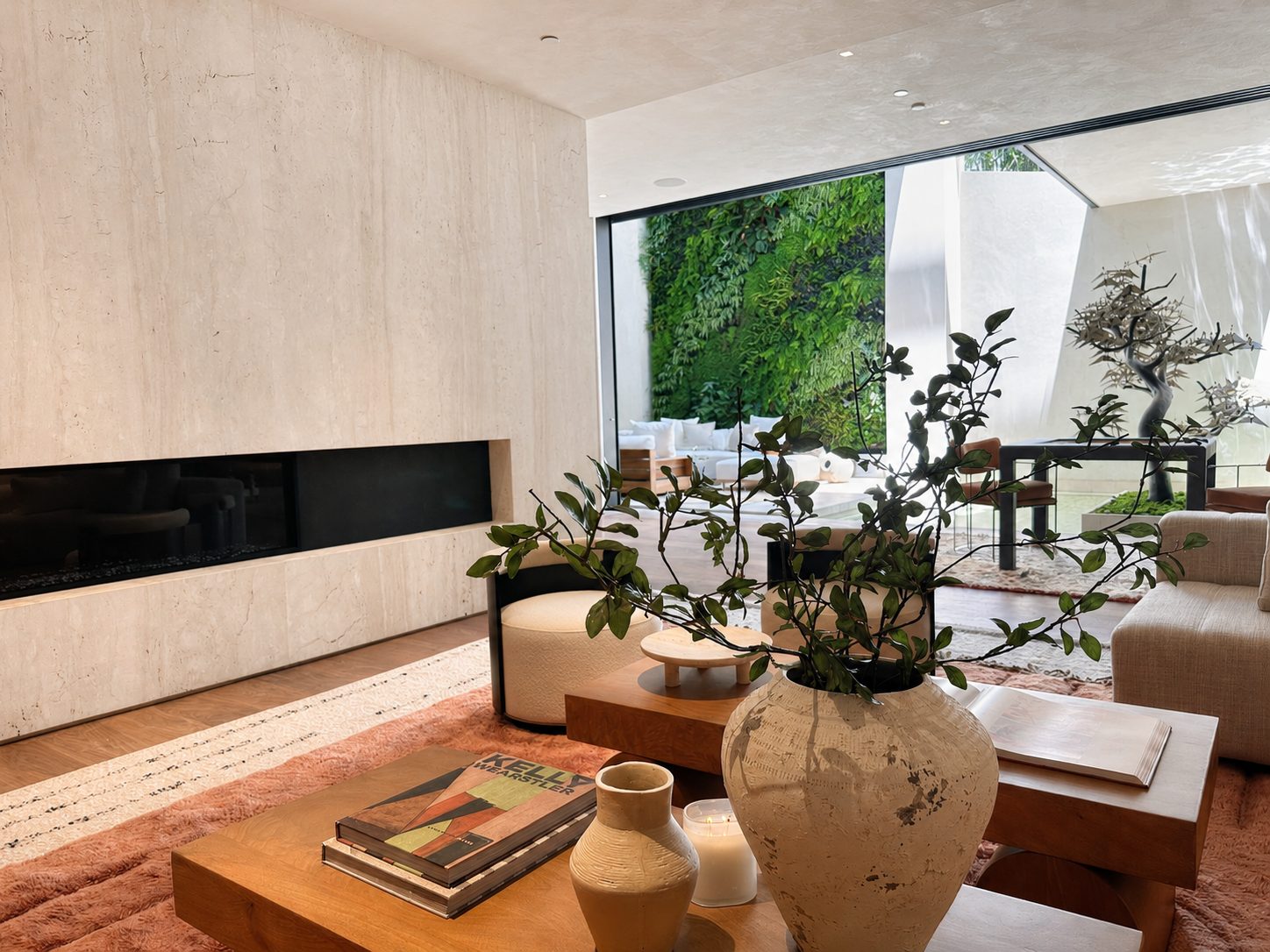
Home Pricing Strategy: Why Pricing Is More Important Than Ever in 2026
Pricing a home has never been about choosing the highest number a seller hopes to achieve.
Today’s home pricing strategy is about positioning a property so buyers recognize its value immediately.
That distinction has become increasingly important across Los Angeles as inventory has grown and buyers have more homes to compare before making an offer.
Instead of asking, “How high can we price it?” today’s sellers should ask, “Where will buyers see the greatest value?”
That question often produces a better outcome.
Pricing Is Marketing
Many homeowners think marketing begins after the listing goes live.
In reality, marketing begins with the asking price.
The asking price is usually the very first piece of information buyers evaluate after seeing photographs online.
It immediately answers several questions:
- Is this home realistically priced?
- Should I schedule a showing?
- Is the seller serious?
- Is this property worth comparing with others?
An unrealistic price discourages many qualified buyers before they ever visit the property.
Buyers Compare Everything
Today’s buyers rarely evaluate one home by itself.
Instead, they compare multiple listings that often appear on the same search results page.
If two similar homes offer comparable locations, size, and condition, buyers naturally gravitate toward the one they perceive as providing greater value.
Pricing has therefore become a positioning strategy rather than simply a valuation exercise.
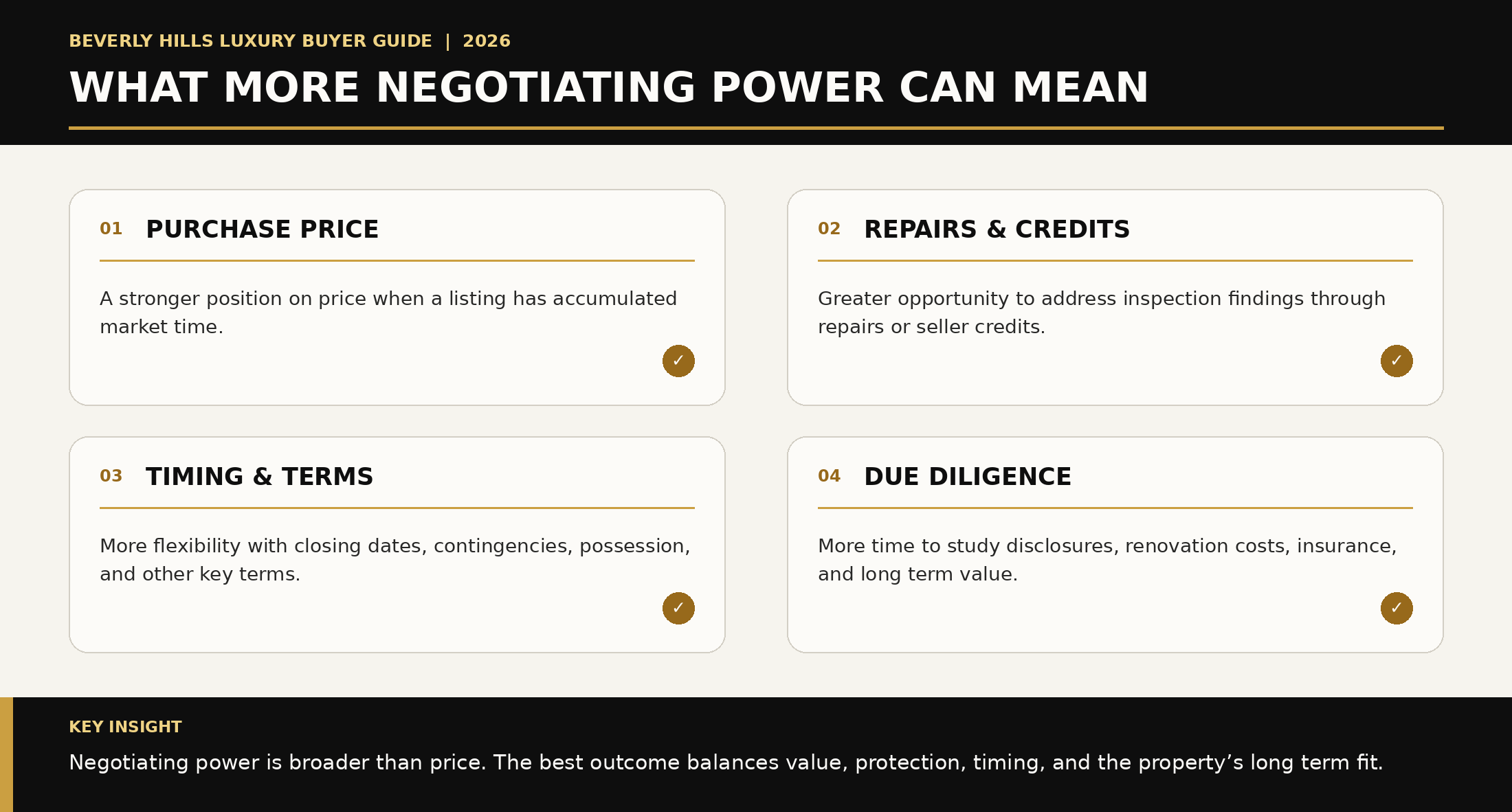
Overpricing Often Reduces Negotiating Power
Many sellers believe pricing high leaves room for negotiation.
Sometimes that approach works.
Today’s market often produces the opposite result.
When a property sits on the market without meaningful activity, buyers begin asking questions.
Why hasn’t it sold?
Is something wrong?
Will the seller eventually reduce the price?
Those questions reduce urgency.
Once urgency disappears, negotiating leverage often shifts toward buyers.
The Cost of Chasing the Market
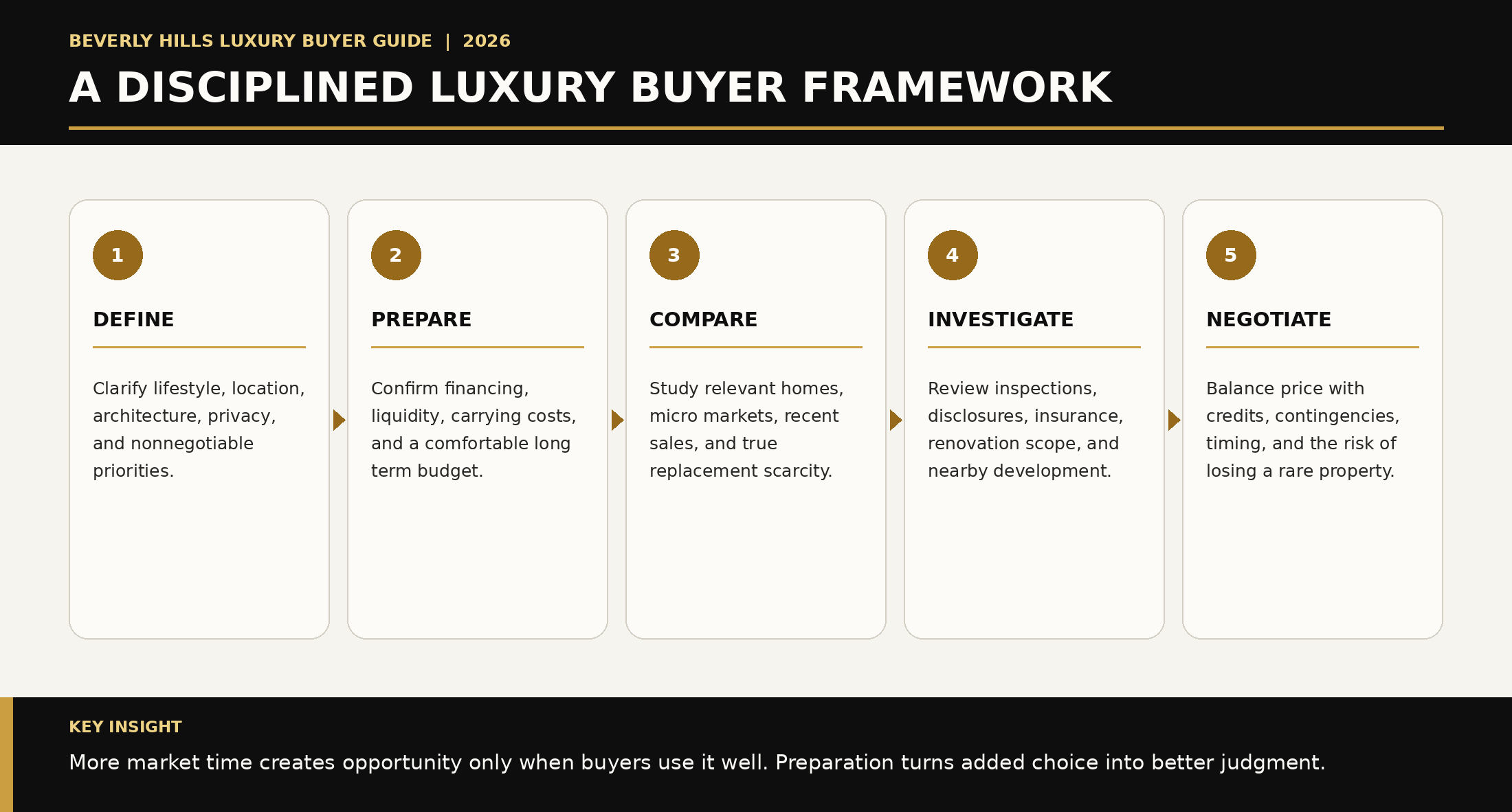
One of the most expensive mistakes sellers make is adjusting their price after buyer interest has already faded.
The strongest exposure almost always occurs during the first few weeks after a listing reaches the market.
If that opportunity is missed, later price reductions may not generate the same excitement as a properly positioned initial launch.
Many buyers have already moved on.
Others assume additional reductions may follow.
Luxury Buyers Think Differently
Luxury buyers throughout Beverly Hills, Bel Air, Brentwood, Westwood, Santa Monica, Pacific Palisades, and Malibu often approach pricing differently from traditional buyers.
They are usually less influenced by monthly payments.
Instead, they focus on value.
They compare:
- Architecture
- Privacy
- Views
- Design quality
- Lot characteristics
- Lifestyle
- Long term investment potential
That means pricing must reflect how the property competes within its specific luxury segment rather than relying solely on comparable sales.
Data Supports Strategic Pricing
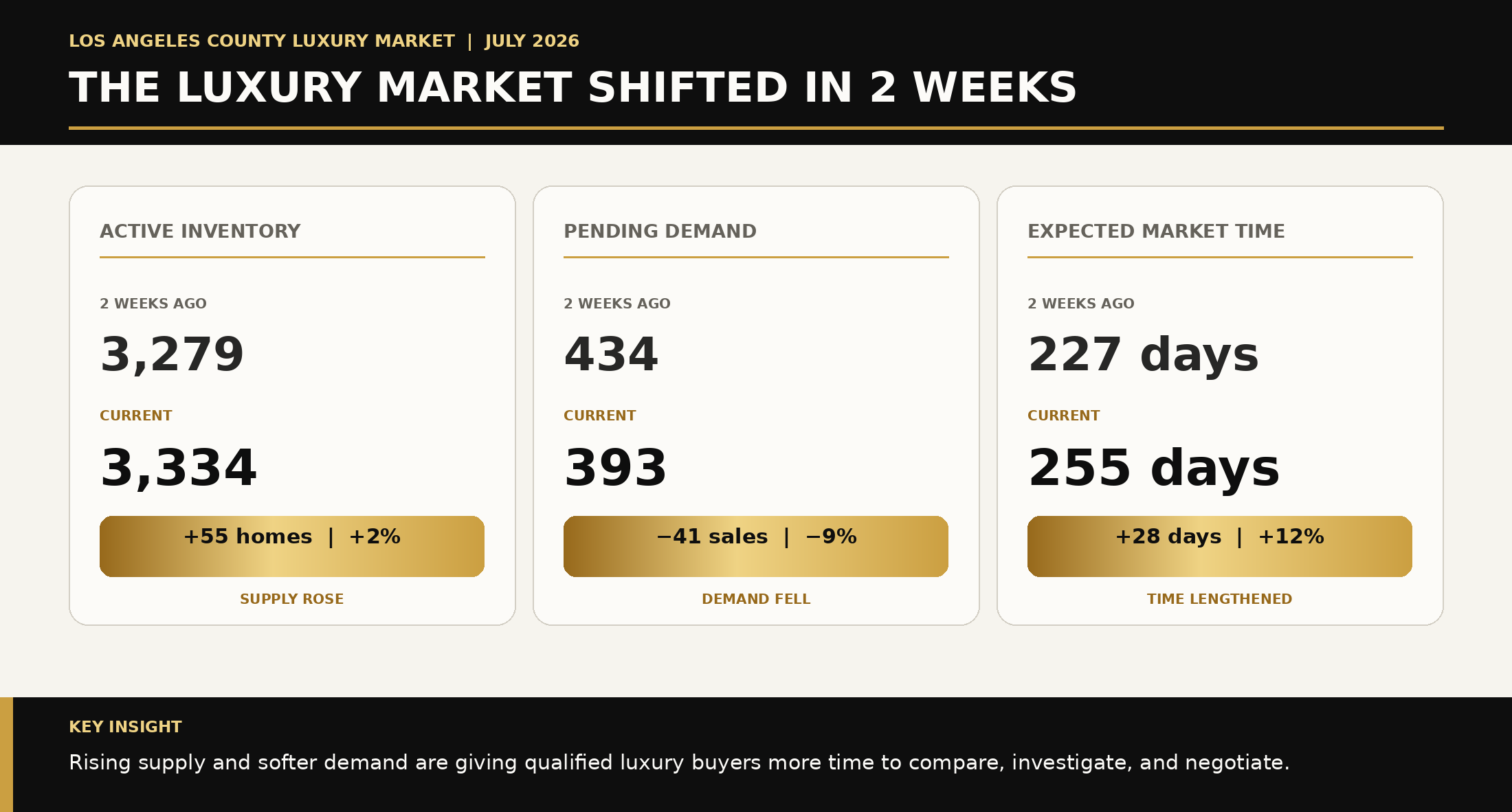
The latest Los Angeles County Housing Report shows that expected market time generally increases as price points rise, particularly among luxury properties. Higher priced homes often require more time to find the right buyer, making strategic pricing even more important.
Longer market times do not necessarily indicate weak demand.
Instead, they often reflect a smaller buyer pool and more careful purchasing decisions.
Pricing Should Create Competition
Every seller hopes to receive the highest possible price.
Ironically, realistic pricing often creates the greatest opportunity to achieve that goal.
When buyers perceive strong value, they are more likely to:
- Schedule showings quickly.
- Compete with other buyers.
- Submit stronger offers.
- Negotiate fewer concessions.
Creating buyer confidence often produces better financial results than testing the market with an unrealistic asking price.
Final Thoughts
Every market rewards different seller strategies.
Today’s market rewards thoughtful pricing.
A successful home pricing strategy balances market data, buyer psychology, property presentation, and neighborhood competition.
For sellers throughout Los Angeles, pricing should never be viewed as simply selecting a number.
It should be viewed as one of the most powerful marketing decisions made before a property ever reaches the market.
Why Some Los Angeles Homes Sell Fast While Others Sit
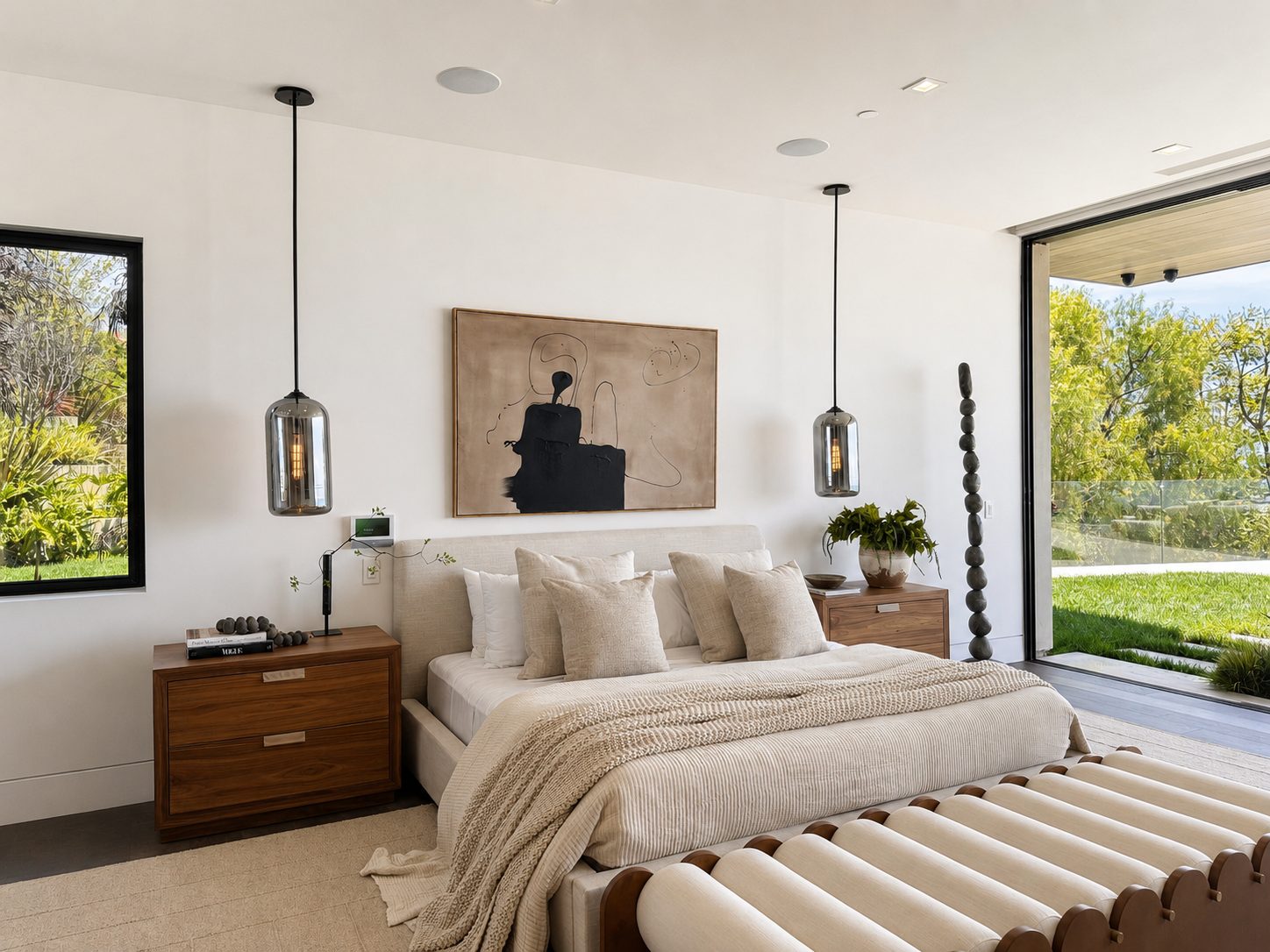
Why Some Los Angeles Homes Sell Fast While Others Sit
The market for Los Angeles homes has changed significantly over the past year. While many headlines focus on rising inventory and longer market times, they rarely explain why some properties continue attracting strong interest almost immediately while others remain unsold for months.
That difference is rarely caused by luck.
Instead, it usually comes down to preparation, pricing, presentation, and marketing strategy.
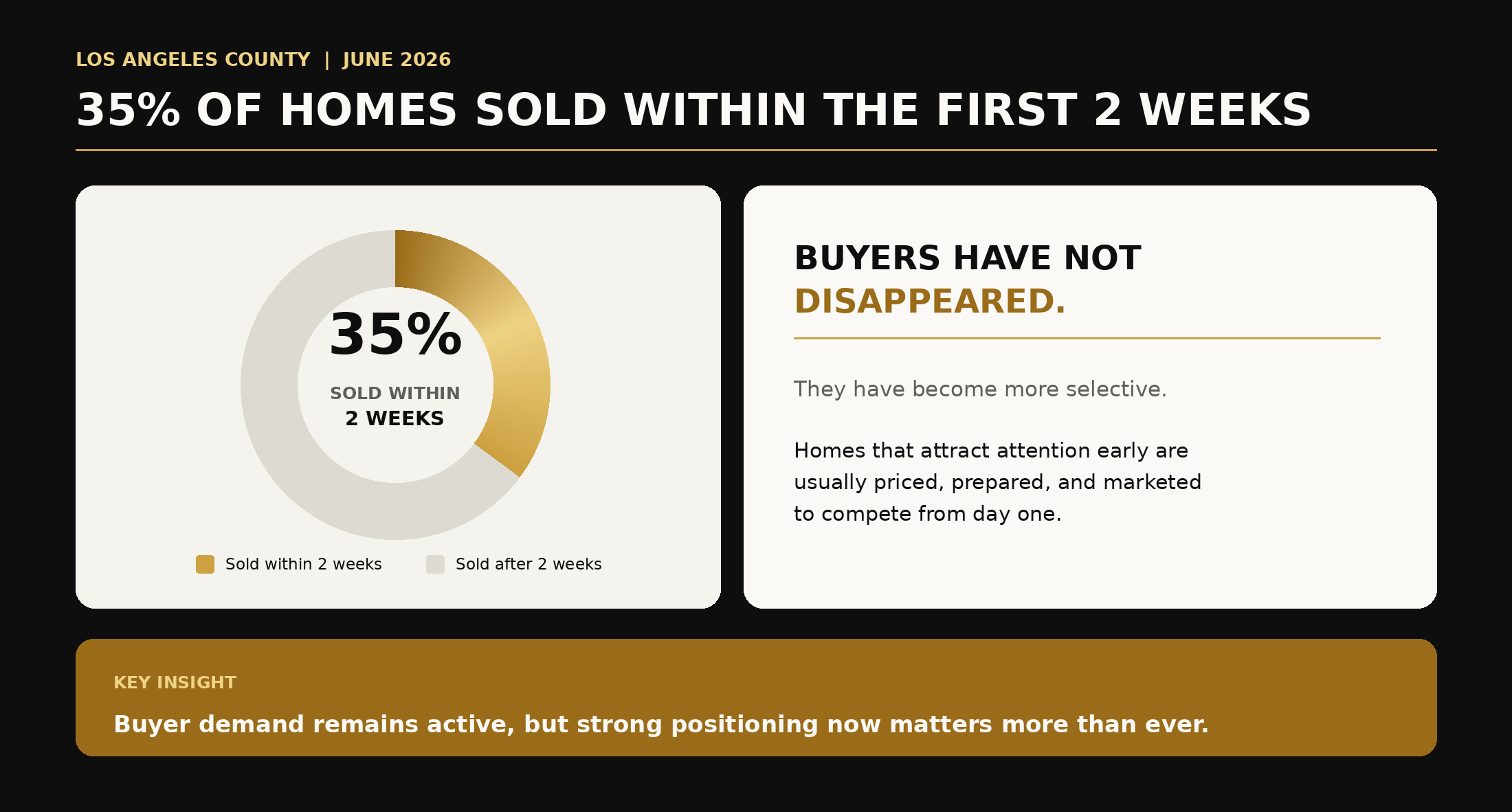
According to the latest Los Angeles County Housing Report, approximately 35% of all homes that closed in June sold within their first two weeks on the market.
That statistic tells us one important thing.
Qualified buyers are still actively purchasing Los Angeles homes.
They have simply become much more selective.
The Market Is More Competitive, Not Broken
Inventory has increased while buyer demand has softened compared with previous years. As a result, buyers have more choices and more negotiating power than they did during the highly competitive market of 2021 and early 2022. Expected market time across Los Angeles County has also increased.
However, averages only tell part of the story.
Exceptional homes continue to attract buyers quickly because they stand apart from competing listings.
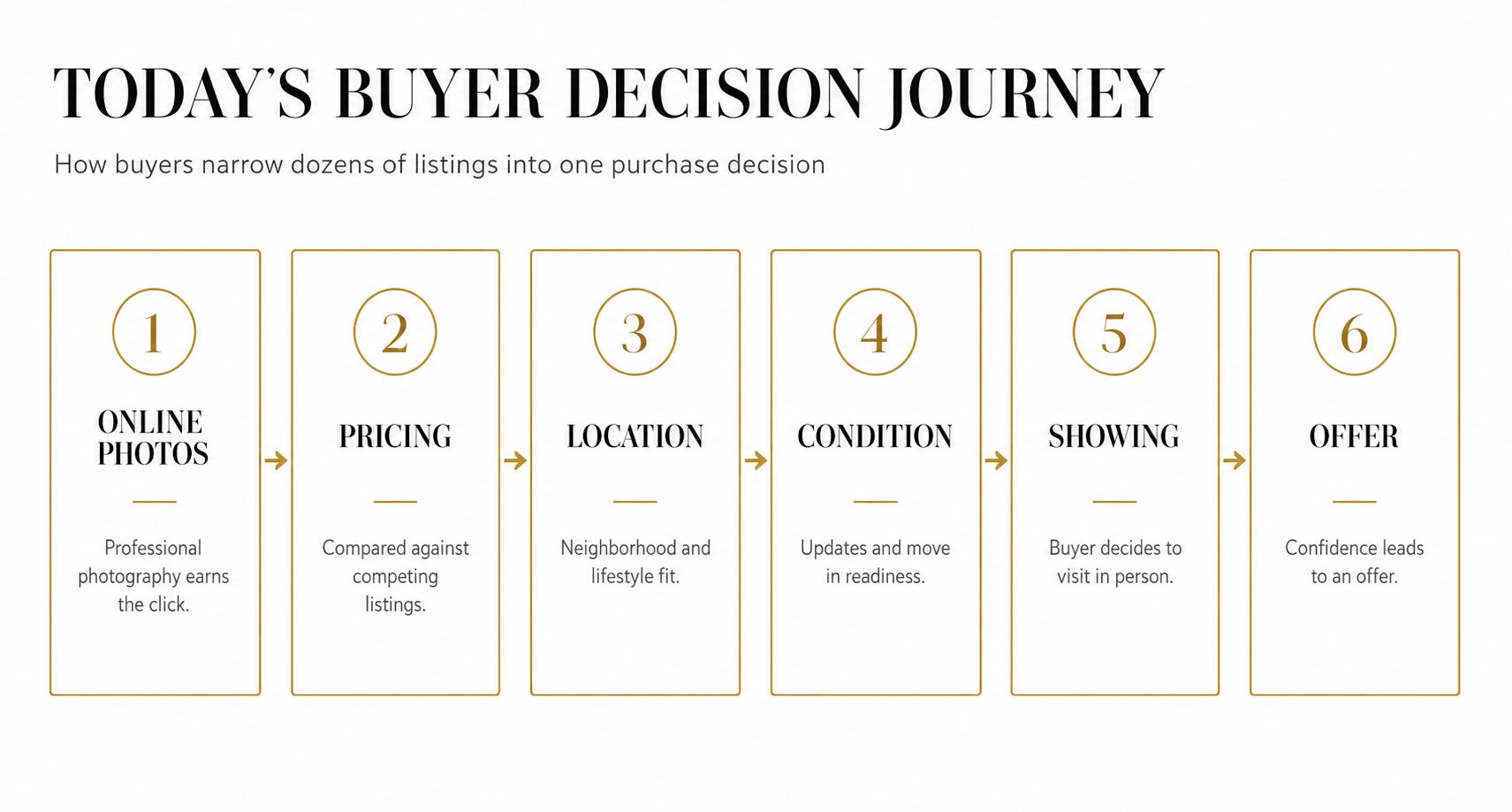
Buyers Decide Online Before Scheduling a Showing
Most buyers form their first impression long before they walk through the front door.
Professional photography, thoughtful staging, accurate pricing, compelling descriptions, and strong visual presentation all influence whether buyers schedule a showing.
Today’s buyers often compare dozens of listings before selecting just a handful to visit.
If a property fails to make an immediate impression online, many buyers simply move on.
Turnkey Homes Continue to Outperform
Many buyers today prefer homes requiring little or no immediate renovation.
Higher borrowing costs and rising construction expenses have increased the value of move-in ready properties.
Updated kitchens.
Modern bathrooms.
Fresh paint.
Quality flooring.
Energy-efficient systems.
These improvements often create stronger buyer confidence and reduce negotiation challenges.
Homes requiring significant repairs can certainly sell, but pricing becomes even more important.
Pricing Creates Opportunity
Price alone rarely determines whether a home sells quickly.
Pricing creates interest.
Presentation creates emotion.
Marketing creates competition.
When those three elements work together, sellers place themselves in the strongest negotiating position.
Conversely, an overpriced listing often loses momentum after its first few weeks on the market.
The First Two Weeks Are Critical
The greatest buyer attention typically occurs immediately after a home is listed.
Serious buyers who have been monitoring the market often schedule showings within days.
That early exposure provides the best opportunity to generate multiple showings and stronger offers.
Once a property remains on the market for several weeks without meaningful activity, buyers often begin wondering whether something is wrong with the home, even when nothing has changed.
Luxury Homes Require Even Greater Precision
Luxury buyers throughout Beverly Hills, Bel Air, Brentwood, Westwood, Santa Monica, Pacific Palisades, and Malibu have become increasingly selective.
Higher inventory gives affluent buyers more opportunities to compare architecture, design, privacy, views, and overall value.
The July Housing Report shows considerably longer expected market times for higher price ranges, reinforcing the importance of strategic pricing and professional marketing for luxury properties.
Exceptional homes continue attracting buyers.
Average listings face much greater competition.
Marketing Has Become a Competitive Advantage
Today’s marketing extends far beyond the MLS.
Successful listings often include:
- Professional photography
- Cinematic video
- Drone imagery
- Social media campaigns
- Broker networking
- Targeted digital advertising
- International exposure
- Strategic open houses
Marketing should generate demand, not simply announce availability.
Final Thoughts

Today’s market rewards preparation.
The Los Angeles homes that continue selling quickly are rarely accidental successes. They are usually the result of thoughtful pricing, exceptional presentation, and strategic marketing from the very beginning.
Whether you’re preparing to sell a condominium in Westwood, a family home in Brentwood, or a luxury estate in Beverly Hills or Bel Air, careful planning can make a meaningful difference in both timing and outcome.
Los Angeles Housing Market Deep Dive: West Hollywood, Beverly Hills, Westwood, Brentwood, Santa Monica, and Pacific Palisades
Deep Dive: What Is Really Affecting the LA Westside Housing Market in 2026
The Los Angeles housing market in 2026 is no longer being driven by momentum. It is being driven by precision, pricing discipline, insurance risk, development policy, and neighborhood specific demand. For buyers, sellers, and investors focused on West Hollywood, Beverly Hills, Westwood, Brentwood, Santa Monica, and Pacific Palisades, the market is not weak across the board. It is selective.
Mortgage rates remain one of the biggest forces shaping buyer behavior. As of May 2026, 30 year mortgage rates are still hovering above 6%, with recent reports showing rates around 6.3% to 6.39%. That keeps monthly payments elevated and forces buyers to become more selective, especially when comparing price per square foot, HOA dues, insurance costs, property taxes, and renovation expenses.
The strongest Westside buyers are not disappearing. They are simply more disciplined. Well priced homes in prime locations can still attract serious attention, while overpriced listings are sitting longer, reducing, or quietly negotiating behind the scenes.
1. Measure ULA Is Still Reshaping the Luxury Market
One of the most important policies affecting Los Angeles real estate is Measure ULA, often called the mansion tax. In the City of Los Angeles, it applies to higher value property transfers. Effective after June 30, 2026, the adjusted thresholds are $5.4 million and $10.9 million. Sales above $5.4 million but below $10.9 million are subject to a 4% tax, while sales at $10.9 million or higher are subject to a 5.5% tax.
This matters directly for Brentwood, Westwood, Pacific Palisades, and parts of the Los Angeles side of the Westside. It does not apply the same way in independent municipalities such as Beverly Hills, Santa Monica, and West Hollywood.
For sellers, Measure ULA can affect net proceeds, pricing psychology, and timing. For buyers, it can create negotiation leverage, especially when a property is sitting close to a tax threshold. UCLA research found that after Measure ULA, the odds of a Los Angeles property selling above the tax threshold fell significantly, especially for non single family transactions.
2. Insurance Is Now a Major Real Estate Issue
Insurance is no longer a minor escrow item. It is now a core part of the buyer underwriting process, especially in hillside and fire affected areas such as Pacific Palisades, Brentwood hills, Bel Air adjacent areas, and parts of Beverly Hills north of Sunset.
California regulators recently accused State Farm of mishandling claims connected to the 2025 Los Angeles area wildfires, citing delays, underpayments, and administrative obstacles. The broader takeaway is simple: buyers and sellers need to understand insurance availability, premiums, FAIR Plan exposure, and rebuilding coverage before removing contingencies.
For Pacific Palisades specifically, wildfire recovery, rebuilding feasibility, lot value, permit timing, insurance cost, and construction risk are all shaping the market. Vacant land and damaged property sales require deeper due diligence than traditional resale homes.
3. Builder’s Remedy and Housing Element Pressure Are Changing the Development Conversation
Across the Westside, state housing law is pushing cities to approve more housing, even in traditionally low density luxury areas.
Beverly Hills has been dealing with Builder’s Remedy projects, including approved and advancing multifamily projects near Olympic Boulevard and Burton Way. The City of Beverly Hills explains that Builder’s Remedy applies when a city does not have a certified housing element, allowing certain qualifying housing projects to move forward even when local zoning would normally restrict them.
Santa Monica has also been a major Builder’s Remedy battleground. The city maintains a public list of Builder’s Remedy projects and recently approved streamlined housing projects under its 2021 to 2029 Housing Element framework.
West Hollywood is also working through its Housing Element and Zoning Improvement Program for Housing, with the stated goal of addressing housing needs across different income levels.
For homeowners, this means nearby development potential matters more than ever. For investors, it creates opportunities around underutilized lots, older multifamily assets, and properties near transit, commercial corridors, and mixed use zones.
4. Pacific Palisades Is Its Own Market Right Now
Pacific Palisades should not be analyzed like a normal luxury neighborhood in 2026. It is being shaped by wildfire recovery, insurance, construction costs, permitting, land sales, and policy debates around density.
Governor Newsom’s 2025 executive order allowed local governments to restrict SB 9 density in certain fire affected high hazard areas, including neighborhoods impacted by the Palisades Fire. Mayor Karen Bass also moved to block duplex projects in the Palisades rebuilding area. Housing advocates have sued over the restrictions.
For buyers, this means the biggest questions are no longer just view, lot size, and school district. They are also:
Can the property be insured?
What can actually be rebuilt?
How long will permitting take?
Is the lot priced correctly compared with construction cost?
Is there upside, or only risk?
5. Beverly Hills Remains Prestige Driven, But Buyers Are More Analytical
Beverly Hills continues to benefit from global name recognition, limited land, luxury retail, privacy, schools, and lifestyle identity. But even in Beverly Hills, buyers are comparing value more carefully.
The most important distinction remains micro location:
Beverly Hills Flats
North of Sunset
Trousdale Estates
Beverly Hills Post Office
90210 versus 90211 versus 90212
Condos near the Golden Triangle
For sellers, brand power alone is not enough. Presentation, pricing, architecture, lot usability, condition, and privacy still decide whether a listing sells quickly or sits.
6. Santa Monica Is Becoming a Lifestyle and Development Market
Santa Monica remains one of the most desirable coastal markets in Los Angeles because it combines walkability, beach access, restaurants, jobs, schools, and lifestyle. But it is also under pressure from housing mandates and redevelopment activity.
The city’s Builder’s Remedy and streamlined housing pipeline could reshape parts of Santa Monica over time, especially around commercial corridors and transit accessible areas.
For buyers, the key question is whether they want a beach lifestyle, walkability, condo convenience, or long term land value. For investors, Santa Monica remains attractive but requires careful review of rent control, HOA health, insurance, building age, and future development nearby.
7. West Hollywood Is a Condo, Lifestyle, and Investor Market
West Hollywood is heavily influenced by condo inventory, rent stabilization, nightlife, design, walkability, and buyer affordability. It is also a market where price per square foot, HOA dues, reserves, building condition, and rental potential matter enormously.
Well priced condos can still move, but dated units, high HOA buildings, litigation issues, weak reserves, or unrealistic seller pricing can create long days on market. Investors should pay close attention to rent control rules, tenant status, parking, washer and dryer feasibility, and renovation costs.
8. Brentwood and Westwood Are Still Anchored by Schools, Jobs, and Lifestyle
Brentwood remains a strong long term ownership market because of its family lifestyle, proximity to Santa Monica, access to private schools, UCLA, the Getty, and high income professional demand. Westwood benefits from UCLA, medical employment, Wilshire Corridor condos, Century City proximity, and investor demand.
The UCLA Research Park conversion of the former Westside Pavilion into a major research hub is another long term factor supporting Westwood and nearby Westside housing demand. The project involves a 700,000 square foot research complex focused on immunology, immunotherapy, quantum science, and related programs.
Bottom Line
The 2026 Los Angeles housing market is not one market. Beverly Hills, Westwood, Brentwood, Santa Monica, West Hollywood, and Pacific Palisades are each moving under different pressures.
The winning strategy is precision.
Buyers should focus on price per square foot, insurance, location quality, HOA strength, renovation cost, and seller motivation.
Sellers should focus on realistic pricing, presentation, timing, and neighborhood specific positioning.
Investors should focus on policy, zoning, rent control, development potential, insurance risk, and long term liquidity.
