

 Facebook
 X
 Pinterest
 Copy Link
Rent or Sell Your Los Angeles Home When You Move?
Deciding whether to rent or sell your Los Angeles home begins with the property, your equity, and your next purchase. Keeping a favorable mortgage can be valuable, but the home also needs to work as a rental and leave you with enough money and flexibility for the move ahead.
For an owner with a low fixed rate, selling can feel like giving up an asset that would be difficult to replace. I understand that concern. I would also want to know what you are keeping beyond the loan: an attractive rental, a manageable obligation, or a property that needs more attention than you want to give it.
Why this question is especially relevant now
The September 28 county report found that 16% fewer homes had entered the market through August than the comparable 2017 to 2019 average. It describes owners’ reluctance to give up low fixed mortgage rates as one contributor to limited new listings.
That provides context for the rent or sell discussion. It does not tell us whether your individual property will produce adequate income or qualify you for another purchase.
There is also a timely financing detail. Fannie Mae’s departing residence guidance, dated September 2, 2026, describes how eligible rental income can be documented when a borrower converts a current primary residence to an investment property while buying another primary residence. Under that guidance, lease agreements are not accepted as the departing residence documentation, and positive adjusted income may offset the property’s housing payment only. Have your lender evaluate the current requirements for your loan; jumbo and other programs can differ.
Does the home work as a rental?
Begin with rent supported by comparable properties. Then allow for vacancy, management, maintenance, taxes, insurance, mortgage payments, HOA charges when applicable, and future capital work.
Suppose a hypothetical home rents for $5,000 a month. Allow $250 for vacancy, $400 for management, and $500 for maintenance and capital reserves. That leaves $3,850 before the mortgage, taxes, insurance, HOA charges, and other expenses. If those remaining monthly obligations total $3,600, the projected cushion is just $250.
These figures are illustrative assumptions, not a recommended reserve level or a forecast of local rents. They show why comparing rent with the mortgage payment alone can be misleading. A larger repair or a longer vacancy could quickly absorb a thin cushion.
There may be long term benefits from principal reduction or appreciation, but neither solves an immediate shortage of cash. A rental should fit the way you actually want to own and manage property.
Consider the equity you would leave invested
A home can produce positive monthly cash flow while tying up a substantial amount of equity. When deciding whether to rent or sell, compare the expected benefit of retaining that equity with other uses for the sale proceeds, including the down payment on your next home.
The comparison should include risk, taxes, management demands, and liquidity. A simple annual cash flow calculation is one input, not a complete investment return.
For a Westwood or Brentwood home, establish the likely tenant profile and property expenses from current evidence. For a condominium in West Hollywood or Santa Monica, confirm whether the governing documents permit the intended lease. In Beverly Hills, Bel Air, and Pacific Palisades, the rental plan should reflect the actual condition and obligations of the residence, rather than assumptions based on the neighborhood’s name.
Applicable rental laws and future occupancy plans also need review. Leasing a property can change the practical options for selling it or moving back in.
Include the eventual sale in the decision
IRS guidance on a former home used as a rental explains that home sale exclusion eligibility depends on ownership and use requirements, and depreciation can affect taxable gain. Ask your tax advisor to compare selling now with renting first and selling later.
If you are looking for the best real estate agent in West Hollywood or a top realtor in Santa Monica, ask for both a realistic sale estimate and a rental analysis. You should be able to see what each route would require and how it affects your next purchase.
My article on Westside investment opportunities discusses broader neighborhood considerations. This decision is more personal: does keeping this particular home support the life and finances you want next? Let’s compare both options with your actual numbers.
Quick answers
Should I keep my home because the mortgage rate is low?
A favorable rate is one advantage. Also evaluate rental cash flow, repairs, equity, management demands, and financing for your next home.
Can expected rent help me qualify for another mortgage?
Possibly. Eligible income, documentation, and treatment depend on the loan program and lender. Obtain a current lender review before relying on the rent.
Is rent minus the mortgage payment my profit?
No. Include vacancy, maintenance, capital reserves, management, taxes, insurance, HOA charges where applicable, and other ownership expenses.
Sources: Reports on Housing, September 28, 2026
Fannie Mae and IRS resources linked above
Low Home Appraisal in Los Angeles: What Happens Next?
A low home appraisal can change the financing for your Los Angeles purchase, even after the buyer and seller agree on a price. The next step is to confirm the lender’s calculation, review the report, and examine the contract before deciding whether to renegotiate, contribute more cash, or pursue another permitted option.
This is a moment when a clear explanation matters. A buyer may feel the home is worth the agreed price. A seller may believe the appraisal overlooks an important feature. Neither reaction tells us how much the lender will finance or what the contract allows.
The purchase price and loan calculation are different
For a typical purchase loan, the lender generally uses the lower of the purchase price or appraised value when applying its loan to value limit. Your lender should confirm the rules for your specific program.
Consider a hypothetical purchase price of $1,500,000 with financing limited to 80% of the applicable value. At a matching appraisal, the loan would be $1,200,000 and the buyer’s contribution toward the price would be $300,000.
If the appraisal is $1,400,000 and the same 80% limit applies, the loan becomes $1,120,000. At an unchanged purchase price, the buyer needs $380,000 toward the price. The additional cash is $80,000, not automatically the full $100,000 difference between price and appraisal. Closing costs and reserves are separate.
That calculation should happen before anyone agrees to cover a gap.
Review the evidence before reacting
The CFPB’s low appraisal guidance recommends obtaining the report and considering a price reduction. Cancellation consequences depend on the contract.
With the lender, review factual details such as the home’s characteristics and the sales used as comparisons. If there are documented errors or relevant evidence the report may have missed, ask about the lender’s formal reconsideration process. A review should present evidence and respect the appraiser’s independence; it is not a promise of a higher value. See CFPB guidance on valuation independence.
For a Beverly Hills residence or Bel Air estate, a view, site, or unusual design may make comparison more complicated. In Westwood, Brentwood, Santa Monica, and West Hollywood, differences in condition, configuration, parking, or location may also affect the comparison. Those features should be supported with evidence, rather than a general claim that the property is special.
Read the agreement before choosing a response
A buyer’s rights depend on the actual contract, contingency deadlines, and any commitments about an appraisal shortfall. A low appraisal does not automatically release the buyer or require the seller to reduce the price.
Possible responses include a negotiated price adjustment, a different division of the shortfall, lender review of financing alternatives, or a cancellation permitted under the agreement. Each option needs to be evaluated before its deadline. Material uncertainty about legal rights deserves attorney review.
The seller should also compare the current proposal with the cost and uncertainty of returning to the market. The September 28 report recorded 3,789 countywide closed residential resales in August, down 13% from July. That is background about completed activity, not evidence that this particular home is worth less or will fail another appraisal.
Prepare before escrow
For sellers, assemble accurate property information and a record of improvements early. For buyers, discuss the maximum cash contribution you would be comfortable making before writing an offer. Loan qualification does not necessarily mean that every possible appraisal gap is affordable.
Someone looking for the best real estate agent in Santa Monica or the best luxury realtor in Beverly Hills should ask how appraisal risk will be explained before an offer is signed. Good guidance connects the price, financing, contract, and available reserves.
My broader article on luxury real estate negotiation discusses the many decisions involved in escrow. A low home appraisal is a specific situation where careful calculation can keep the next decision grounded. Contact me to discuss your purchase or sale.
Quick answers
Does a low appraisal mean I must pay the full difference in cash?
Not necessarily. The additional cash depends on the lender’s revised loan amount, the final purchase price, and your financing structure.
Must the seller lower the price?
A low appraisal alone does not require a price reduction. Any obligation or cancellation right depends on the contract and applicable law.
Can an appraisal be reviewed?
Ask your lender about its reconsideration process if you identify factual errors or relevant evidence. The appraiser’s independent judgment must be respected.
CFPB resources linked above
Should You Buy Before Selling in Los Angeles?
If you want to buy before selling in Los Angeles, start with your available cash and the cost of carrying both homes. Buying first can give you more control over your next move, but selling first may be the stronger choice when your purchase depends on the equity in your current property.
The difficult part is that a move involves 2 decisions with different timelines. You might find a home in Brentwood that feels right while your current residence in Westwood still needs preparation. Or you may be downsizing from Beverly Hills and want to secure the next place before letting go of a home you have owned for years.
There is no single sequence that fits everyone. There should, however, be a clear plan before you commit.
What the current market changes
The September 28 Los Angeles County Housing Report put countywide Expected Market Time at 137 days, compared with 114 days a year earlier. This measures the time needed to exhaust active inventory at the recent pending sales pace. It is not an average listing duration, an escrow period, or a forecast for your home.
For a homeowner planning to buy before selling, the practical implication is to allow room for a slower sale rather than relying on an ideal closing date. The question is how your finances would look if the overlap lasted longer than expected.
My recent article on the fall buyer’s market explains the broader backdrop. Here, the priority is arranging the move itself.
Selling first: know your budget before committing
Selling first gives you a clearer picture of net proceeds. You can then shop with funds available and fewer assumptions about your down payment.
The tradeoff is the transition. You may need temporary housing, storage, or 2 moves. A negotiated period of occupancy after closing can sometimes help, but it depends on the buyer’s agreement, lender requirements, insurance, and a written arrangement.
For someone who needs the sale proceeds to qualify or who would feel uncomfortable carrying both properties, that inconvenience may be worth the financial clarity.
Buying first: test the overlap
Before deciding to buy before selling, ask your lender to evaluate the actual arrangement. Confirm how existing debt, a new loan, and any temporary financing affect qualification and reserves.
A bridge loan or home equity line may provide access to equity, but it adds a separate cost and obligation. The Consumer Financial Protection Bureau explains that HELOC rates are usually variable, and fees can include closing and early cancellation charges. Get the terms for your specific loan, including what happens when the existing home is sold.
Use 3 scenarios. What happens if the overlap lasts 2 months? What if it lasts 4? What if it lasts 6 and the sale proceeds are lower than planned? These are planning scenarios, not predictions of local selling times.
If the combined ownership cost is hypothetically $12,000 a month, a 4 month overlap requires $48,000 before moving costs, loan fees, or unexpected repairs. Your actual budget may be very different.
A coordinated sale and purchase
A purchase tied to the sale of your current home can reduce the need for an extended overlap. Its feasibility depends on the contract and the other seller’s willingness to accept the uncertainty. Closings also need room for appraisal, financing, and document delays.
I would rather have a workable fallback than a calendar that succeeds only if every participant performs on the exact day expected.
For a move from West Hollywood to Santa Monica, or from Bel Air to Pacific Palisades, we should evaluate both properties separately. The home you are selling and the one you are buying may attract different buyers and operate at different speeds.
What good representation should help you decide
When searching for the best real estate agent in Westwood or a top realtor in Brentwood, ask how they would coordinate the purchase with the sale. You should receive a realistic proceeds estimate, a financing conversation, and a contingency plan for the transition.
My goal is to help you buy before selling only when the numbers and the backup plan support it. If selling first gives you more freedom and less pressure, that may be the better route. Let’s map the move around your finances and priorities.
Quick answers
Is it better to buy or sell first in Los Angeles?
Sell first if you need the proceeds or cannot comfortably carry both homes. Buying first may suit owners with adequate financing, liquidity, and reserves.
Does Expected Market Time tell me when my home will sell?
No. It is a market pace indicator based on active inventory and recent pending sales, not a property specific sale deadline.
Can I stay in my home after selling it?
Possibly, with the buyer’s agreement and a properly documented arrangement consistent with financing and insurance requirements. Establish the terms before relying on it.
Sources:
Reports on Housing, September 28, 2026
CFPB resources linked above
Will Los Angeles Home Prices Drop in 2026?
The Market Is Slower but Distress Remains Rare
Searches about a possible Los Angeles housing crash tend to increase whenever mortgage rates rise and sales slow. The current market does have meaningful headwinds. Demand is lower, Expected Market Time reached 129 days, and the Zillow Home Price Index cited in the report had declined modestly month over month since March.
But a slower market is not the same as a distressed market. Short sales and foreclosures represented only 1.5% of active listings and 1.7% of demand on September 14. Los Angeles County had 229 distressed homes available: 81 foreclosures and 148 short sales.
Equity Changes Seller Behavior
In August, 99.28% of closed sales were made by sellers with equity. That is a critical difference from a true housing crisis. Owners with equity generally have more options. They can reduce a price, rent the property, delay a move, or remove the home from the market. They are less likely to be forced into a rapid sale at any price.
The active inventory of 14,832 homes was also only 10% above the 2017 to 2019 average. It was far higher than the unusually constrained years of 2023 and 2024, but it did not represent the glut that normally accompanies a severe price collapse.
What Price Adjustment Looks Like Instead
The report described prices as sticky. Monthly changes in the Zillow Home Price Index ranged from a decline of 0.05% to 0.31%. For a $1 million home, that equals roughly $500 to $3,100 in a month. Buyers have more room to negotiate on some properties, yet desirable homes can still sell quickly and above asking.
This uneven adjustment is visible across Los Angeles. A dated condo in West Hollywood may face more pressure than a well-run building with a renovated unit. A compromised hillside home in Bel Air may require a larger correction than a rare view property. In Brentwood, Santa Monica, Beverly Hills, Westwood, Pacific Palisades, and Malibu, location and property quality continue to matter.
What Buyers Should Do
Do not build a purchase strategy around an assumed crash. Build it around affordability, holding period, property quality, and negotiation evidence. If the right home is available and the monthly cost is comfortable, a modest price adjustment may matter less than securing the location and features that are difficult to replace.
At the same time, buyers should not ignore leverage. Longer market time, previous listing attempts, deferred maintenance, insurance costs, and competing inventory can all support better pricing or terms.
What Sellers Should Do
A low level of distress does not protect an overpriced listing. Buyers have more choices and are sensitive to value. Sellers should prepare the property carefully, resolve insurability and disclosure questions early, and price within the range supported by current evidence.
As a luxury real estate agent in Los Angeles serving Beverly Hills, Bel Air, Westwood, Brentwood, Santa Monica, Pacific Palisades, Malibu, and West Hollywood, I would describe the current environment as a selective adjustment, not a broad collapse. The market is asking both sides to make better decisions, supported by local facts rather than dramatic forecasts.
Sources and External Links
Reports on Housing, Los Angeles County Housing Report, September 14, 2026
Realtor.com, Los Angeles Home Prices Slide Even as Supply Stays Tight
Realtor.com, Los Angeles Home Prices Fall While Inventory Stays Tight
Is Los Angeles a Buyer’s Market in Fall 2026?
The Fall Market Is Moving More Slowly
The Los Angeles housing market has slowed considerably since the beginning of 2026. Expected Market Time, the number of days needed to sell all available listings at the current buying pace, increased from 99 days in February to 129 days by September 14. This was the slowest September reading since tracking began in 2012.
The change does not mean homes have stopped selling. It means buyers generally have more time to compare properties, review disclosures, and negotiate. Sellers, meanwhile, can no longer assume that simply placing a home on the market will create urgency.
Demand Has Fallen Faster Than Inventory
Los Angeles County had 14,832 active listings in mid September, nearly unchanged from the same period last year. Buyer demand, measured by new pending sales during the previous month, fell to 3,436, which was 10% lower than a year earlier. With demand weakening faster than supply, the market has shifted further in the buyer’s favor.
That shift can be felt across Beverly Hills, Bel Air, Westwood, Brentwood, Santa Monica, and West Hollywood. Buyers are seeing more choices and fewer situations that require an immediate decision. Still, the amount of leverage depends on the individual property.
Slower Does Not Mean Every Home Sells Below Asking
The report’s breakdown of August closings shows why countywide market speed should not be confused with the outcome of every sale. Among closed transactions, 47% sold below the last asking price, 16% sold at the last asking price, and 37% sold above it. These percentages describe 3 separate groups of sales. They are not a single sales to list price ratio.
The timing was equally revealing. Homes that sold above the last asking price spent a median of 17 days on the market and closed a median of $25,000 over asking. Homes that sold at asking took 22 days. Those that sold below asking took 48 days and closed a median of $32,500 under the last asking price.
Property Quality Still Creates Urgency
Even in a slower Los Angeles housing market, buyers continue to compete for homes that are well located, thoughtfully presented, in excellent condition, and realistically priced. A turnkey home in Brentwood or Santa Monica may attract immediate attention, while an ambitious listing in Bel Air or Beverly Hills may remain available long enough for buyers to negotiate.
The same distinction applies to condominiums in West Hollywood and Westwood and to coastal properties in Pacific Palisades and Malibu. Market averages provide useful context, but they cannot account for a specific view, floor plan, building, street, level of renovation, or seller motivation.
What Buyers Should Do Differently
A slower market gives buyers room to be more deliberate, but it should not encourage automatic low offers. Start with the home’s pricing history, recent comparable sales, current competition, condition, and number of days on the market. A property that has been available for 60 days calls for a different approach from one receiving strong activity during its first weekend.
Buyers should also separate replaceable features from rare ones. Finishes can be changed. A quiet street, exceptional view, desirable lot, natural light, or scarce architectural style may be much harder to find again.
A Better Market for Informed Decisions
As a Los Angeles luxury Realtor serving Beverly Hills, Bel Air, Westwood, Brentwood, Santa Monica, Pacific Palisades, Malibu, and West Hollywood, I see the slower fall market as an opportunity for better decision making. Buyers can investigate more carefully and negotiate where the evidence supports it. Sellers can still succeed, but preparation, presentation, and accurate pricing matter more than they did earlier in the year.
The market has slowed, but it has not become uniform. The best strategy begins with understanding how the specific property is performing within its neighborhood, price range, and property type.
Sources and External Links
Reports on Housing, Los Angeles County Housing Report, September 14, 2026
Realtor.com, Los Angeles Home Prices Slide Even as Supply Stays Tight
Measure ULA and Westside Real Estate City Boundaries Matter
A Few Blocks Can Change the Financial Picture
Los Angeles real estate is full of invisible boundaries.
A property in West Hollywood may sit only a few blocks from a home in the City of Los Angeles. To most people, they belong to the same general neighborhood. From a tax and regulatory perspective, they may be very different.
That distinction has become increasingly important as higher borrowing costs, slower sales, and Measure ULA influence real estate decisions throughout the region.
Location has always shaped value. Today, the municipal boundary itself can also shape the financial outcome.
Where Measure ULA Applies
Measure ULA applies to qualifying real property transfers within the City of Los Angeles. For transactions closing after June 30, 2026, the adjusted thresholds are more than $5.4 million and more than $10.9 million. The corresponding rates are 4% and 5.5%.
The tax is based on the location and value of the property, not on whether the property is actually a mansion.
That means qualifying sales in Brentwood, Westwood, Pacific Palisades, and the Los Angeles portions of the Hollywood Hills may be subject to Measure ULA. West Hollywood, Beverly Hills, Santa Monica, Culver City, and Malibu are separate cities and are not subject to the City of Los Angeles tax.
Other transfer taxes and closing costs may still apply. Because municipal lines are not always obvious, jurisdiction should be confirmed for the individual address rather than assumed from the neighborhood name.
Why the Issue Has Returned to the Conversation
A September 22 Los Angeles Times report examined why new apartment development has slowed despite the region’s continuing housing shortage.
According to data cited from Kidder Mathews, the average sale price per apartment unit in Los Angeles County declined from $397,289 in 2022 to $280,591 in 2026, a drop of approximately 29%. Apartment completions during the first half of 2026 fell nearly 9% from the same period last year, while the number of units under construction declined approximately 15%.
Developers pointed to several pressures. Higher financing costs. Rising construction and permitting expenses. Tenant regulations. Development fees. Measure ULA.
No single factor explains the slowdown. Real estate rarely works that way. Yet when a project already has a narrow margin, a substantial transfer tax can influence how investors evaluate the eventual sale and whether a proposed development makes financial sense.
The Tax Map and the Market Map Are Different
Avoiding Measure ULA does not automatically make one property a better investment than another.
The latest Los Angeles County Housing Report showed an Expected Market Time of 234 days in Brentwood, 338 days in Beverly Hills, 408 days in West Hollywood, 163 days in Santa Monica, and 564 days in Pacific Palisades.
These communities are moving at very different speeds. Inventory, price, property type, condition, insurance, architecture, and buyer demand all contribute to those differences.
This is an important distinction. The tax map tells us what transaction costs may apply. The market map tells us how buyers are responding to a particular type of property in a particular location.
Neither should be evaluated alone.
What This Means for Luxury Sellers
For a home near a Measure ULA threshold, the asking price should be considered alongside the seller’s estimated net proceeds.
A relatively small change in the final sale price can move a transaction into a different tax category and materially change the result. That does not mean every seller should price below a threshold. A lower price can sacrifice more value than the tax it avoids.
It means the calculation should be completed before the home comes to market.
The analysis should include the likely sale price, conventional transfer taxes, Measure ULA when applicable, commissions, credits, loan payoff, preparation expenses, and the cost of additional time on the market. Only then can a seller compare strategies clearly.
The goal is not simply to minimize one expense. It is to achieve the strongest overall result.
What Buyers and Investors Should Consider
For buyers, Measure ULA may influence a seller’s timing, preferred terms, or willingness to negotiate. Understanding that context can help explain why a particular price or closing date matters to the other side.
For investors and developers, the analysis begins much earlier. If the anticipated sale could exceed a future threshold, the transfer tax should be considered when the property is acquired, not only when it is sold. The thresholds are adjusted over time, so a long term project should not rely entirely on today’s figures.
Municipal differences extend beyond Measure ULA. Two similar properties on opposite sides of a city boundary may face different rent rules, permitting processes, development fees, inspection requirements, and transfer taxes. Those differences can affect renovation plans, land value, and the feasibility of a future sale.
Local Knowledge Includes Understanding the Boundary
People often speak about the Westside as one market.
In reality, it is a collection of cities, neighborhoods, and small property markets, each operating within its own set of financial and regulatory conditions.
That complexity is one of the reasons address level analysis matters. A property may benefit from being outside the City of Los Angeles, yet face weaker demand. Another may fall within Measure ULA but offer a superior location, architecture, or long term opportunity that outweighs the additional transaction cost.
The boundary is important, but it is never the complete story.
Before comparing 2 opportunities, it is worth asking 3 separate questions. What jurisdiction governs the property? What will it cost to enter, own, and eventually sell? How strong is the underlying real estate?
When those questions are considered together, the decision becomes clearer.
In Los Angeles, a few blocks can change the rules. Understanding those differences is part of understanding the opportunity.
Sources
• City of Los Angeles Office of Finance Measure ULA FAQ
• Los Angeles Times Why LA Developers Are Not Building More Apartments September 22 2026
• Reports on Housing Los Angeles County Housing Report
Los Angeles Luxury Real Estate: The 4 Layers of Property Value That Stand the Test of Time
The 4 Layers of Property Value: Why Some Los Angeles Homes Continue to Outperform Over Time
When people evaluate a luxury home, they often begin with what they can immediately see.
The architecture.
The kitchen.
The finishes.
The view.
Those features certainly influence a property’s appeal, but after working with buyers and sellers throughout Los Angeles, I’ve found that they explain only part of the story.
Some homes appreciate more consistently than others, even when they were built around the same time or renovated to similar standards. Likewise, two homes with comparable square footage and amenities can experience very different long-term performance simply because they occupy different locations.
That raises an important question.
What actually creates lasting real estate value?
Many people assume the answer is the house itself.
In reality, a property’s long-term performance is shaped by several independent factors, some of which owners can influence and others they cannot.
Over the years, I’ve come to think about residential real estate through four distinct layers of value.
Understanding these layers helps explain why certain neighborhoods continue attracting buyers through different market cycles, why some renovations generate exceptional returns while others do not, and why experienced buyers often evaluate much more than the home itself before making an investment.
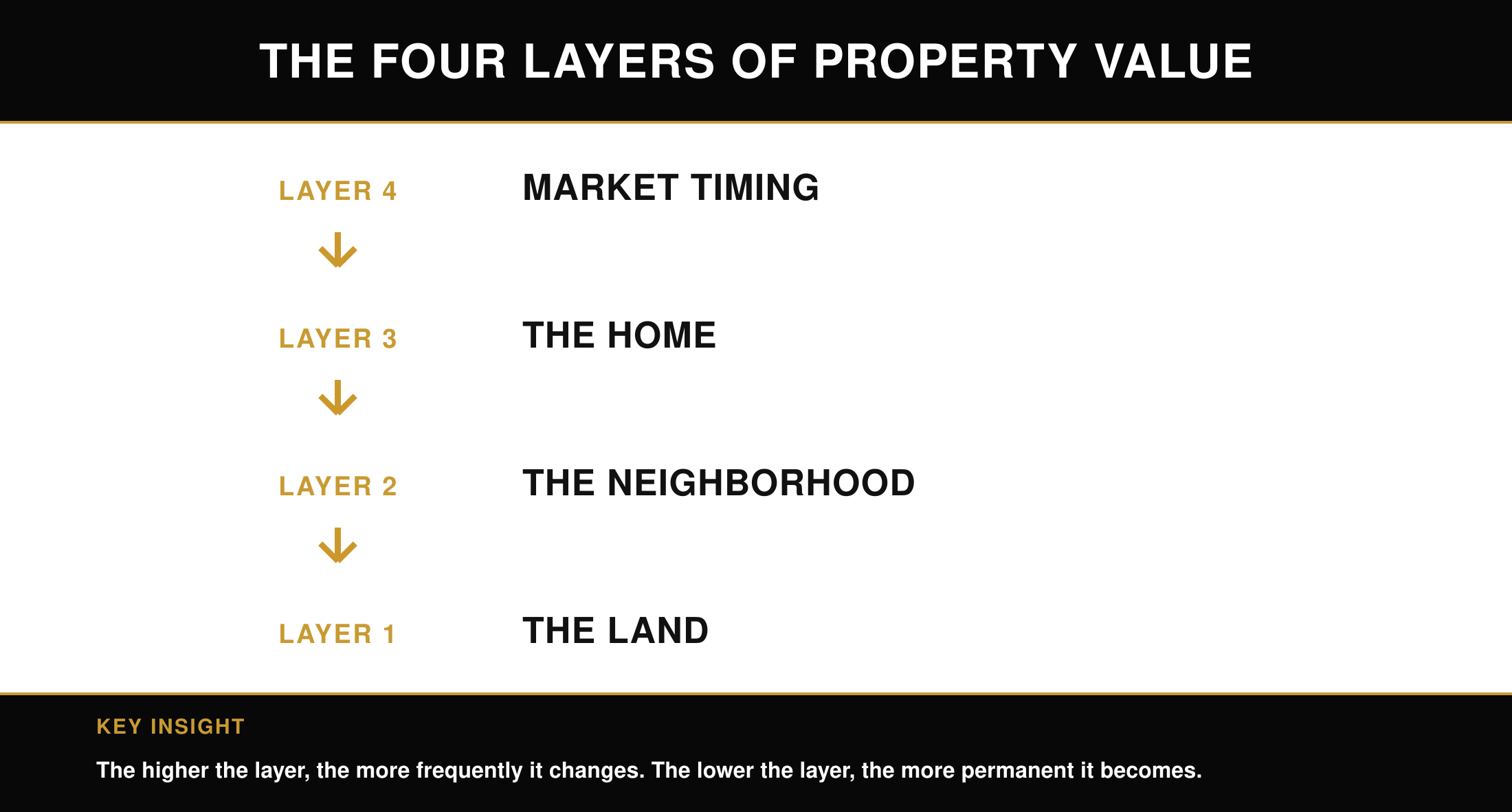
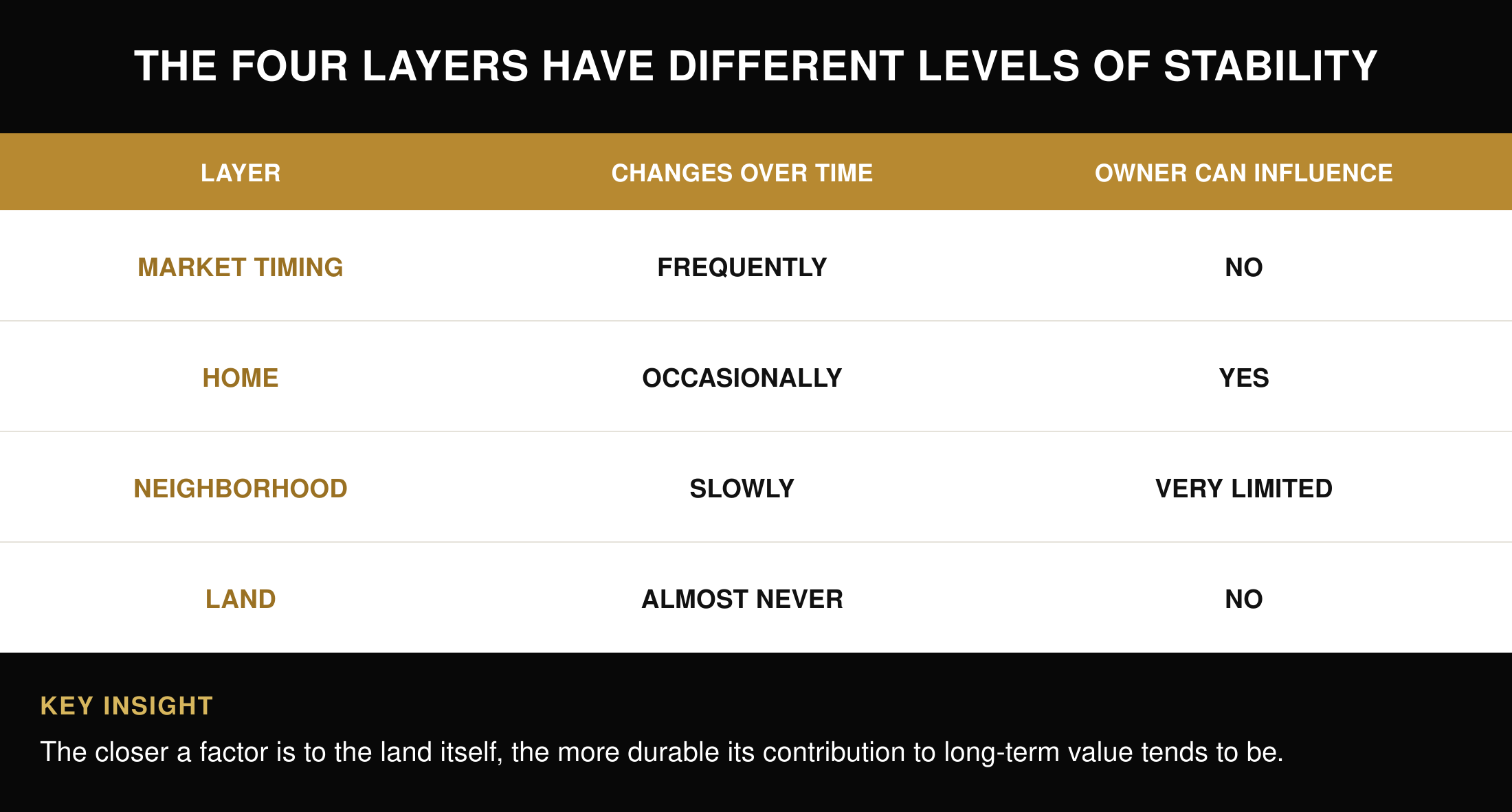
Layer 1: The Land Is the One Asset That Cannot Be Recreated
Every luxury home begins with something remarkably simple.
A piece of land.
Unlike the home built upon it, land cannot be manufactured, expanded, or relocated. Once a neighborhood is fully developed, its most desirable parcels become increasingly difficult to replace.
This is one reason exceptional locations continue to command premium values over long periods of time.
An oceanfront parcel in Malibu cannot be replicated elsewhere.
A south-facing lot with panoramic city views in Bel Air cannot simply be recreated across the street.
Large estate lots in Beverly Hills become more valuable not because someone builds another one, but because opportunities to acquire them become increasingly limited.
Scarcity is one of the most powerful economic forces in real estate.
While homes can be remodeled, expanded, or even rebuilt, truly exceptional land remains finite.
For long-term investors, understanding the quality of the underlying site is often more important than evaluating the finishes currently sitting on top of it.
That’s why experienced buyers often ask questions such as:
- How difficult would it be to find another lot like this?
- Could zoning rules allow similar development nearby?
- Are the views protected?
- Is the surrounding neighborhood already mature?
These questions focus less on today’s appearance and more on tomorrow’s rarity.
Layer 2: Neighborhood Value Compounds Over Decades
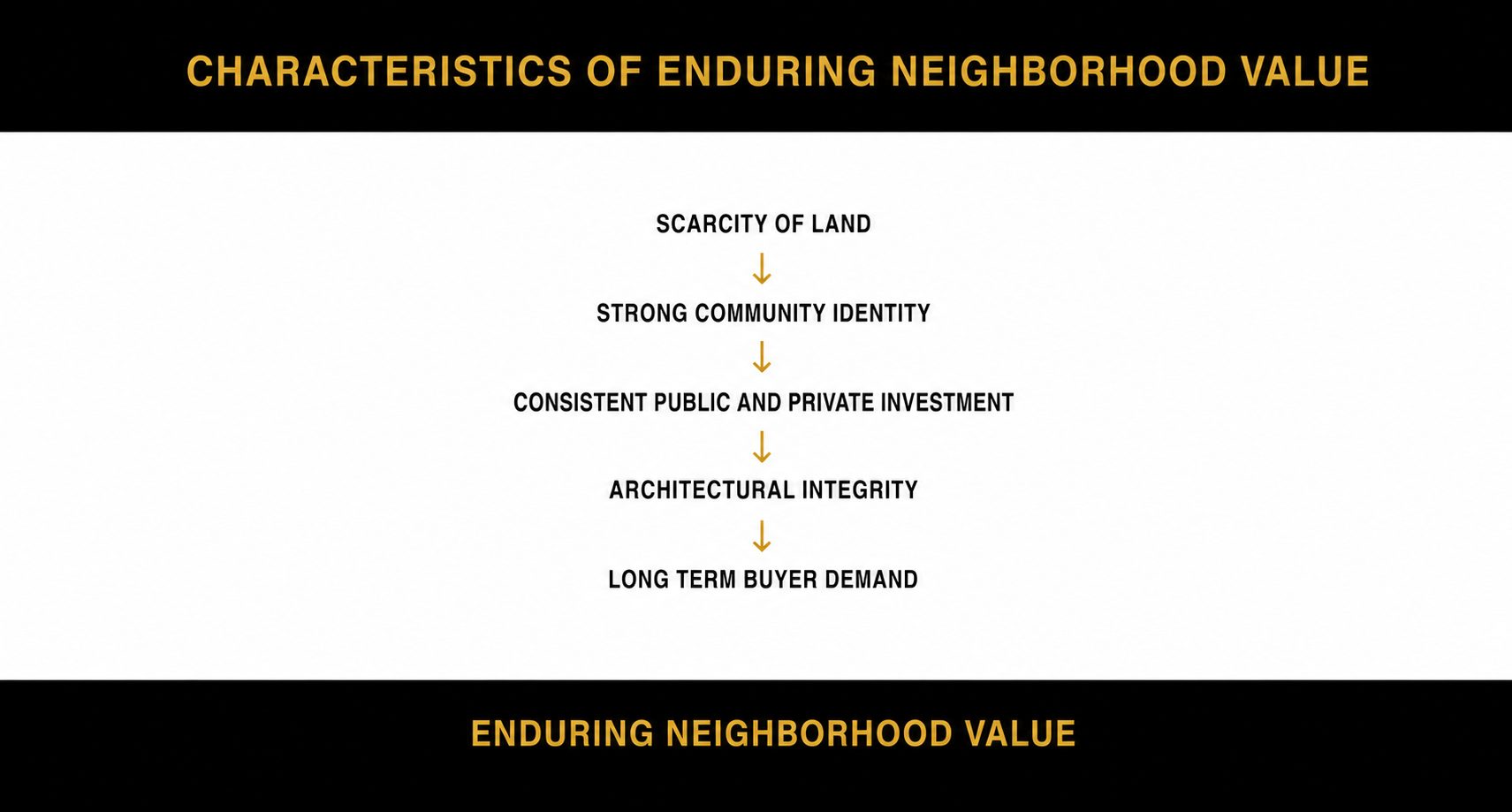
If land forms the foundation of value, the neighborhood determines how that value evolves.
Unlike a renovation that can be completed within a year, neighborhoods develop over generations.
Tree-lined streets mature.
Independent restaurants establish loyal followings.
Parks become gathering places.
Public infrastructure improves.
Cultural institutions grow in prominence.
Schools develop reputations.
Over time, these individual elements begin reinforcing one another, creating neighborhoods that buyers consistently seek regardless of changing market conditions.
This process helps explain why certain Los Angeles communities have remained desirable for decades despite fluctuations in interest rates, economic cycles, or housing inventory.
The value of a neighborhood is rarely tied to one feature.
Instead, it reflects the combined effect of thousands of decisions made over many years by residents, city planners, business owners, and local governments.
That accumulated investment creates something difficult to duplicate.
A sense of place.
This is one reason buyers often return to the same neighborhoods repeatedly, even when they consider different homes.
They’re not simply purchasing an address.
They’re investing in an established environment whose qualities have been built gradually over time.
Why Great Neighborhoods Become More Valuable Over Time
One characteristic stands out among Los Angeles’ most sought-after communities.
They continue improving even after they’ve become established.
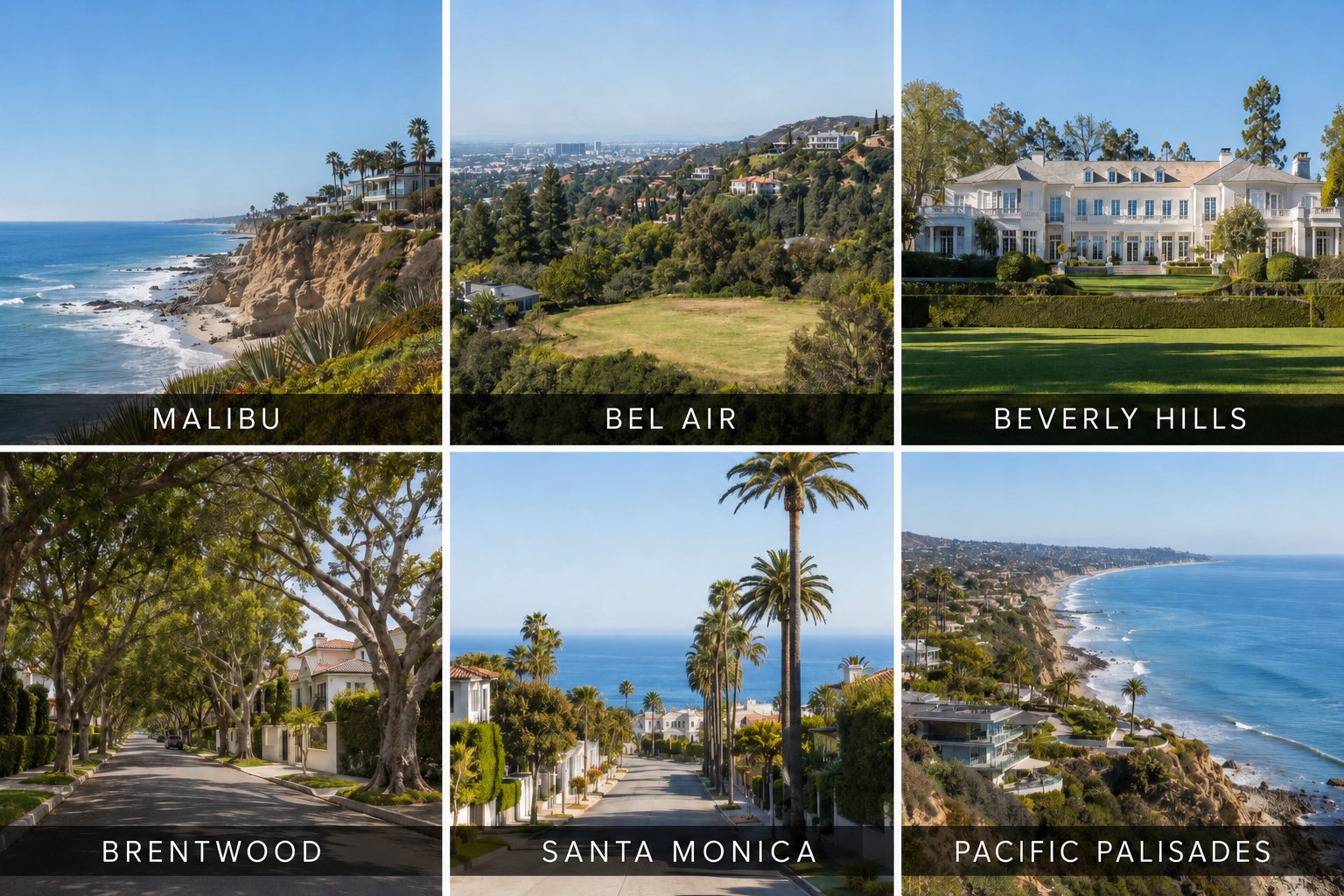
Beverly Hills strengthens its international reputation through luxury retail, hospitality, and cultural events.
Santa Monica continues investing in its beachfront amenities, parks, pedestrian districts, and commercial corridors.
Brentwood preserves its village atmosphere while attracting new restaurants and boutique businesses.
Pacific Palisades continues rebuilding and reinvesting in its community, demonstrating the long-term resilience that has attracted generations of homeowners.
Malibu’s coastline remains one of California’s most irreplaceable natural assets.
Bel Air continues protecting the privacy and low-density character that define its identity.
None of these advantages developed overnight.
They represent decades of careful planning, investment, and community stewardship.
For buyers thinking beyond today’s market cycle, that history often matters just as much as the home itself.
Layer 3: The Home Is Where Owners Create Value
The first two layers of property value – land and neighborhood – are largely fixed. Once you’ve chosen a location, you can’t move the lot or redesign the surrounding community.
The home itself is different.
It is the one layer where thoughtful decisions can significantly enhance value.
This is why two neighboring properties on similar lots can command very different prices.
The difference often isn’t the address. It’s the execution.
Architecture, floor plan, natural light, construction quality, craftsmanship, functionality, and maintenance all shape how buyers perceive a property. These elements influence not only market value but also how quickly a home sells and how strongly buyers compete for it.
A successful renovation isn’t about making a home look expensive.
It’s about making it feel timeless.
Luxury buyers consistently respond to homes that balance aesthetics with functionality. Spaces should feel comfortable rather than oversized, elegant rather than extravagant, and practical enough to support everyday living.
The highest-performing luxury homes rarely follow short-term design trends. Instead, they emphasize enduring principles such as proportion, quality materials, natural light, and thoughtful flow between rooms.
That is one reason some homes continue attracting buyers years after construction while others begin to feel dated surprisingly quickly.
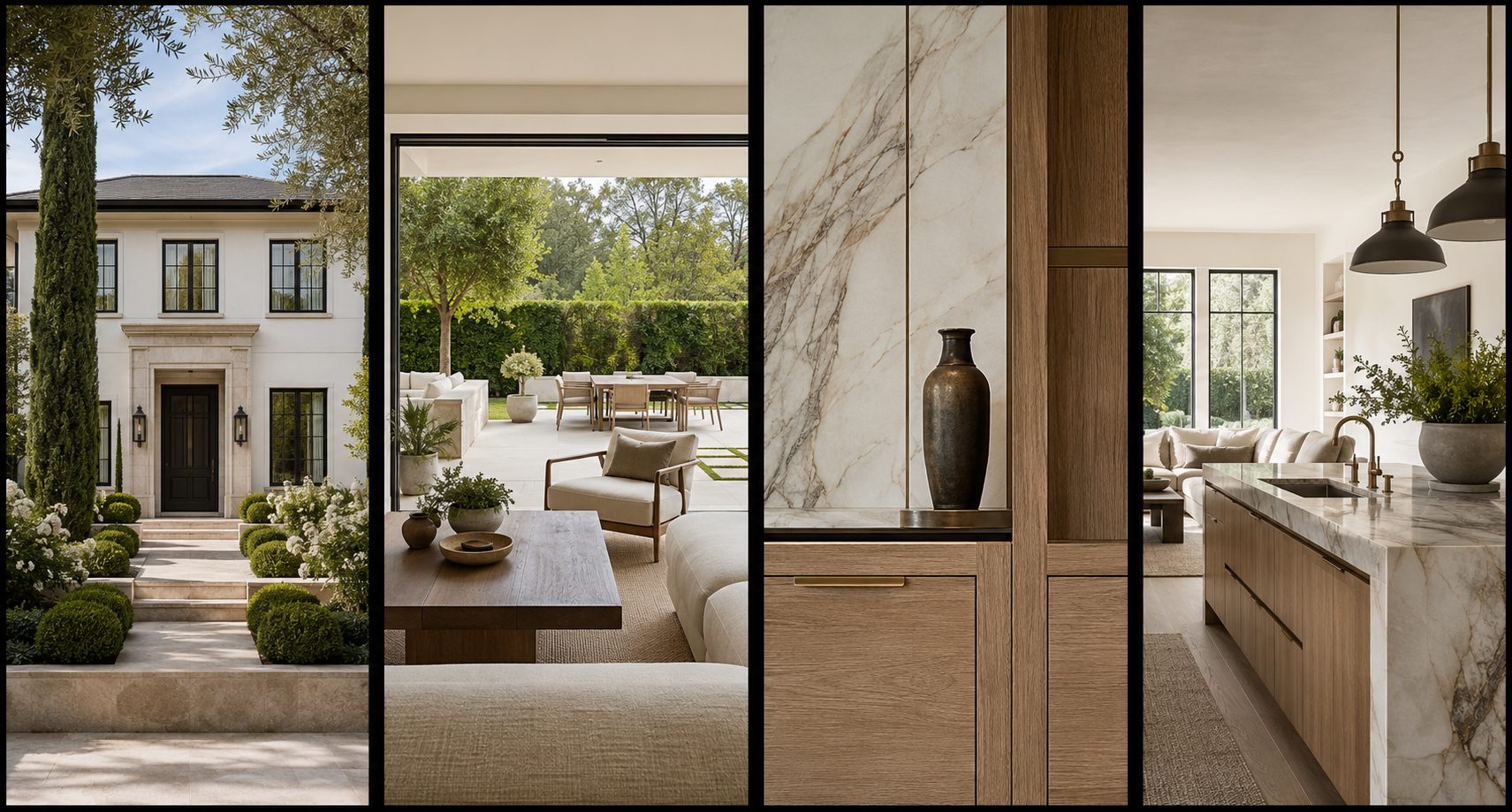
Timeless Design Creates Lasting Value
- Contemporary architecture with clean lines
- Seamless indoor-outdoor living
- Classic traditional architecture with modern updates
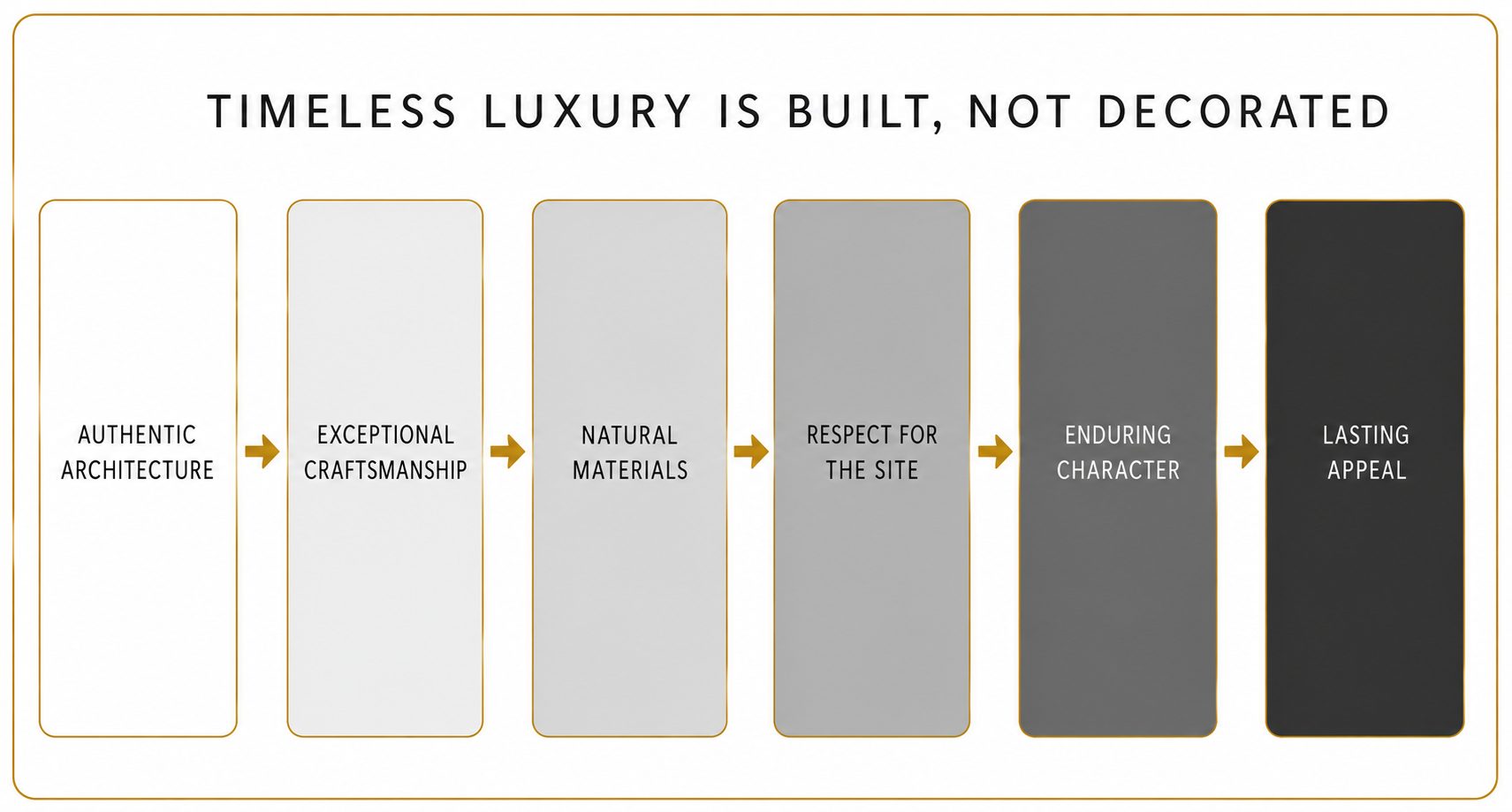
- Exceptional craftsmanship and natural materials
Key Insight
Great design ages gracefully.
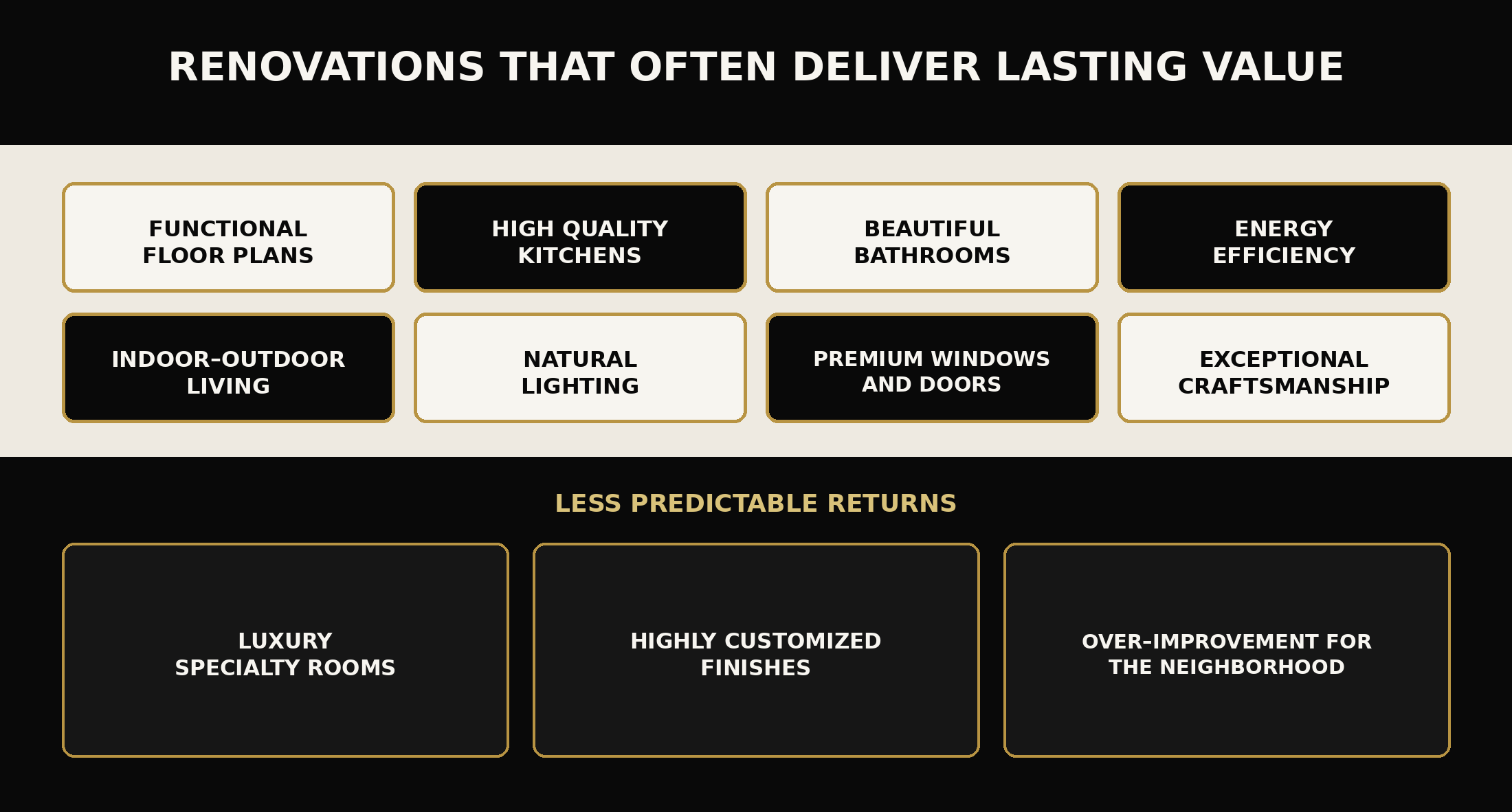
Renovating With Return in Mind
One of the most common questions homeowners ask is:
“Which improvements add the most value?”
The answer depends on the property.
Not every renovation produces a meaningful return.
Some improvements simply personalize a home without increasing what future buyers are willing to pay.
The most successful renovations usually strengthen what already makes the property desirable.
For example:
A beautifully designed kitchen may improve a home’s functionality, but it won’t transform an average location into a premier one.
Likewise, an expensive remodel cannot compensate for poor natural light, awkward floor plans, or an undesirable setting.
Before beginning a renovation, I encourage homeowners to ask several questions:
- Will this improvement appeal to future buyers?
- Does it complement the architecture?
- Is it consistent with surrounding properties?
- Will it remain attractive ten years from now?
When improvements respect both the home and its neighborhood, they often generate stronger long-term returns than projects driven primarily by current design trends.
Layer 4: Market Timing Influences Value, But It Doesn’t Define It
The fourth layer is also the one that receives the most attention.
Interest rates.
Housing inventory.
Economic news.
Consumer confidence.
Election cycles.
Financial markets.
These factors certainly affect real estate activity, and they often dominate headlines.
Yet they are also the most temporary layer.
Markets rise.
Markets slow.
Inventory expands.
Inventory contracts.
Mortgage rates fluctuate.
Buyer sentiment changes.
Throughout these cycles, many people become convinced that waiting just a little longer will produce the perfect opportunity.
Sometimes they’re right.
More often, they discover that the market changed in ways nobody predicted.
One of the lessons I’ve learned over the years is that long-term success in real estate rarely comes from perfectly timing the market.
It comes from purchasing an exceptional property in an exceptional location and allowing time to work in your favor.
Great Properties Continue Creating Demand
Market conditions influence negotiation.
They influence pricing strategies.
They influence marketing.
What they rarely change is the fundamental appeal of exceptional real estate.
Buyers continue searching for outstanding homes in Beverly Hills.
Families continue relocating to Brentwood.
Professionals continue appreciating Santa Monica’s blend of coastal living and urban convenience.
Estate buyers continue valuing Bel Air’s privacy.
Homeowners continue seeking Pacific Palisades for its community character and rebuilding momentum.
Oceanfront properties in Malibu remain among the most limited residential opportunities anywhere in California.
The market may determine when people purchase.
The first three layers largely determine what they continue wanting to own.
That distinction explains why truly exceptional properties often remain desirable across multiple economic cycles.
A Different Way to Evaluate Real Estate
One exercise I often encourage buyers to try is surprisingly simple.
Instead of asking:
“Do I love this house?”
Ask four separate questions.
How rare is the land?
How strong is the neighborhood?
How well does the home support long-term living?
Does today’s market provide a favorable opportunity to purchase?
When viewed through those four lenses, the decision often becomes much clearer.
A beautiful home in an average location may not perform as well over time as an attractive home on exceptional land within a highly desirable neighborhood.
Likewise, a temporary shift in interest rates may create a buying opportunity, but it doesn’t fundamentally alter the qualities that have made premier Los Angeles neighborhoods desirable for generations.
Understanding which factors are permanent and which are temporary helps buyers make more confident decisions and helps sellers better understand the strengths of the property they are bringing to market.
Why the Four Layers Matter More in Today’s Market
One of the most valuable characteristics of today’s Los Angeles luxury market isn’t simply pricing.
It’s perspective.
Compared with the highly competitive conditions seen several years ago, buyers generally have more opportunities to evaluate properties carefully, compare neighborhoods, and make thoughtful decisions before writing an offer. That shift allows buyers to focus on long-term fundamentals instead of reacting to intense competition.
Ironically, this type of market often rewards disciplined decision-making.
Instead of asking, “How quickly do I need to act?”, buyers can spend more time asking questions that may have a much greater impact over the next twenty years.
Is the land truly irreplaceable?
Does the neighborhood continue attracting investment?
Will the home’s architecture remain desirable over time?
Am I purchasing because the property is exceptional, or simply because current market conditions appear favorable?
Those questions often produce better decisions than attempting to predict where mortgage rates or home prices might be six months from now.
What This Framework Means for Buyers
Buying luxury real estate is rarely just about acquiring a beautiful home.
It’s about selecting an asset that will continue serving your lifestyle while preserving long-term desirability.
When buyers evaluate all four layers independently, priorities often become clearer.
If a home sits on an extraordinary lot within a highly desirable neighborhood, temporary cosmetic shortcomings may become opportunities rather than obstacles.
Conversely, even an impeccably renovated home may struggle to match the long-term appeal of a superior location if the underlying land or neighborhood lacks the same enduring characteristics.
That perspective often changes the way buyers compare properties.
Instead of concentrating primarily on finishes, they begin asking broader questions about permanence, scarcity, and future demand.
Those conversations frequently lead to more confident purchasing decisions.
What This Framework Means for Sellers
For homeowners preparing to sell, the Four Layers of Property Value provide a useful way to position a property before it reaches the market.
Every seller naturally focuses on the home itself.
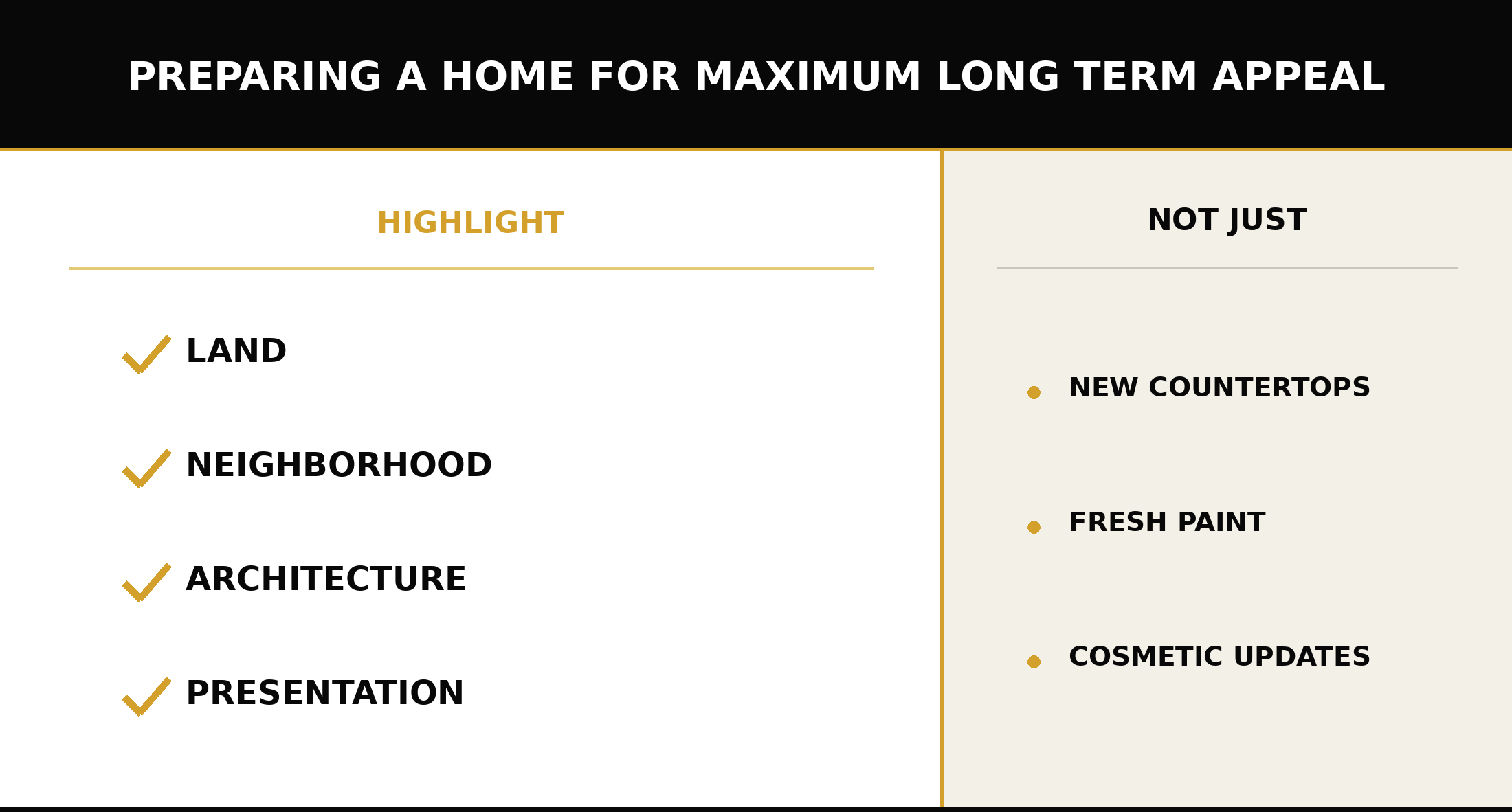
Fresh paint.
Professional staging.
Landscape improvements.
Updated lighting.
Photography.
Marketing.
Those details remain important because they influence first impressions.
However, the strongest marketing also highlights the property’s first two layers.
The quality of the land.
The strength of the neighborhood.
Those characteristics cannot be replicated by competing listings.
A beautifully prepared home attracts attention.
An exceptional location creates lasting demand.
The most effective marketing strategy communicates both.
Rather than simply listing features, successful luxury marketing tells buyers why the property occupies a location that will remain desirable for years to come.
Looking Beyond Today’s Headlines
Real estate headlines often focus on short-term events.
Interest rates.
Economic forecasts.
Election cycles.
Inventory changes.
While those developments deserve attention, they represent only one of the four layers influencing a property’s long-term value.
The strongest real estate decisions are usually grounded in factors that change very slowly.
Exceptional land remains exceptional.
Well-established neighborhoods continue attracting new generations of buyers.
Thoughtful architecture endures.
Only market timing shifts from year to year.
Keeping that perspective helps buyers avoid reacting emotionally to temporary conditions while helping sellers recognize the enduring strengths their properties already possess.
Conclusion
Luxury real estate has always been about more than beautiful homes.
The properties that continue performing well over decades often share something much deeper.
They occupy exceptional land.
They belong to enduring neighborhoods.
They feature homes designed to stand the test of time.
And eventually, they benefit from favorable market conditions.
Understanding these four layers doesn’t eliminate uncertainty.
Real estate will always involve changing markets and evolving buyer preferences.
But it does provide a framework for separating temporary conditions from lasting value.
Whether you’re purchasing your first luxury residence, selling a longtime family home, or expanding a real estate portfolio, asking the right questions often matters more than finding the perfect market forecast.
Because while no one can consistently predict the next market cycle, buyers and sellers can still recognize the qualities that have made Los Angeles’ premier neighborhoods desirable for generations.
And in my experience, those qualities continue to matter long after today’s headlines have faded.
Key Takeaways
The Four Layers of Property Value
- Land provides the foundation of long-term scarcity.
- Neighborhood compounds value through decades of investment and reputation.
- The Home is where thoughtful design and craftsmanship create additional value.
- Market Timing influences opportunity but should rarely outweigh the first three layers.
Understanding these layers helps explain why certain properties continue attracting buyers through changing economic conditions and why exceptional real estate remains exceptional regardless of the current news cycle.
Timeless Luxury Home Design: Why Some Homes Feel Extraordinary for Generations
Luxury Leaves an Impression Long Before Anyone Talks About Price
Walk through enough exceptional homes and one observation becomes difficult to ignore.
Some homes are unforgettable.
Others are merely expensive.
The difference has very little to do with the price tag.
I’ve toured magnificent estates where every finish was imported, every appliance represented the latest technology, and every room showcased extraordinary craftsmanship. Yet after leaving, I struggled to remember much about the experience.
I’ve also visited homes that were noticeably smaller or less elaborate, yet days later I could still recall exactly how they felt.
That contrast fascinated me.
Over the years, I’ve come to believe that timeless luxury isn’t created by adding more. It’s created by understanding what truly matters and having the discipline to remove what doesn’t.
Whether we’re talking about architecture, fashion, furniture, or fine watchmaking, the principles remain remarkably consistent.
The Best Luxury Never Feels Forced
Before entering real estate, I spent more than two decades representing some of the world’s most respected luxury brands, including Giorgio Armani, Loro Piana, and Vacheron Constantin.
Although each company operates in a different industry, they all share one defining characteristic.
None relies on excess to communicate quality.
Giorgio Armani became synonymous with elegance by refining proportions and removing unnecessary complexity.
Loro Piana built its reputation not through bold logos, but through exceptional materials, craftsmanship, and understated refinement.
Vacheron Constantin has spent nearly three centuries perfecting details that many people will never consciously notice, yet collectors immediately recognize their significance.
Luxury, I learned, is rarely loud.
It communicates confidence through restraint, precision, and authenticity.
When I began working in luxury real estate, I realized exceptional homes follow many of the same principles.
The most memorable residences aren’t those trying hardest to impress.
They’re the ones where every decision feels intentional.
Timeless Design Begins With Human Experience
Many conversations about luxury homes focus on measurable features.
Square footage.
Bedroom count.
Ceiling height.
Imported stone.
Custom cabinetry.
Smart home technology.
Those elements certainly contribute to quality.
But they don’t fully explain why one property feels extraordinary while another, with a similar budget, leaves only a fleeting impression.
The answer lies in something far less tangible.
Great design begins with human experience.
Before buyers consciously evaluate finishes or construction details, they are already responding to the environment around them.
How natural light enters a room.
Whether proportions feel balanced.
How the architecture frames a view.
How the transition from one space to another unfolds.
Most of these reactions happen within seconds, long before anyone begins discussing specifications.
The finest homes are designed not only to be seen, but also to be experienced.
Principle One: Arrival
Luxury doesn’t begin inside the home.
It begins the moment someone approaches the property.
Think about some of the world’s most memorable hotels, museums, or historic estates.
Very few reveal everything at once.
Instead, they create anticipation.
A tree lined drive.
A carefully framed entrance.
The gradual reveal of a courtyard.
A glimpse of the ocean beyond the architecture.
These moments slow people down.
They encourage curiosity before the front door even opens.
The same principle appears throughout exceptional residential architecture.
Rather than immediately displaying every feature, the home invites visitors to discover it one experience at a time.
That sense of arrival is often impossible to measure, yet it becomes one of the strongest first impressions a property can create.
Principle Two: Light
Ask architects what transforms a room, and many will give the same answer.
Natural light.
Not because it simply makes a room brighter, but because it changes throughout the day, bringing movement, warmth, and depth to the spaces we inhabit.
Morning light creates energy.
Afternoon light softens a room.
Evening light can completely transform the character of an interior.
Expensive finishes may capture attention for a moment.
Beautiful light influences how people feel every day.
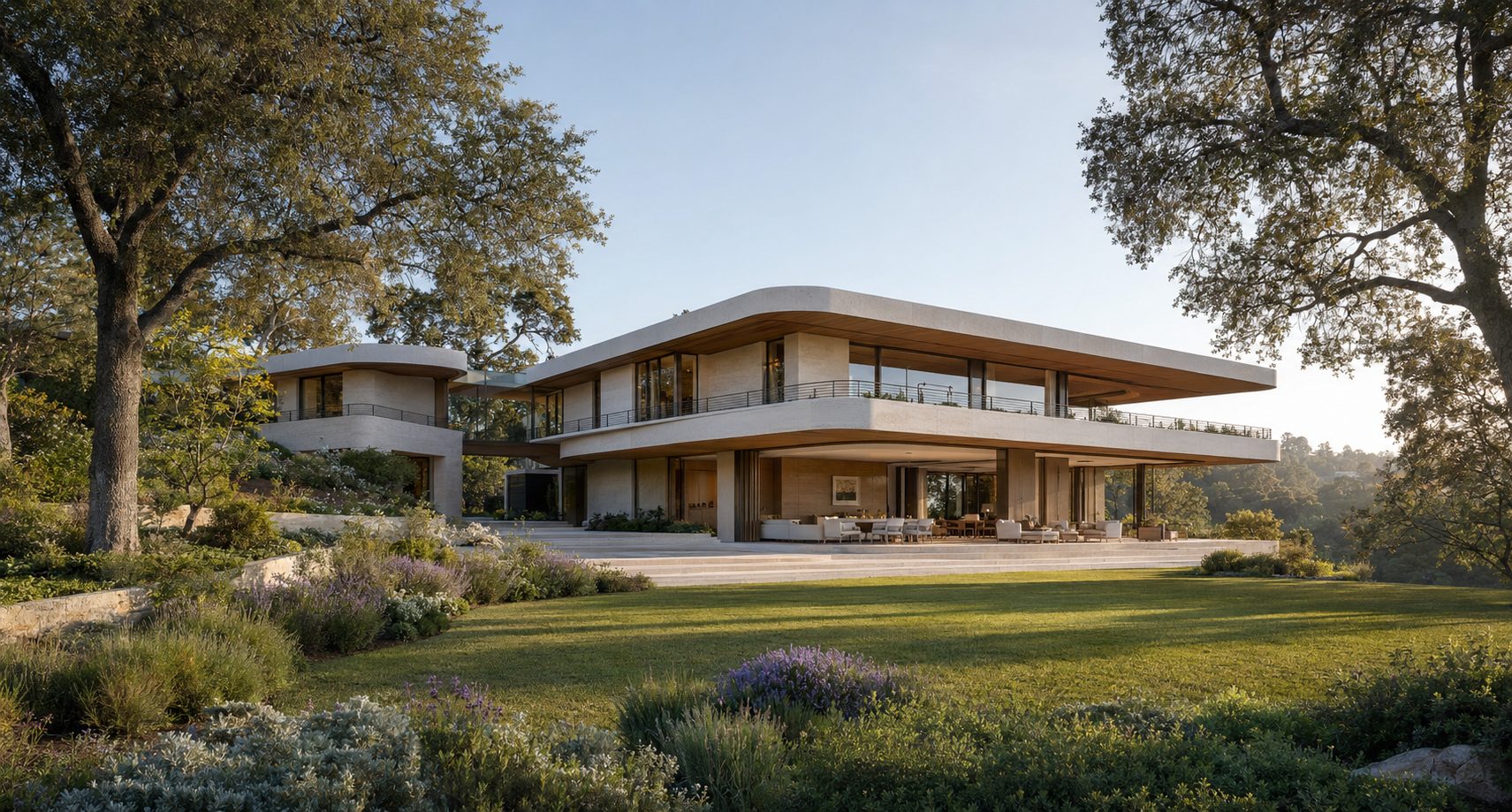
Perhaps that’s why so many of the world’s most admired homes are remembered not for a specific material, but for the way they engage with the sun, the landscape, and the changing seasons.
Timeless luxury isn’t static.
It evolves with the environment around it.
Principle Three: Proportion
One of the greatest misconceptions about luxury is that bigger automatically means better.
In reality, proportion often matters far more than size.
Some of the world’s most admired homes are not remembered because they have the largest rooms. They’re remembered because every room feels balanced.
Ceilings relate comfortably to the room’s dimensions.
Windows frame views rather than overwhelm them.
Hallways feel purposeful instead of oversized.
Furniture complements the architecture instead of competing with it.
When these relationships are thoughtfully considered, a home feels calm and intuitive. Visitors may never consciously identify why, but they immediately recognize the result.
The same principle exists throughout the luxury world.
During my years with Giorgio Armani, I came to appreciate that elegance is rarely created by adding more fabric or embellishment. It comes from proportion. Every line, every silhouette, and every detail exists in balance with the whole. Nothing feels exaggerated because nothing needs to.
Exceptional architecture follows the same philosophy.
A home that is perfectly proportioned often feels more luxurious than one that is simply larger or more elaborate.
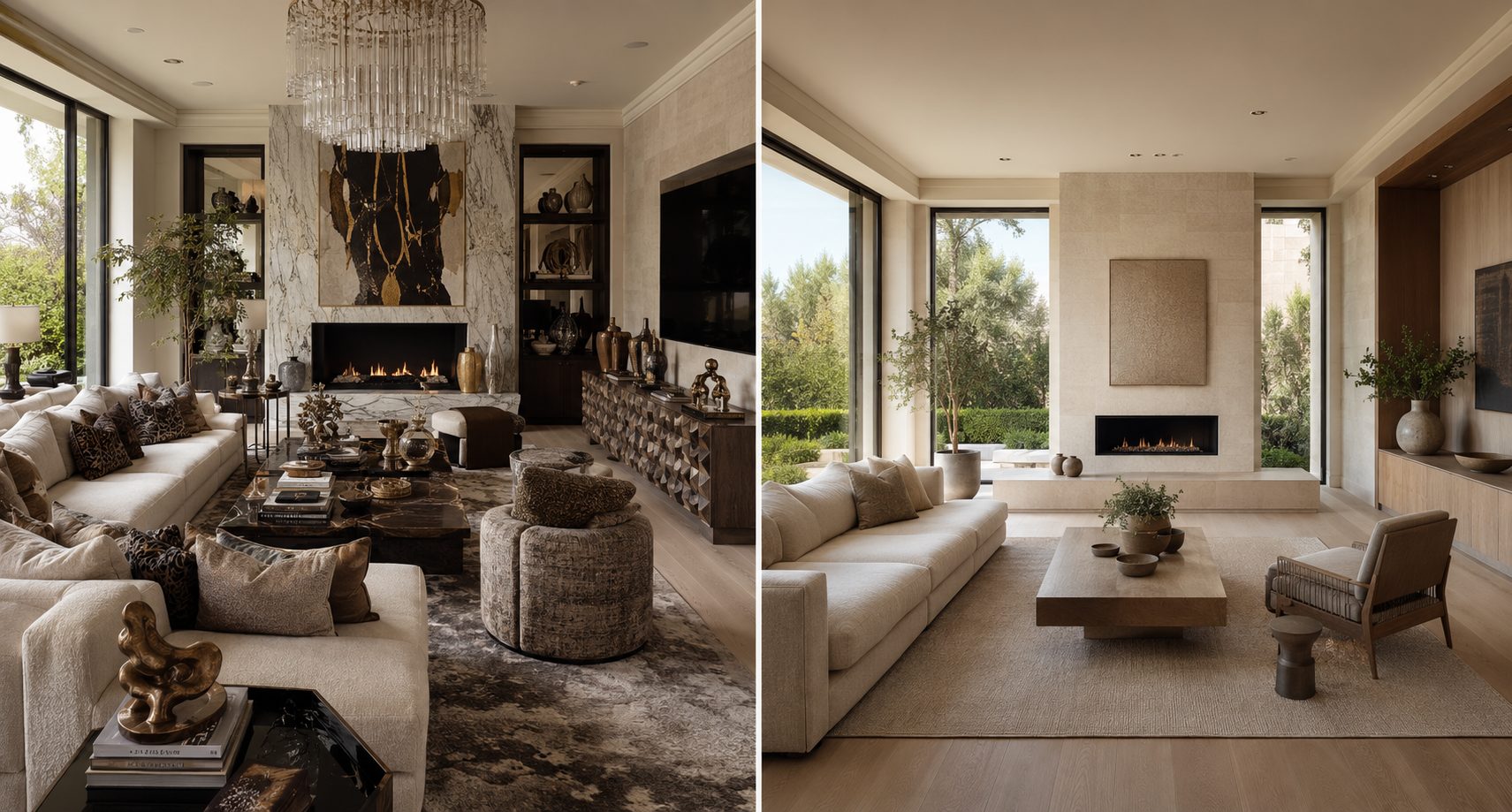
Key Insight: Luxury is often the result of balance rather than abundance.
Principle Four: Flow
If proportion determines how a home looks, flow determines how it lives.
Think about the last home that immediately felt comfortable.
Chances are you didn’t stop to analyze why.
You simply moved through it effortlessly.
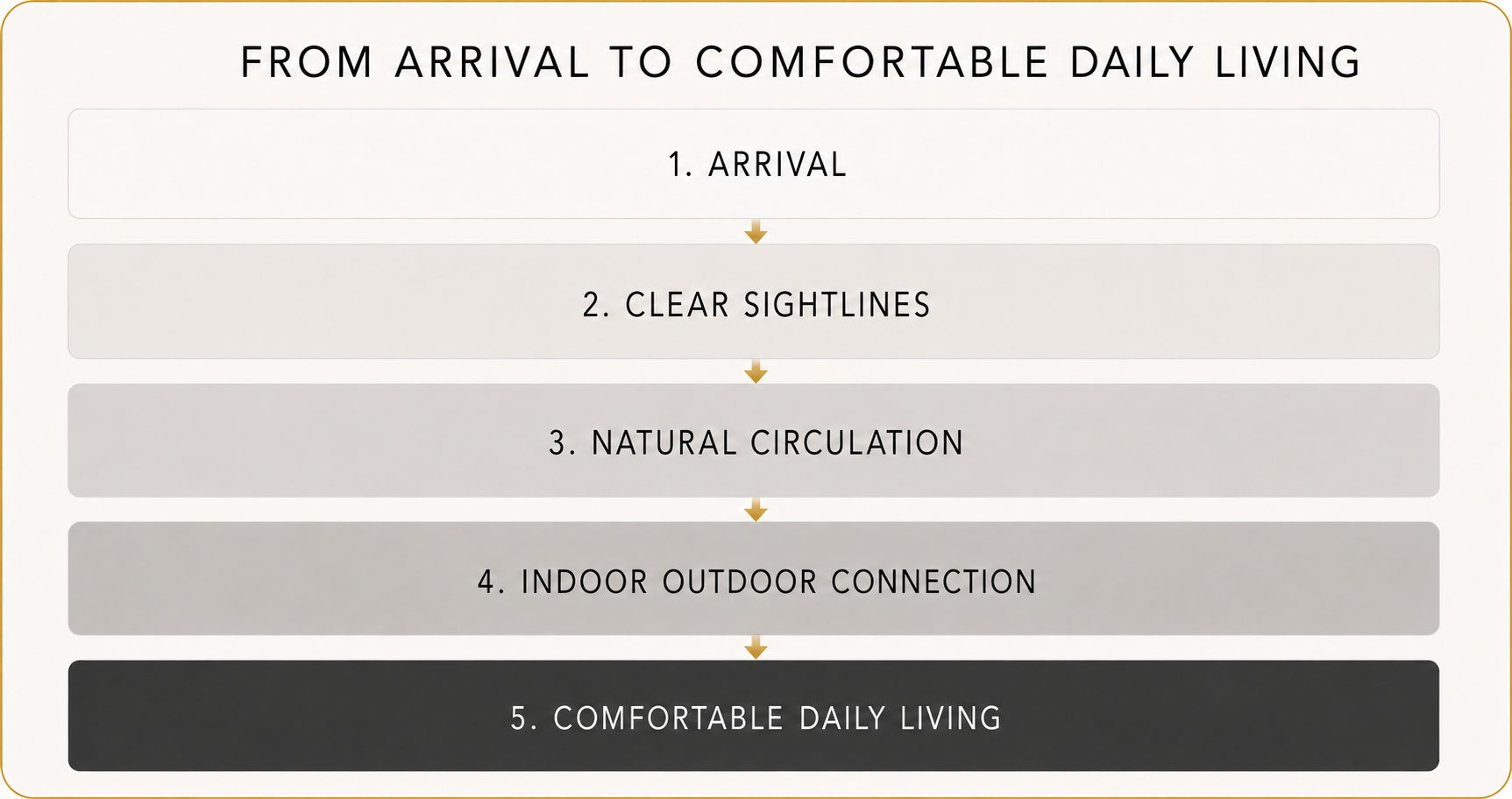
One room naturally led to the next.
Sightlines felt intentional.
Outdoor spaces extended the interior rather than interrupting it.
Natural light guided your attention.
Nothing felt awkward or forced.
This is thoughtful planning at work.
Great architecture removes friction.
Rather than constantly asking occupants to adapt to the building, the building quietly adapts to the way people naturally live.
That is surprisingly difficult to achieve.
It requires careful planning, restraint, and an understanding of human behavior rather than simply maximizing square footage.
The Luxury of Simplicity
Many people associate luxury with abundance.
More rooms.
More materials.
More technology.
More amenities.
Yet the most enduring luxury often feels remarkably simple.
That lesson became especially clear during my time with Loro Piana.
Clients didn’t choose a garment because it demanded attention across the room.
They chose it because it felt extraordinary the moment they touched it.
The quality wasn’t immediately obvious to everyone.
It revealed itself over time.
Exceptional homes behave much the same way.
The finest craftsmanship often isn’t the most visible.
It’s found in details that quietly improve daily life.
Cabinet doors that close with precision.
Natural materials that become more beautiful as they age.
Windows positioned to capture changing daylight throughout the seasons.
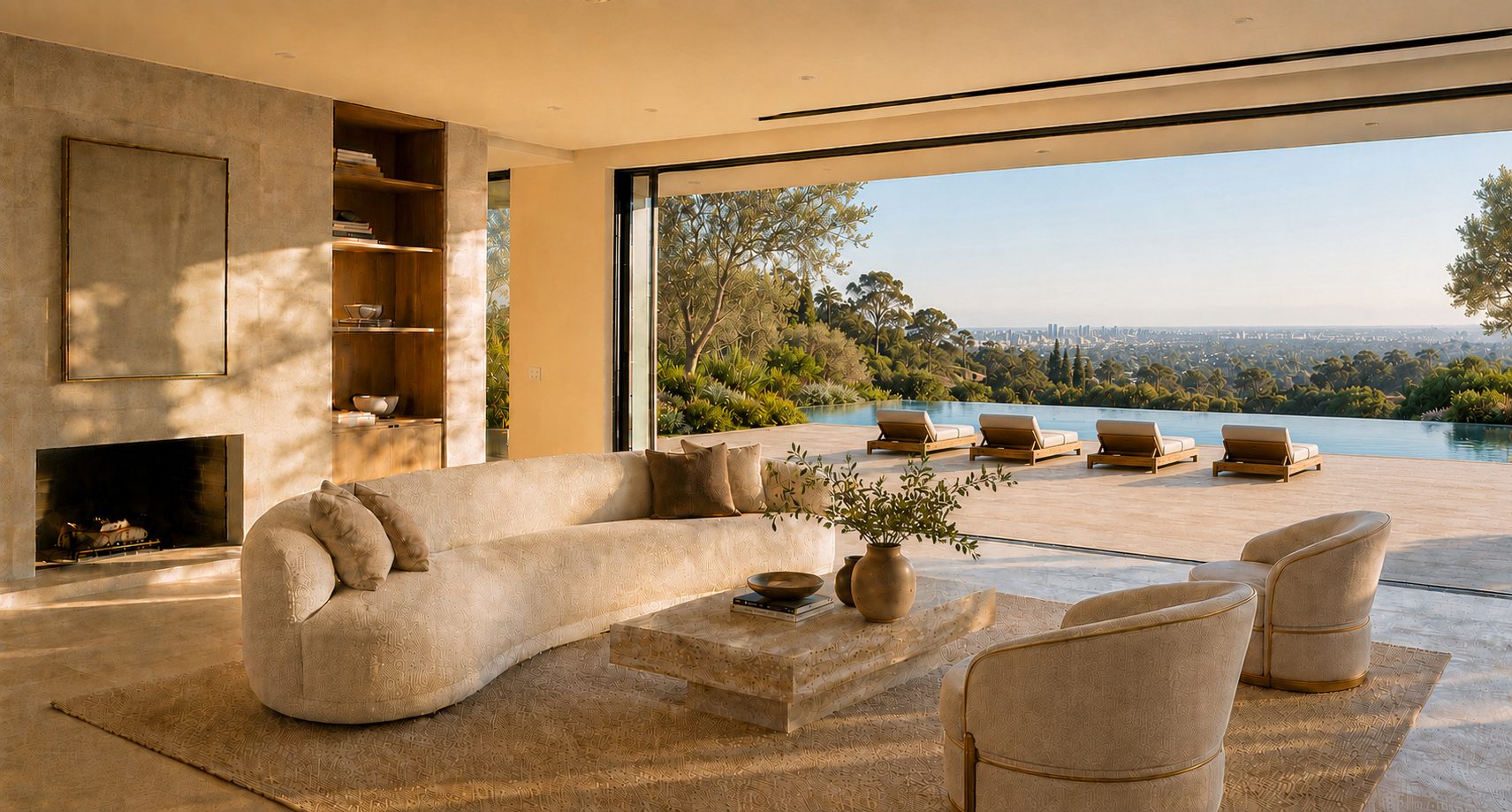
Outdoor spaces that feel like natural extensions of the home rather than separate destinations.
These details rarely appear in marketing headlines.
Yet they consistently shape how people experience a property.
Luxury Should Feel Effortless
One characteristic I admire most in exceptional homes is how little they ask of their owners.
Daily routines feel intuitive.
Guests know where to gather.
Private spaces remain private.
Storage is thoughtfully integrated.
The kitchen supports conversation rather than interrupting it.
Technology serves the home without dominating it.
Ironically, achieving this level of simplicity often requires tremendous discipline.
Every unnecessary decision removed from daily life allows the architecture itself to shine.
The result is a home that doesn’t constantly compete for attention.
Instead, it quietly supports the people living within it.
That’s a hallmark of timeless luxury.
What Buyers Often Remember
After showing hundreds of luxury homes, I’ve noticed that buyers rarely recall every appliance brand, countertop material, or lighting fixture.
Instead, they remember something far less tangible.
“That home felt peaceful.”
“I could picture myself living there.”
“Everything just made sense.”
Those reactions aren’t accidents.
They’re the result of thoughtful proportion, natural flow, and careful craftsmanship working together.
When architecture disappears into the experience of living, it has achieved something remarkable.
That’s when a house begins to feel timeless rather than simply expensive.
Principle Five: Authenticity
If proportion creates beauty and flow creates comfort, authenticity creates permanence.
It’s the characteristic that allows a home to remain desirable long after design trends have changed.
Authenticity cannot be manufactured.
It comes from architecture that respects its surroundings.
Materials selected for their integrity rather than their novelty.
Craftsmanship that rewards closer inspection.
Design decisions guided by purpose instead of fashion.
Authentic homes don’t imitate luxury.
They embody it.
Craftsmanship Is Meant to Be Discovered, Not Announced
One lesson I carried with me from Vacheron Constantin is that true craftsmanship often reveals itself gradually.
A collector doesn’t admire a fine mechanical watch because it is covered in decoration.
They admire the countless details that remain invisible to most people.
The precision of the movement.
The finishing beneath the dial.
The patience required to create something intended to last for generations.
Exceptional homes evoke the same appreciation.
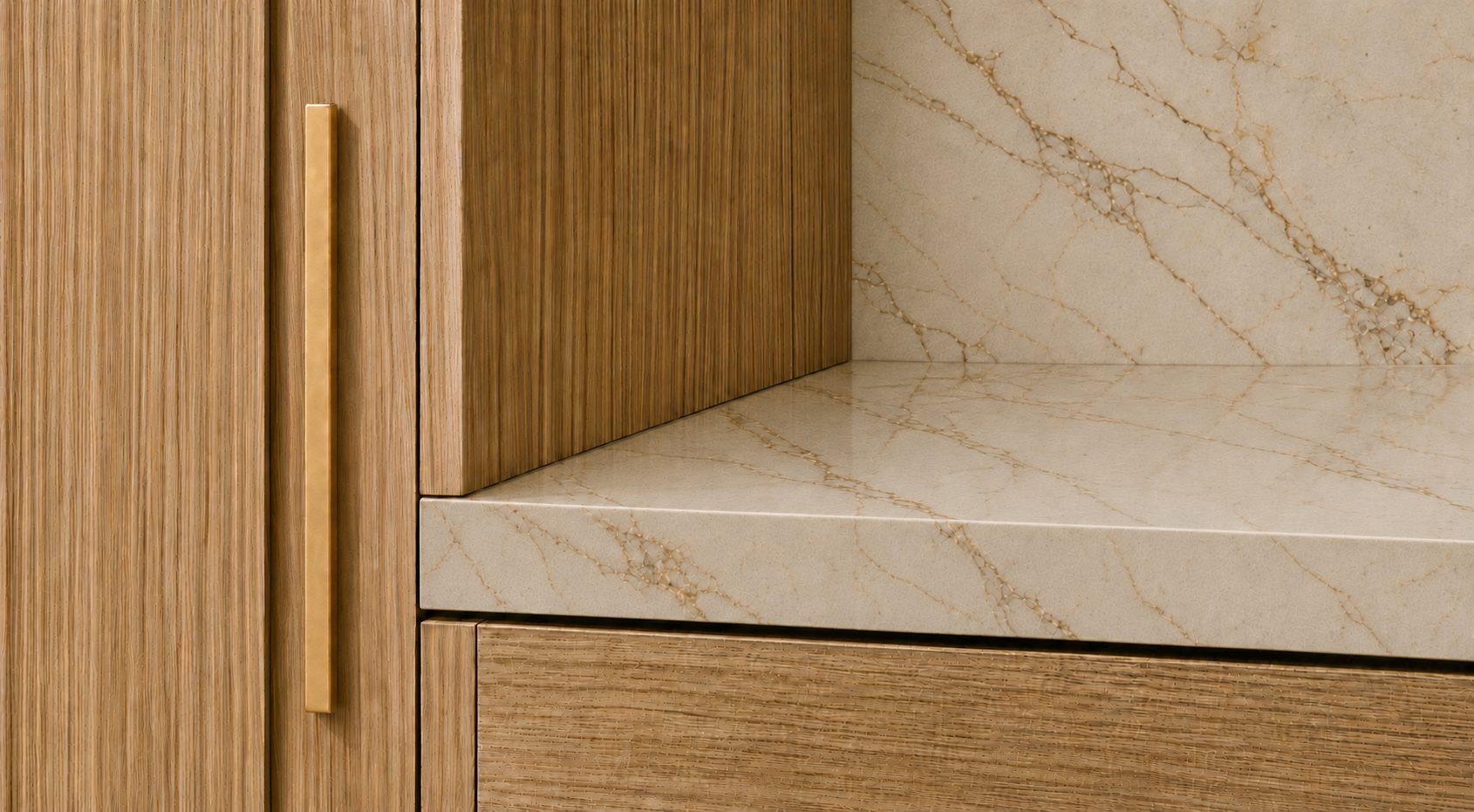
The joinery of custom millwork.
The way natural stone aligns across adjoining surfaces.
The precision of shadow lines.
How doors close with quiet confidence.
How light gently moves across carefully chosen materials throughout the day.
Many visitors may never consciously notice these details.
Yet they influence how a home is experienced.
Luxury is often defined not by what immediately captures attention, but by what quietly earns admiration over time.
Timeless Homes Respect Their Surroundings
The finest homes rarely compete with their environment.
They complement it.
A contemporary residence overlooking the Pacific should frame the coastline rather than distract from it.
A Beverly Hills estate should embrace mature landscaping as naturally as it embraces its architecture.
A Bel Air hillside home should celebrate privacy, topography, and distant city views rather than overwhelm them.
Great architecture doesn’t dominate the landscape.
It belongs to it.
That’s one reason many of Los Angeles’ most admired homes remain compelling decade after decade.
They respond thoughtfully to their setting instead of chasing temporary trends.
What This Means for Buyers
When touring luxury homes, it’s easy to compare measurable features.
Square footage.
Bedroom count.
Construction cost.
Amenities.
Those details matter.
But after years of walking through exceptional homes, I’ve found that the questions leading to the best long-term decisions are often different.
Does the architecture feel balanced?
Will this design remain beautiful twenty years from now?
Does the home feel connected to its surroundings?
Can I imagine enjoying this space long after today’s trends have passed?
A remarkable home doesn’t reveal itself all at once.
Like exceptional art, fine tailoring, or masterful watchmaking, its qualities become more meaningful the longer you experience them.
What This Means for Sellers
Preparing a luxury home for sale isn’t simply about updating finishes or adding fashionable décor.
It’s about revealing the qualities that already make the home exceptional.
Sometimes that means simplifying a space so the architecture becomes the focal point.
Sometimes it means allowing natural light to define a room instead of filling it with decorative elements.
Sometimes it means preserving original craftsmanship that tells the home’s story.
The objective isn’t to convince buyers that a property is luxurious.
It’s to help them experience why it is.
When buyers form that emotional connection, the conversation shifts away from individual features and toward the home as a complete composition.
That is where enduring value is created.
A Different Way to Think About Luxury
Throughout my career, whether I was representing Giorgio Armani, Loro Piana, Vacheron Constantin, or advising clients in luxury real estate, I’ve been fascinated by the same question:
Why do some creations remain admired for generations while others quickly fade from memory?
The answer is rarely excess.
It is thoughtful design.
Purpose.
Craftsmanship.
Restraint.
Authenticity.
Those principles transcend industries.
They define exceptional fashion.
They define fine watchmaking.
They define enduring architecture.
And they define the homes that continue to inspire long after they are built.
Final Thoughts
Luxury isn’t a collection of expensive materials.
It isn’t a larger floor plan or a longer list of amenities.
At its highest level, luxury is the thoughtful integration of architecture, craftsmanship, proportion, light, and human experience.
That’s why the homes people remember most are often not the ones that tried hardest to impress.
They’re the ones that felt effortless.
As someone who has spent more than two decades immersed in luxury brands before entering real estate, I’ve come to appreciate that the principles of enduring quality are remarkably consistent. Whether evaluating a finely tailored jacket, a handcrafted timepiece, or an exceptional residence, the question remains the same:
Will this still feel extraordinary years from now?
For buyers, asking that question often leads to wiser decisions.
For sellers, understanding that perspective can help reveal the authentic strengths that already exist within a home.
Markets will rise and fall.
Design trends will evolve.
Technology will continue to advance.
But homes built upon timeless principles will continue to stand apart because genuine luxury never depends on the moment. It endures well beyond it.
Key Takeaways
- Timeless luxury is defined by design principles, not price.
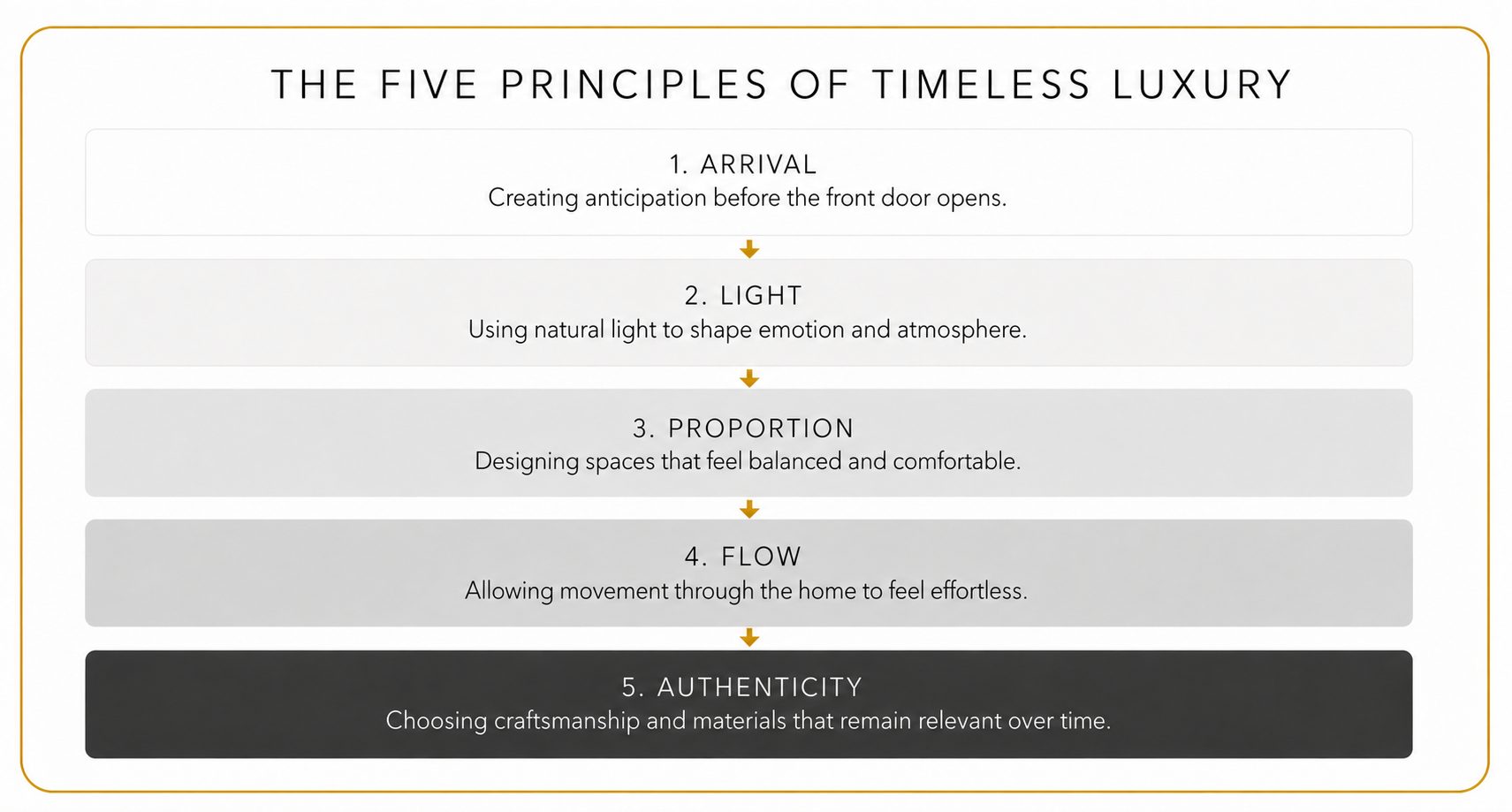
- Arrival, light, proportion, flow, and authenticity shape how a home is experienced.
- Exceptional craftsmanship is often subtle and reveals itself over time.
- Great architecture complements its surroundings instead of competing with them.
- Buyers should evaluate how a home will feel years from now, not just on the day they tour it.
- Sellers create the strongest impressions by highlighting authentic architectural qualities rather than chasing temporary design trends.
Suggested Internal Links
- The 4 Layers of Property Value: Why Some Los Angeles Homes Continue to Outperform Over Time
- What Today’s Luxury Home Buyers Really Want in 2026
- Home Pricing Strategy: Sell Smarter in Today’s Los Angeles Market
- Beverly Hills Real Estate
- Bel Air Real Estate
- Brentwood Real Estate
- Santa Monica Real Estate
- Malibu Real Estate
Suggested Authoritative External Links
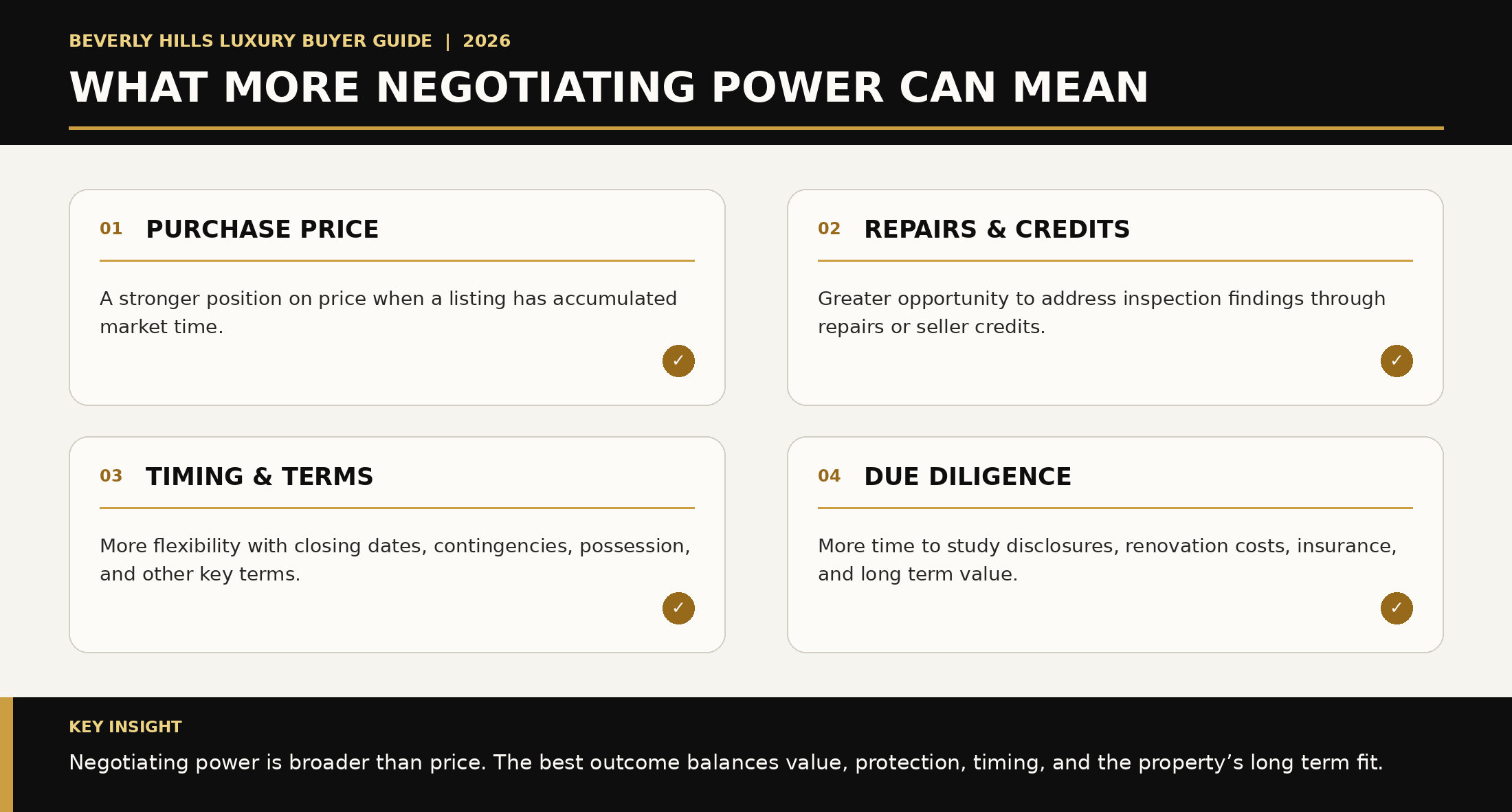
Luxury Real Estate Negotiation in Los Angeles: Why Representation Matters More Than Ever in 2026
The Return of Negotiation: Why Representation Matters More Than Ever in Today’s Los Angeles Market

One of the biggest misconceptions about real estate is that success comes down to finding the right property.
Finding the right property is only the beginning.
The real work often starts after an offer is written.
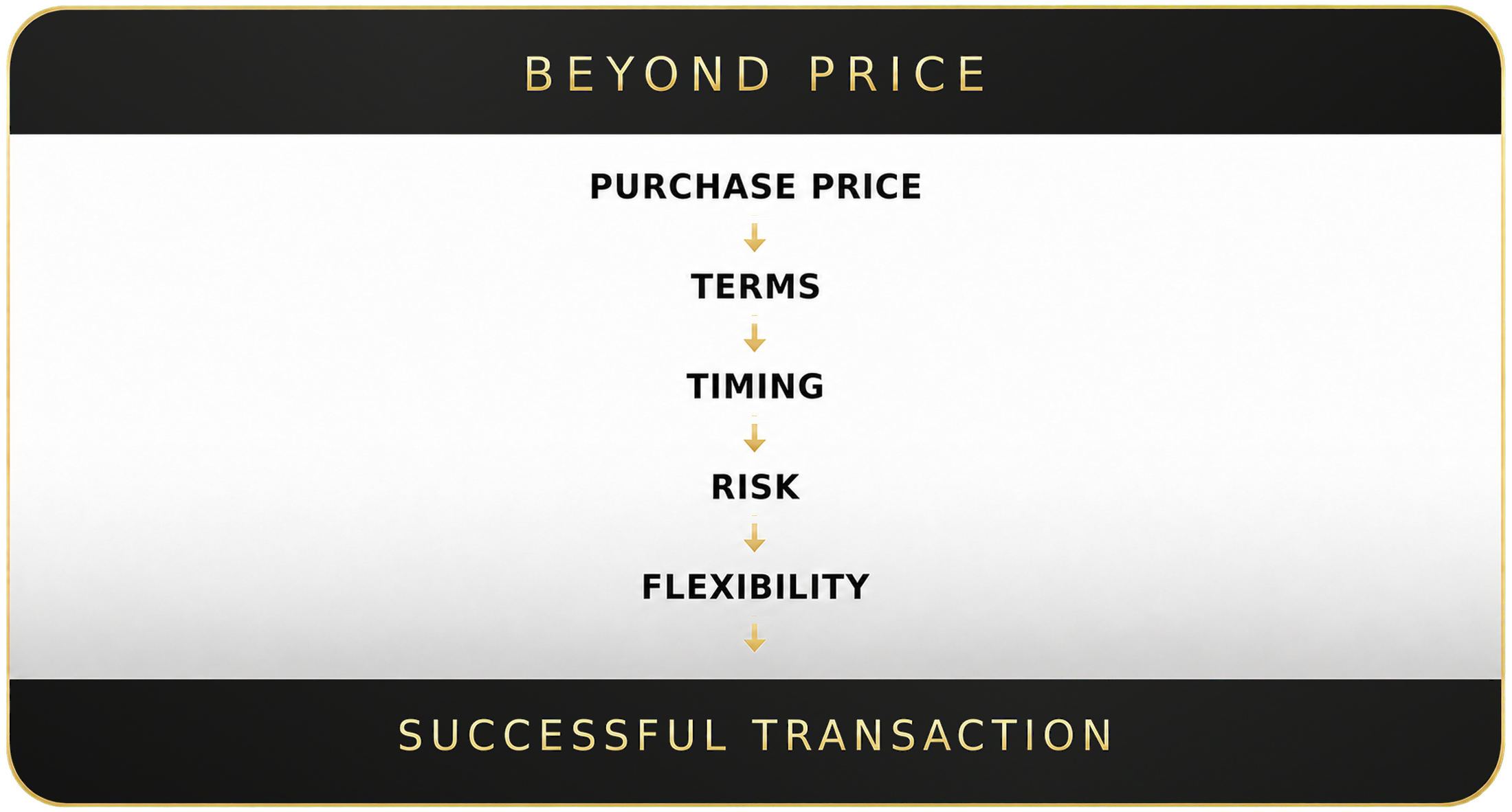
Every purchase involves hundreds of decisions.
Price.
Terms.
Contingencies.
Repairs.
Credits.
Escrow timelines.
Inspection strategy.
Appraisals.
Disclosures.
Risk management.
Many of these decisions never appear on real estate websites, yet they frequently determine whether a transaction succeeds and how favorable the final outcome becomes.
As today’s Los Angeles market becomes more balanced, negotiation has once again become one of the most valuable skills a real estate professional can provide.
Negotiation Is No Longer Just About Price
During highly competitive markets, buyers often believed the only way to win was to offer more money.
Today’s market has become more nuanced.
Price still matters.
But many successful negotiations involve adjustments that create value for both parties without necessarily changing the purchase price.
Examples include:
• Repair credits
• Escrow timelines
• Lease-back arrangements
• Contingency periods
• Personal property
• Closing cost allocations
• Home warranty coverage
• Inspection scheduling
Often, a thoughtful adjustment in one of these areas creates more value than simply reducing the purchase price.
Every Client Defines Success Differently
One buyer may want the lowest possible purchase price.
Another may prioritize certainty.
Some sellers want maximum proceeds.
Others value privacy or timing.
I’ve found that successful negotiations begin by understanding what each party values most.
Once those priorities become clear, opportunities often emerge that wouldn’t be obvious by focusing exclusively on price.
That is why negotiation is as much about listening as it is about advocating.
Information Creates Leverage
One of the advantages experienced agents bring to a negotiation is context.
Market data.
Comparable sales.
Neighborhood trends.
Inspection findings.
Disclosure analysis.
Contract knowledge.
These pieces of information help clients understand not only what a property is worth, but also how much negotiating flexibility may realistically exist.
Good negotiation is rarely based on emotion.
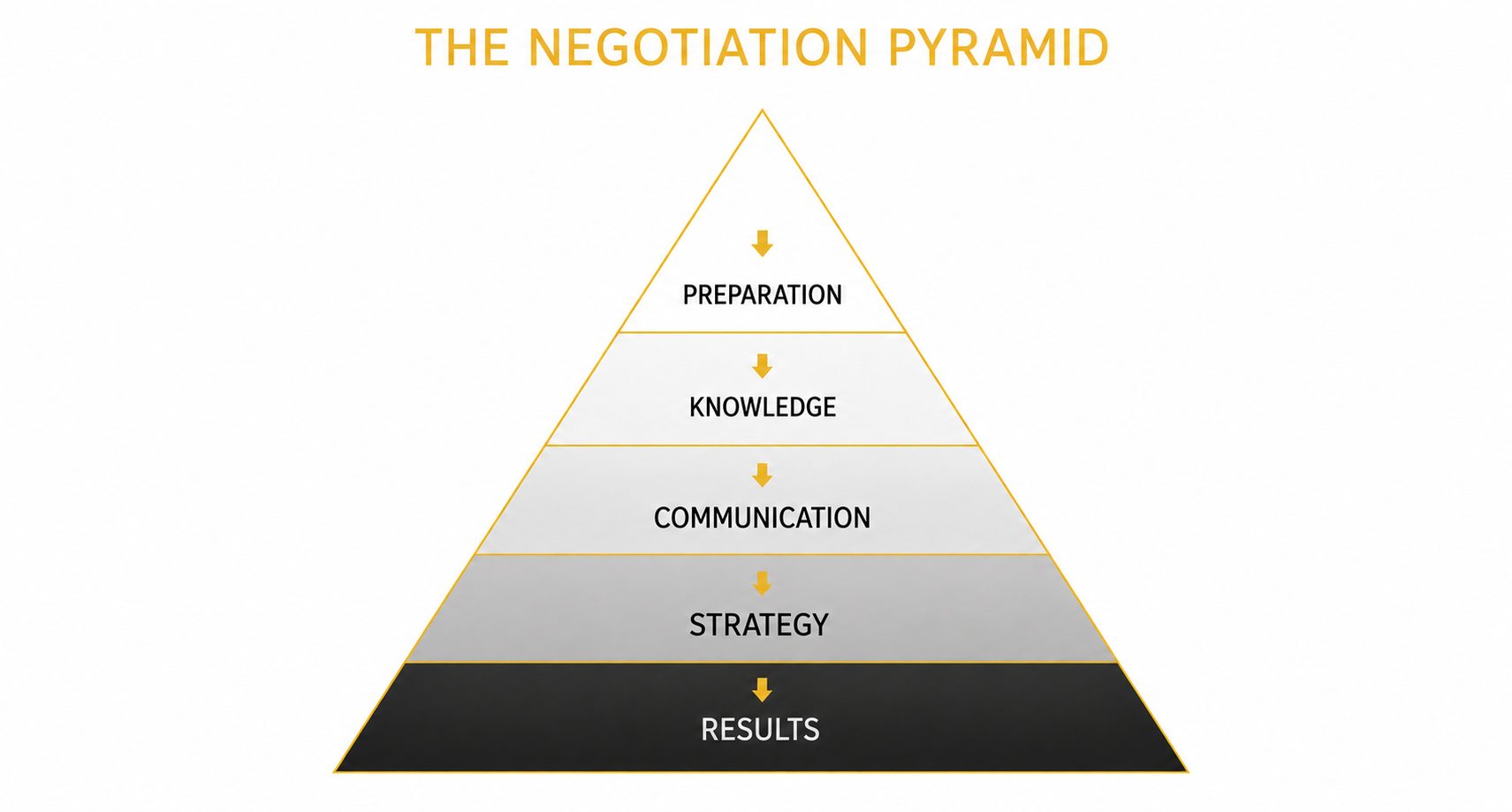
It is based on preparation.
 Negotiation Continues Throughout Escrow
 Negotiation Continues Throughout Escrow
Many people think negotiations end once an offer is accepted.
In reality, some of the most important discussions occur afterward.
Inspection findings.
Repair requests.
Credit negotiations.
Appraisal issues.
Title questions.
Financing changes.
Unexpected discoveries.
Each stage requires careful judgment.
Knowing which issues deserve attention and which are unlikely to influence the outcome helps keep transactions moving toward a successful closing.
Communication Often Determines Outcomes
Real estate transactions involve many professionals working toward the same goal.
Buyers.
Sellers.
Agents.
Escrow officers.
Lenders.
Inspectors.
Contractors.
Attorneys.
Appraisers.
Clear communication reduces misunderstandings, builds trust, and helps solve problems before they become obstacles.
Many successful transactions close not because problems never arise, but because everyone remains focused on finding practical solutions.
Experience Helps Identify Risk Before It Becomes Expensive
One of the least visible parts of representation is risk management.
Reviewing disclosures carefully.
Recognizing unusual contract language.
Understanding inspection reports.
Identifying potential permit issues.
Coordinating specialists when necessary.
Helping clients ask better questions.
Many of these efforts receive little attention because, ideally, they prevent problems before they occur.
The best transaction is often the one where potential issues are addressed early rather than becoming expensive surprises later.
Today’s Market Rewards Patience and Strategy
The July 20 Housing Report suggests buyers generally have more time to evaluate opportunities than during the extremely competitive markets of recent years. Rather than reacting immediately, many buyers can compare properties, negotiate thoughtfully, and make decisions with greater confidence.
That doesn’t mean every negotiation becomes easier.
It means every decision becomes more important.
With additional opportunities available, buyers and sellers benefit from careful preparation rather than rushed decisions.
Representation Is About More Than One Transaction
The goal of professional representation isn’t simply to close escrow.
It is to help clients make informed decisions that continue serving them long after the transaction is complete.
Sometimes that means encouraging a client to move forward confidently.
Other times it means recommending patience – or even advising against a purchase—when the risks outweigh the potential benefits.
The most valuable advice isn’t always the advice that leads to an immediate sale.
It’s the advice that helps clients achieve their long-term goals.
Conclusion
Markets change.
Interest rates fluctuate.
Inventory rises and falls.
Negotiation, however, remains one constant.
Every transaction involves decisions that influence financial outcomes, timing, and risk.
Understanding those decisions—and approaching them with preparation, communication, and strategy—can make a meaningful difference.
Whether buying or selling in Beverly Hills, Bel Air, Brentwood, Santa Monica, Pacific Palisades, Malibu, or elsewhere on the Westside, successful outcomes are rarely the result of luck.
More often, they reflect thoughtful planning, informed negotiation, and experienced guidance throughout every stage of the process.
Home Pricing Strategy: Sell Smarter in Today’s Los Angeles Market
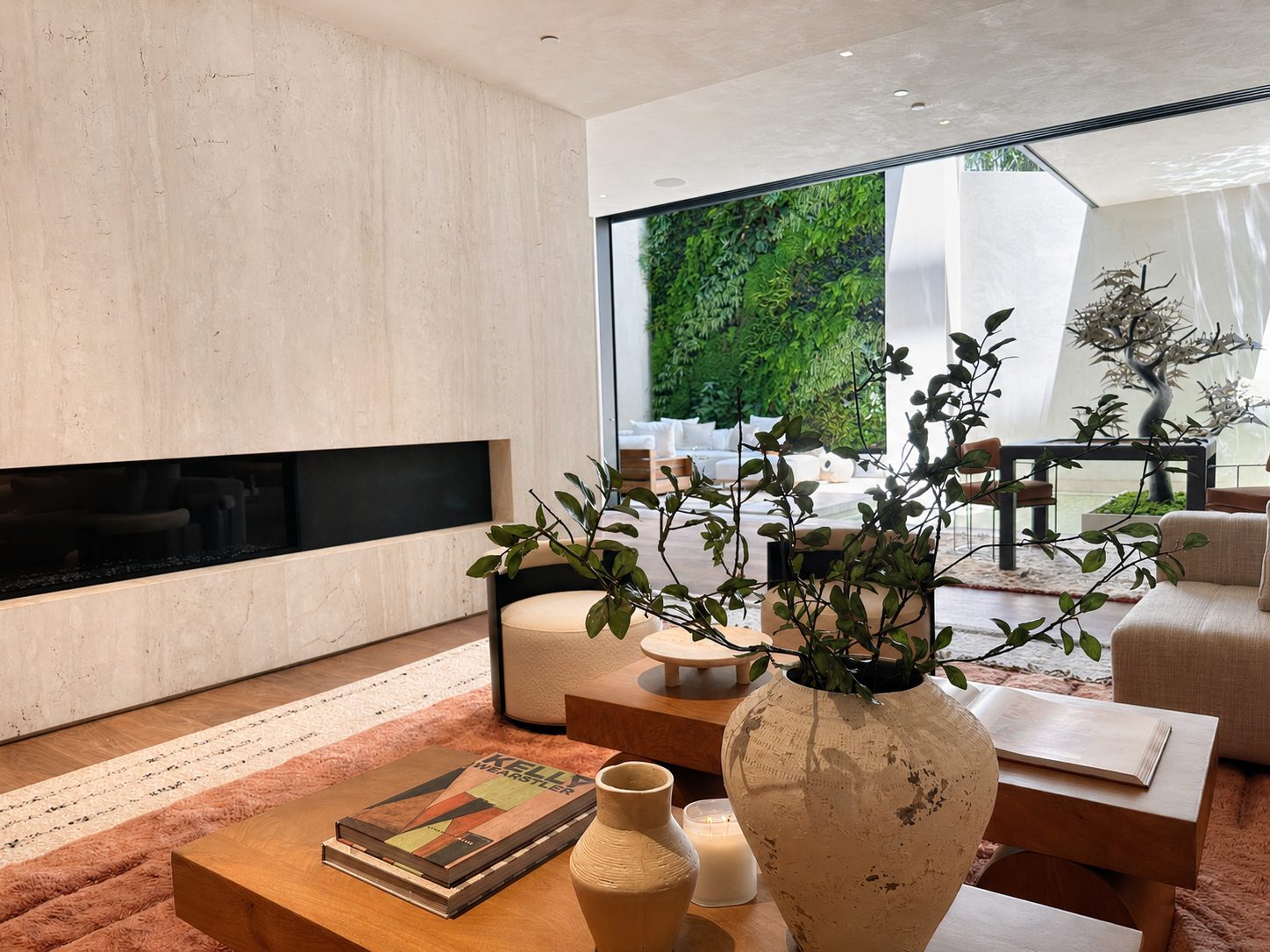
Home Pricing Strategy: Why Pricing Is More Important Than Ever in 2026
Pricing a home has never been about choosing the highest number a seller hopes to achieve.
Today’s home pricing strategy is about positioning a property so buyers recognize its value immediately.
That distinction has become increasingly important across Los Angeles as inventory has grown and buyers have more homes to compare before making an offer.
Instead of asking, “How high can we price it?” today’s sellers should ask, “Where will buyers see the greatest value?”
That question often produces a better outcome.
Pricing Is Marketing
Many homeowners think marketing begins after the listing goes live.
In reality, marketing begins with the asking price.
The asking price is usually the very first piece of information buyers evaluate after seeing photographs online.
It immediately answers several questions:
- Is this home realistically priced?
- Should I schedule a showing?
- Is the seller serious?
- Is this property worth comparing with others?
An unrealistic price discourages many qualified buyers before they ever visit the property.
Buyers Compare Everything
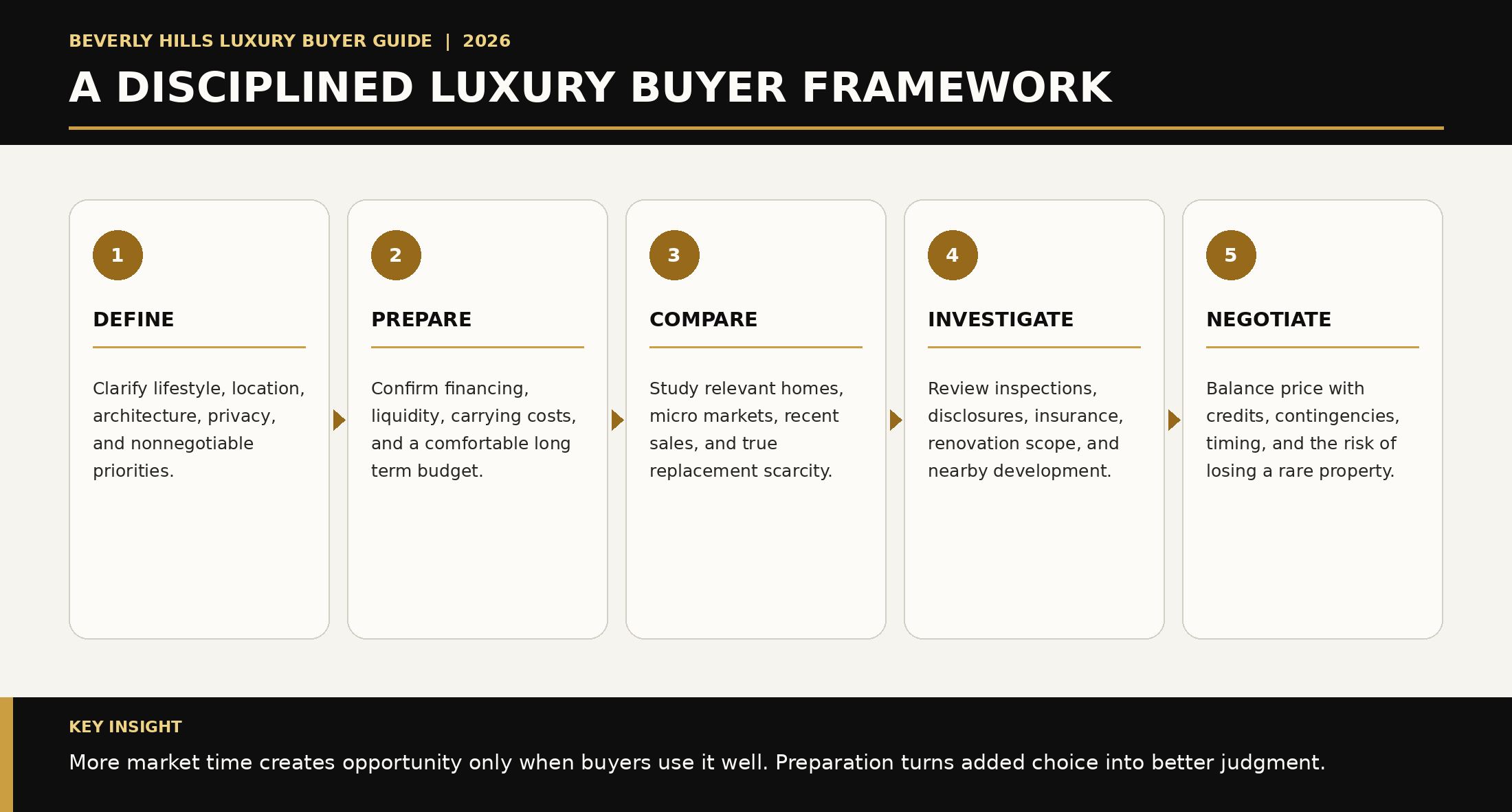
Today’s buyers rarely evaluate one home by itself.
Instead, they compare multiple listings that often appear on the same search results page.
If two similar homes offer comparable locations, size, and condition, buyers naturally gravitate toward the one they perceive as providing greater value.
Pricing has therefore become a positioning strategy rather than simply a valuation exercise.
Overpricing Often Reduces Negotiating Power
Many sellers believe pricing high leaves room for negotiation.
Sometimes that approach works.
Today’s market often produces the opposite result.
When a property sits on the market without meaningful activity, buyers begin asking questions.
Why hasn’t it sold?
Is something wrong?
Will the seller eventually reduce the price?
Those questions reduce urgency.
Once urgency disappears, negotiating leverage often shifts toward buyers.
The Cost of Chasing the Market
One of the most expensive mistakes sellers make is adjusting their price after buyer interest has already faded.
The strongest exposure almost always occurs during the first few weeks after a listing reaches the market.
If that opportunity is missed, later price reductions may not generate the same excitement as a properly positioned initial launch.
Many buyers have already moved on.
Others assume additional reductions may follow.
Luxury Buyers Think Differently
Luxury buyers throughout Beverly Hills, Bel Air, Brentwood, Westwood, Santa Monica, Pacific Palisades, and Malibu often approach pricing differently from traditional buyers.
They are usually less influenced by monthly payments.
Instead, they focus on value.
They compare:
- Architecture
- Privacy
- Views
- Design quality
- Lot characteristics
- Lifestyle
- Long term investment potential
That means pricing must reflect how the property competes within its specific luxury segment rather than relying solely on comparable sales.
Data Supports Strategic Pricing
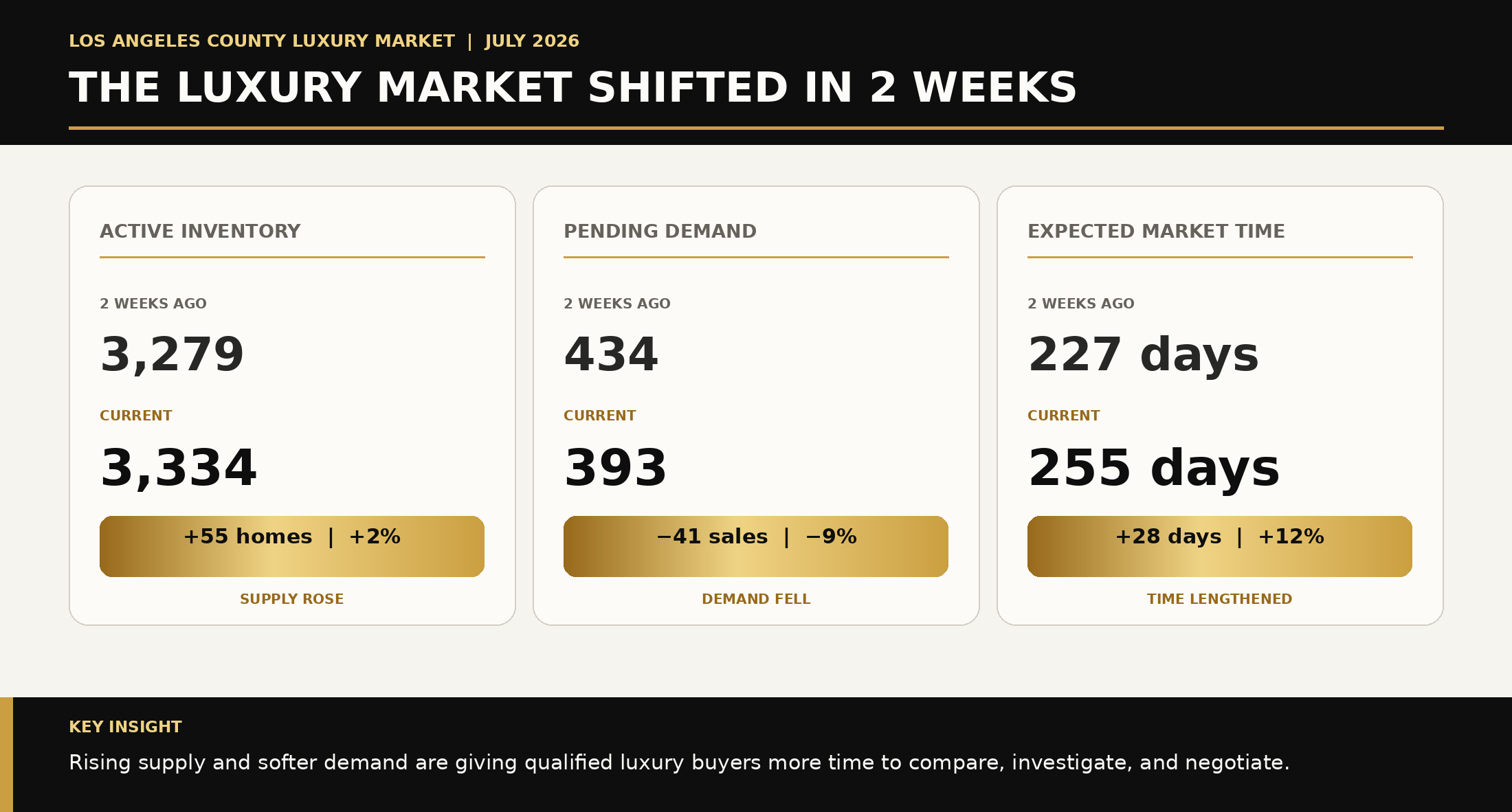
The latest Los Angeles County Housing Report shows that expected market time generally increases as price points rise, particularly among luxury properties. Higher priced homes often require more time to find the right buyer, making strategic pricing even more important.
Longer market times do not necessarily indicate weak demand.
Instead, they often reflect a smaller buyer pool and more careful purchasing decisions.
Pricing Should Create Competition
Every seller hopes to receive the highest possible price.
Ironically, realistic pricing often creates the greatest opportunity to achieve that goal.
When buyers perceive strong value, they are more likely to:
- Schedule showings quickly.
- Compete with other buyers.
- Submit stronger offers.
- Negotiate fewer concessions.
Creating buyer confidence often produces better financial results than testing the market with an unrealistic asking price.
Final Thoughts
Every market rewards different seller strategies.
Today’s market rewards thoughtful pricing.
A successful home pricing strategy balances market data, buyer psychology, property presentation, and neighborhood competition.
For sellers throughout Los Angeles, pricing should never be viewed as simply selecting a number.
It should be viewed as one of the most powerful marketing decisions made before a property ever reaches the market.
